Columbia University · Analysis of Networks & Crowds

Literature Mutations

Measuring the rate at which fiction's genres form and mutate, by modeling literature as a growing network.

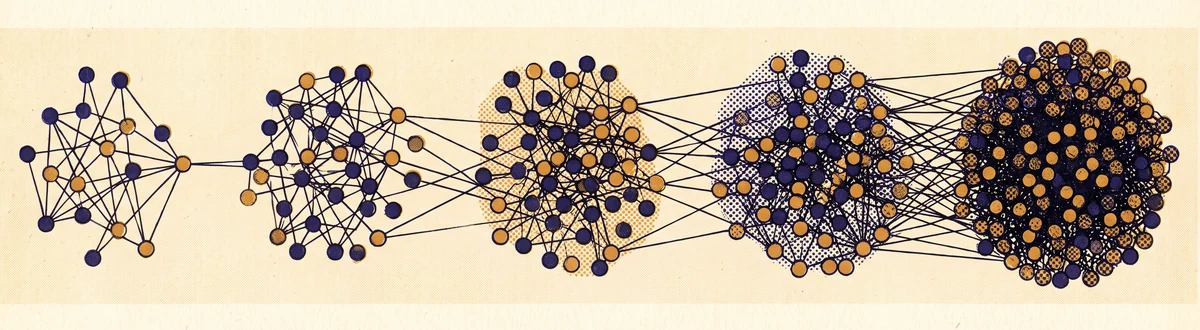
Watching the graph form. 166 novels, one per author. Positions are fixed from the final k-NN layout, so only publication is temporal. A novel stays grey until the community it belongs to reaches three members — the pipeline's own threshold for calling a community real — so clusters are watched cohering rather than assumed. Over the full 345-novel run the ledger records 33 splits, 25 merges and 32 births, but a null model cannot separate that from shuffled publication years (90 real events against 94 ± 15, z = −0.27) — so this shows the shape of genre formation, never a rate.

Phase 2 — 77 authors, Homer to the 1920s, directed edges scored two independent ways. This is one of two networks the pipeline builds; Phase 1 (unsupervised genre recovery from prose) is the other interactive view →, and the full method, corpus discipline, and honest limits for both are in the paper →