I think a lot of people have these. Those rabbit holes you go down on the internet late at night. Maybe its sports related or tracking weather patterns or looking up fancy houses on Zillow that none of us can afford. You may only have one of these. I have several.
I’m going to group literature and poetry together as one of these. Not only do I spend a lot of time reading these things, I’m obsessed with the entire field. Authors and who they were in real life. Where romantic poets found their inspiration (a surprising number of which don’t stem from a lover). And probably the most prominent of which is reading other people’s reviews of books on Reddit. I seldom weigh in on these online communities, it’s simply the various perspectives that proves to be so interesting.
Obscure Interests · August 2024 ↗
How do you get people back into reading? I can only describe my own experience. 10th grade English class with Mr Young’s and reading JD Salinger’s The Catcher in the Rye. Changed my perspective on reading. Not for entertainment, but for spiritual exploration.
Fast forward and I’m 20 and move to London to study abroad and fall headlong into infinite free time in the cultural hubcap of the world — city-center London. 4 days a week I’d walk the Thames to class and stop by the book vendor under the bridge. Find a new paperback from an author I’d been exploring. Take their ideas back to my dorm room for examination.
To this day I try and read consistently. Not as good about it as I once was, but still tackle 15-20 difficult books every year.
How do you get people back into reading? · August 2026 ↗
Before literature
Basically, the argument for reading Homer is that prior to what we now consider “literature” — things like Shakespearean plays and Fitzgerald novels — there was only verbal story telling. We didn’t write things down, we told each other stories by candlelight and across dinner tables. That’s what makes this so particularly interesting. Homerian stories are the stories that lasted. They were the stories we told for centuries. They were the first stories we felt obligated to write down.
Fragments of Homer account for nearly half of all identifiable Greek papyrus finds.
The Greeks were the foremost Western society. You could even argue much of Roman tradition stems from the Greeks. And meanwhile NEARLY HALF of all Greek writings make reference to Homer.
What does this tell us? That stories like The Odyssey and The Iliad form the bedrock of Western society. That these tales of Achilles and Ulysses and wandering and love and angry Greek gods were important. That these were the words spoken from steps of the Acropolis.
And here we are thousands of years later, grandchildren to this enormous tradition.
The Homeric Question · March 2024 ↗
The canon
In the literature community, it’s widely accepted that Homer, Shakespeare, Milton, and Dante are the most influential writers of all time (setting aside the Bible and its contributors). Whereas when you move into modern times, its an oft-debated subject. In no particular order:
James Joyce — known for revolutionizing stream-of-consciousness. In the academic community he is often cited as the greatest of all time. Most known for Ulysses and Dubliners (I’d start with Dubliners if interested).
Ernest Hemingway — known for his no-frills prose, undeniably influenced a generation of writers. Most known for The Old Man and the Sea, but his earlier works are the most touted in the literature community (A Farewell to Arms is essential, but my personal favorite is The Sun Also Rises).
Herman Melville — outside of pious academics (think Harvard and Dartmouth PhDs) Melville is considered to have achieved the greatest work of English literature with Moby Dick. Although the French believe Pierre to be the better novel.
Post-modernists such as David Foster Wallace (Infinite Jest), Thomas Pynchon (Gravity’s Rainbow), and Cormac McCarthy (Blood Meridian) also make waves
Humanity’s Most Prolific Writers · December 2025 ↗
Who writes like whom
A quote from each of the aforementioned:
And then I asked him with my eyes to ask again yes and then he asked me would I yes and his heart was going like mad and yes I said yes I will yes.
James Joyce (Ulysses)Because we would not wear any clothes because it was so hot and the window open and the swallows flying over the roofs of the houses and when it was dark afterward and you went to the window very small bats hunting over the houses and close down over the trees and we would drink the capri and the door locked and it hot and only a sheet and the whole night and we would both love each other all night in the hot night in Milan. That was how it ought to be.
Ernest Hemingway (A Farewell to Arms)“I have heard,” murmured Starbuck, gazing down the scuttle, “that in violent fevers, men, all ignorance, have talked in ancient tongues; and that when the mystery is probed, it turns out always that in their wholly forgotten childhood those ancient tongues had been really spoken in their hearing by some lofty scholars. So, to my fond faith, poor Pip, in this strange sweetness of his lunacy, brings heavenly vouchers of all our heavenly homes. Where learned he that, but there?
Herman Melville (Moby Dick)
In the margins
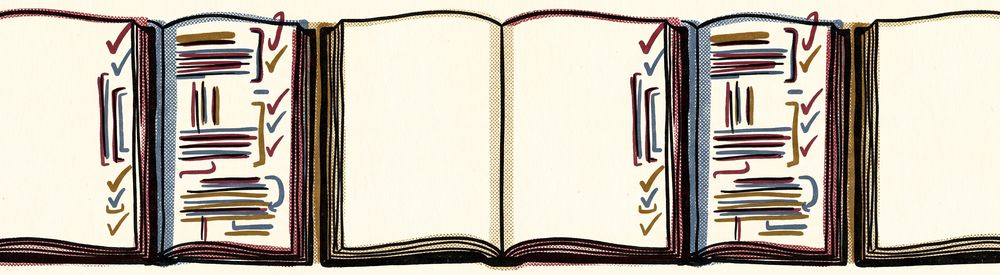
I’m a longtime Melville reader, and I wanted to write and say thank you. I recently discovered Melville’s Marginalia Online while revisiting Shakespeare’s tragedies, and finding it turned something I already knew in the abstract — that Melville marked up his own Shakespeare heavily while writing Moby-Dick — into something I could actually see: his pencil, his handwriting, his “Terrific!” scrawled next to Cornwall’s line right before Gloucester is blinded in King Lear. That’s an extraordinary thing to have made freely available, and I don’t think projects like this get told often enough how much they matter to someone outside the academy.
I got curious enough to build something with it. Using your public XML archive for Volume 7 alongside Folger’s free digital text of King Lear, I put together a personal, print-ready edition of the play with Melville’s actual marks reproduced in the margins at the lines where he made them — his underlines and scores rendered as marginal marks, and his three written comments as sidenotes.
Thank you for making this material public. It has changed how I read the play.
A letter to Melville’s Marginalia Online · August 2026 ↗
King Lear, with Melville’s marks
→His pencil, in the margins.
Marks in Books
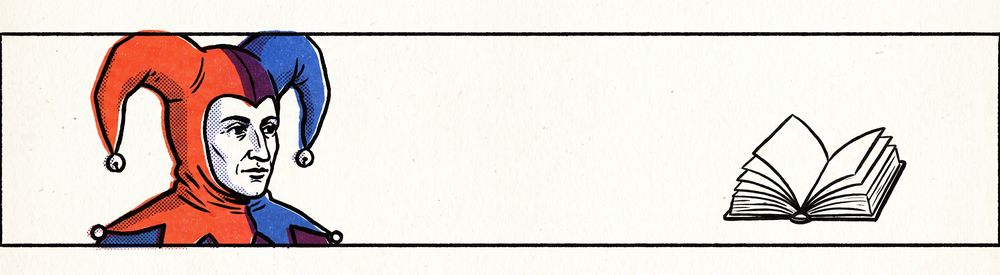
→What a reader’s marks say.
Re-reading
After reading all McCarthy’s novels (with the exception being his plays) I’d say this has to be his most inaccessible work. Lots of discussion on very high level mathematics and it’s conjunction with our interpretation of the world. This was like reading a McCarthy brain dump. There’s super interesting tidbits in here ranging from the history of violins to the way whales time their breathing - and it’s semi-evident to me what McCarthy was advocating as a theme - I just think it could have been more appropriately edited (the last 30 pages and the history of the Poincaré/Riemann/etc could have been excluded and the novel would have rounded out a lot better - but that’s just me). 4 out of 5 because I’m stacking this against his other incredible works.
Also, I’d like to add that I think McCarthy is a genius. And that’s coming from someone who uses that word very sparingly.
Book Review: Stella Maris · January 2023 ↗
The little girl gone missing at the end, after her bear was killed, was it the judge? Seems related to the judge killing the idiot.
The Judge preys on children throughout the novel (there are multiple hints and references to missing children whenever he appears). Whenever children disappear in proximity to him, violence follows.
A child disappears.
The Judge remains.
The Judge dances.
He survives. The innocent does not.
The bear and the girl matter symbolically too.
The bear = something wild, ancient, mythic.
It’s reduced to spectacle.
It’s shot for entertainment.
Re-reading Blood Meridian · March 2026 ↗
The greats
I often fall into this trap when I sit down to write. Comparing what I do to the greats. Melville. McCarthy. Joyce. Faulkner. And I oftentimes have to stop myself because two things can be true at once. 1) There can be works of art that resonate with lots of people for long periods of time. These are the Monets and the Picassos. “High art.” But at the same time 2) You can tune into the beauty of each day and find inspiration to create and it doesn’t have to be something you share with others. It can simply exist in a notebook or on a canvas in your basement. It’s the creative process itself that is inherently so rewarding. You’ve just gotta open yourself up to the waves. To the inspo. To the vibrations man :p
Creativity · December 2024 ↗
In these 6 months I read Steinbeck, Joyce, Fitzgerald, Nietzsche and explored 1800s romantic poetry with Keats, Shelley, and Lord Byron. Like drinking world culture through a spigot. And to a young mind, instrumental.
AUG 26 — PT2 ↗All of it, in one place ↗