Reader's View: Is a college degree still worth the cost?

January: Part 1 '23

January: Part 2 '23
February '23
March '23
April '23

May '23

June '23

July '23
August '23

September '23

October '23

November '23
December '23
January '24

February '24

March '24
April '24
May '24
August '24
October '24

November '24

December '24
January '25
Titans and Transformers
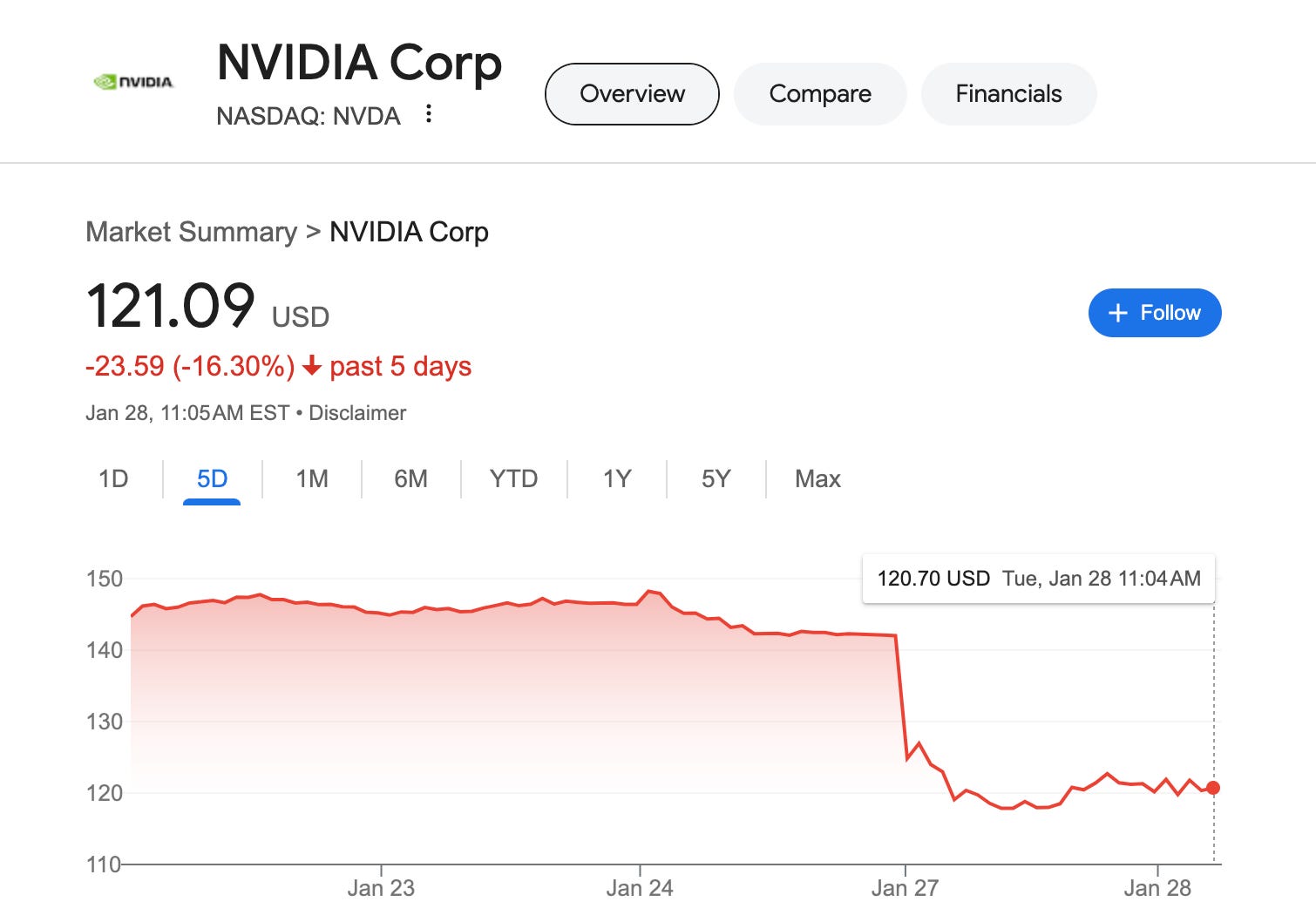
DeepSeek
February ‘25

South Africa

April '25
Monopolistic Behavior in Modern Business

June '25
August '25

September '25
SEPT 25 — PT2

OCT 25
The AI Bubble

DEC 25
DEC 25 — PT2

Italia

NYC
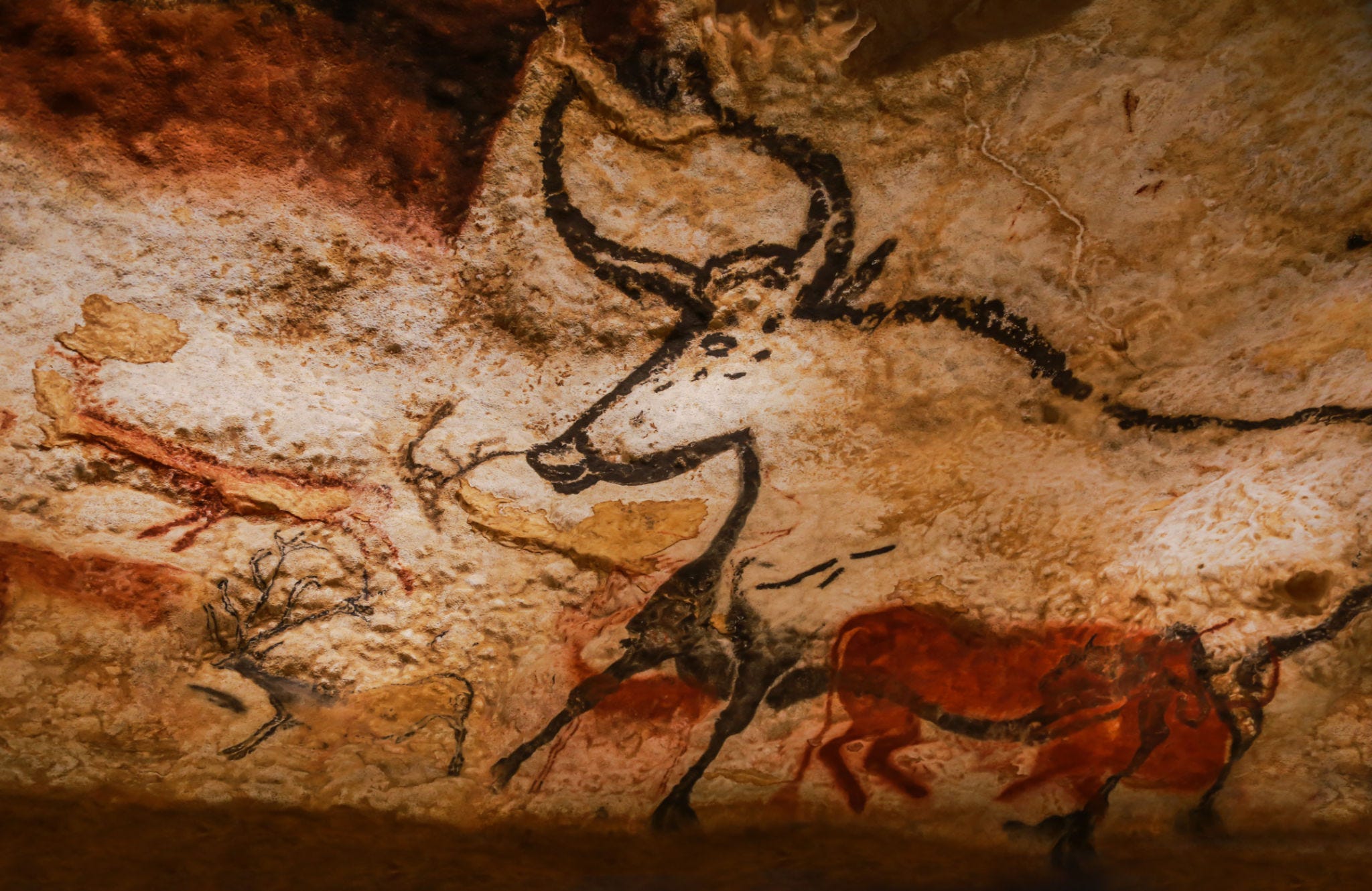
Primitive Anthropology
FEB 26
MAR 26

MAR 26 PT2
APR 26
Physical Media Journal

Soulful
Working w/Claude Code
The Stoddard Temple is a threat to many things.
Thought Experiment

Publishing a newspaper.
Appreciative.
Opinions on the stock market

Something Greek
Last night there was a huge storm here in Minnesota and I woke up at 3am to this eery hum of voltage.
JUN 26
STUDY GUIDE | Quantum Gravity
Rodent Inspections | ARCHIVE
FEB 26 | ARCHIVE

Astroid Trails.

JUN 26 — PT2
JUN 26 — PT3
Big Sky Journals — 1
Big Sky Journals — 2
Big Sky Journals — 3

JULY 26
Big Sky Journals — 4

JULY 26 — PT2
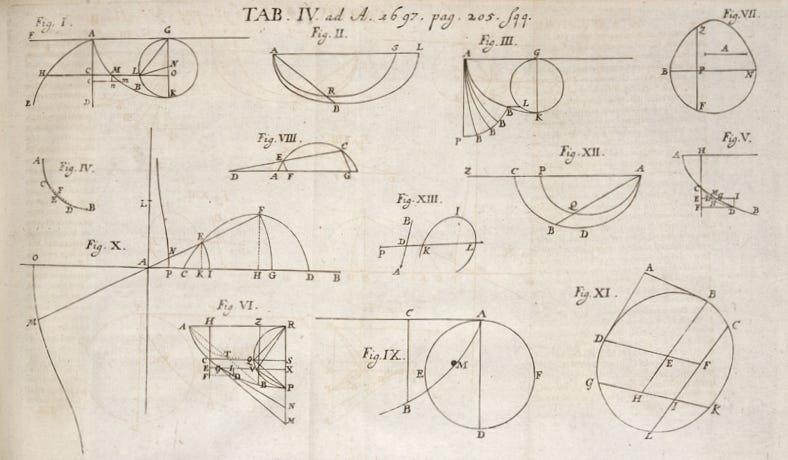
STUDY GUIDE | Newton's Brachistochrone Proof

AI, and the Artistic Age
Dream — Comet
Dream — Oratory
Stream-of-Consciousness
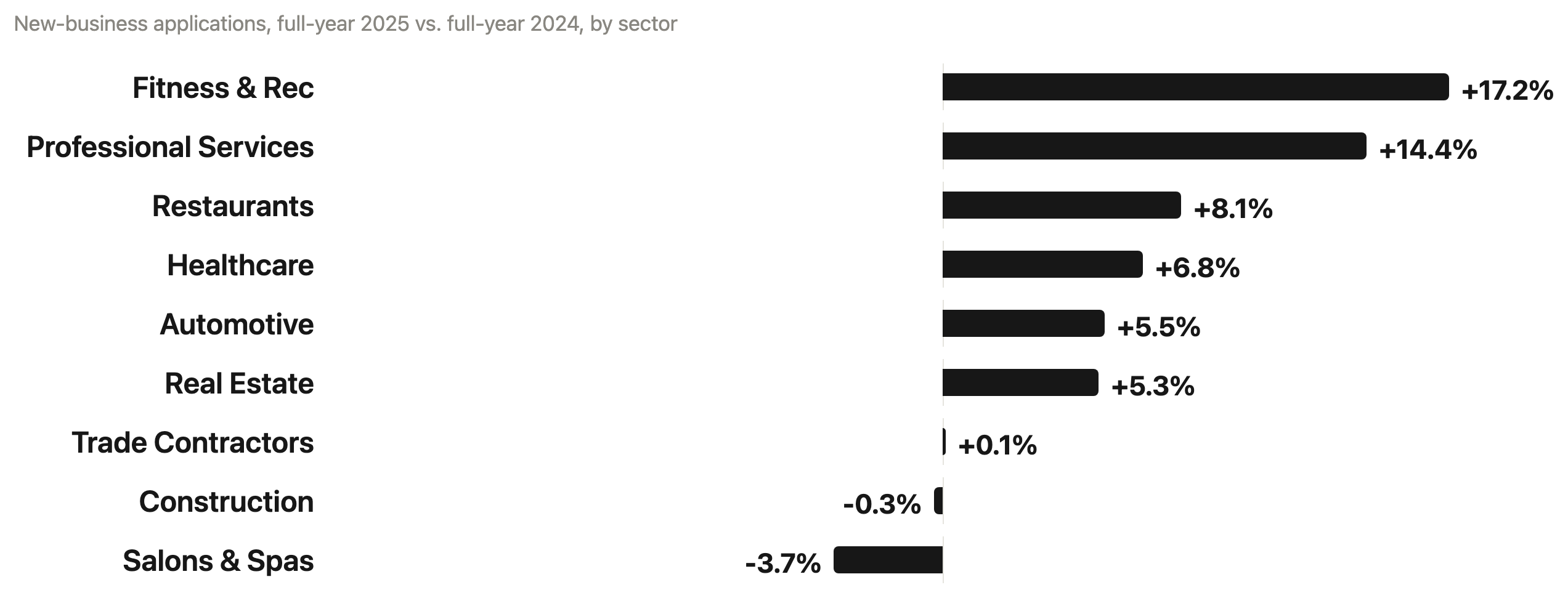
The United States Small Business Review
AUG 26
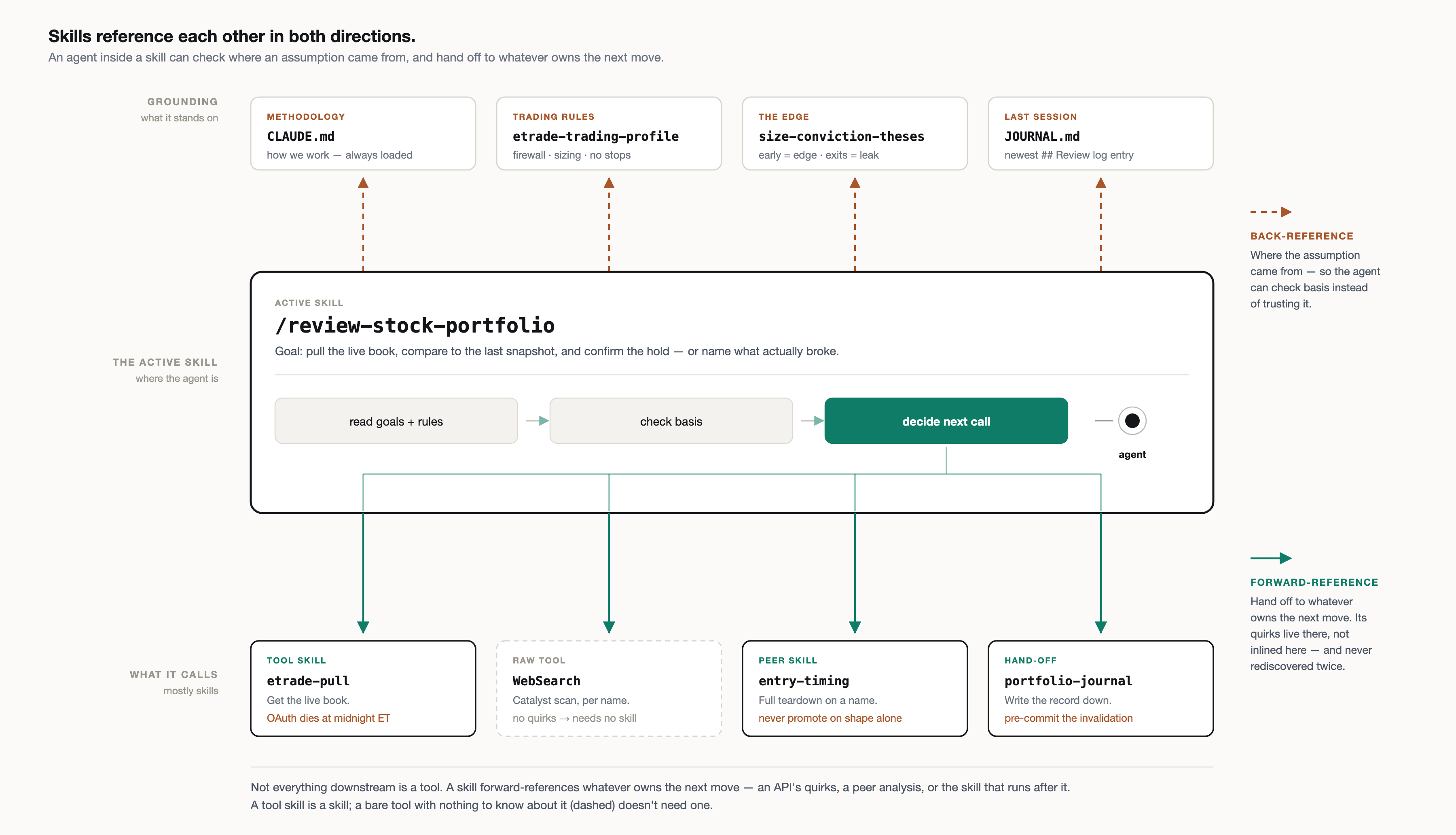
Getting an AI to do a given thing is really pretty simple.
Short Stories
Dream — A Higher Power
Collected Poems
My Writing Process
READING | Selected Poems and Fragments
READING | Cities of the Plain
READING | Go Down Moses
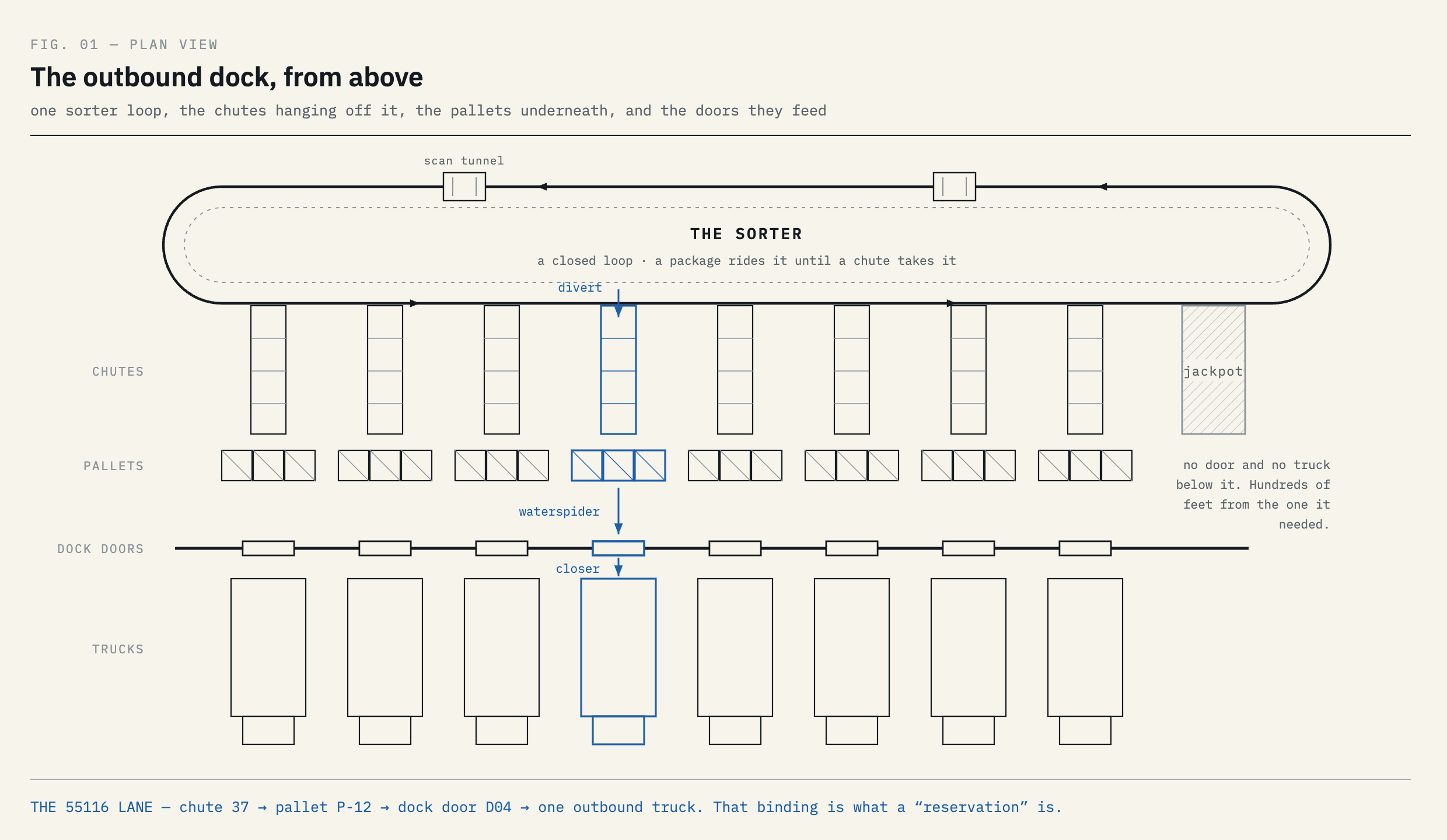
Directed Staffing of Outbound Dock Doors in Amazon Fulfillment Centers
AUG 26 — PT2
Early Work
Jul 2022 — Nov 202370 essaysWild Shit in IdahoJan 2023132w
Apparently I've been "living under a rock" (according to a buddy) given how late I am to hear about this - but am as astounded as the rest of you. Open questions:
Suspect had no apparent motive?
Weird that cops took so long to release news/evidence/etc
Two roommates were still inside when it happened and called police 8 hours later? These roommates are "not considered suspects in the ongoing investigations"
The fact that the timeline of events is almost entirely based on phone activity is spooky from a privacy perspective
Am I the only one that think's the currently apprehended suspect looks like a cookie cutter "serial killer"? Image below for reference
Here's the link I used to catch up on this (found the timeline of events to be rather cogent): https://abcnews.go.com/US/idaho-college-murders-timeline-events/story?id=93575278
TikTok: Internal TurmoilJan 202371w
Picked this up from the Benedict Evans tech memo (I'd highly recommend for those wanting to keep up in tech news each week - link below) and found this bit interesting: "… company staff used location data from the app to try to see whether journalists who’d been reporting negative stories had been in the same locations as TikTok staff. That sounds… not good."
Full story: https://www.forbes.com/sites/emilybaker-white/2022/12/22/tiktok-tracks-forbes-journalists-bytedance/?sh=5f2cd4ec7da5
Benedict Evans Newsletter: https://www.ben-evans.com/newsletter
NFT Wash TradingJan 202345w
A recent research study found 45% of all NFT volume in 2022 were "shady trades". Aka, people selling to themselves in order to pump their NFT's price. I find the idea of NFT's interesting, but really don't see them going anywhere as a market.
https://www.coindesk.com/web3/2022/12/23/over-30b-of-nft-trading-volume-on-ethereum-is-wash-trading-research-suggests/
Instagram is Today's PlayboyJan 2023456w
From the 1950s onwards, Playboy magazine increasingly came to represent “sex” in America. The introduction of voluptuous women at the center of an advertisement stricken magazine harkened a new era for what was deemed publishable as well as mainstream. It also grew from it’s publicly assumed apish beginnings to what was seen as a tasteful gentleman’s publication responsible for printing the likes of literary giants ranging from Vladimir Nabokov to Ray Bradbury. Sex and sensuality were now subjects discussable beyond closed doors - though often dejected among the country’s more conservative sects. And not only was it just men reading Playboy, its women were found clutching copies through fits of dejectedness in an attempt to both understand as well as emulate the world’s most desirable women. This fact becomes ever more clear when we consider Playboy’s own take on the rise in popularity among women circa the early 1980s. As noted in its January 1984 edition: “Compared with our first nationwide Playmate search five years ago, this one was a colossus. In 1978, we sent five photographic teams to 28 cities and snapped Polaroids of more than 3000 women. This time, we sent seven roving photographers and their assistants to 30 U.S. cities and to one in Canada, and they were swamped by 7000 applicants — nearly twice as many, in fact, as we had expected … We wondered why … It became pretty clear after a while that we were seeing the effects of the health-and-fitness movement … an equally likely reason may be simply that PLAYBOY is now considered by more people than ever (including mothers of nice girls) a publication in a class of its own … a tasteful exception“. Women were increasingly recognizing their own beauty as well as the immense captivation the playmates had when given a platform like Playboy, and simply put, they wanted their taste.
Fast forward a few decades and the psychology hasn’t changed - only the platform. What had been previously restricted to the world’s most elite supermodels has since been opened to anyone with an iPhone 13 and Adobe Photoshop. Your content’s publication audience reachable in an instant. Glitz, glamour, and sexual intimation can be found at the tap of a finger and as far away as your sister’s Instagram profile. What used to cost thousands of dollars at the expense of a Playboy pocketbook and associated photoshoot now achievable from a walk on Sunset Boulevard in thigh-high Victoria’s Secret stockings and a Nikon D850 handled by your guy friend who took a point and shoot course at UCLA. Instagram is a cheap man’s Playboy and Howard Hefner is turning in his grave with every portrait mode selfie floated as a result of golden hour. Publius.
Generational Disposition: The Boomerang EffectJan 2023221w
I've been reading a lot of Joan Didion lately and find her journalistic pieces not all that different from the writings of Bret Easton Ellis (author of American Psycho). This has in turn lead to some contemplation on the counter-culture of the 1960s and 70s in comparison to the nihilistic sentiment of the 1980s. It feels to me like children of the 1940s and 50s (post World War II) grew up experiencing their parents lack of fulfillment with suburban life and Sunday afternoons spent at the regional shopping center and opted instead for dope, Led Zeppelin, and "fuck the man" in the 60s. They wanted nothing to do with cookie cutter houses, cars, or ways of life. You can then follow the spiral to the 1980s where that generation saw their parents of the 60s and 70s as a generation fighting for change and expectedly turned to "what's the point?" which we see crop up socially as a lack of spirit, interests, and general dissidence from reality. I haven't thought deeply enough about our current society and the generation of millennials in this sort of contrast yet, but there seems an intuitive (and rather obvious) ping-pong effect that occurs between generations and it doesn't tend to restructure itself in the inception of new core values — rather, it just erodes existing.
Parking at the MallJan 2023177w
I read recently that shopping malls have a sort of “playbook” that they follow when both designing and launching a new one. For one, they will anchor “major” outlets such as Macy’s, JP Penney, etc on either end of the mall and place smaller shops in-between in order to increase exposure as folks commute between major outlets. Another involves painting the lines in the parking lot such that parking spots are much bigger than normal when the mall is first launched. This is done so that it takes less cars to give the mall a “busy” or “packed” look - generating excitement and fervor. Months (or even years) after launch when the mall has matured to a staple in the community, they will then repaint the lines to optimize for maximal parking spots.
I mean — sure — these things make complete sense. But I’ve never considered either one of these things in my life till now and it intrigues me that there is a onboarding packet out there somewhere titled “Building the Mall: Your How-To Guide”.
Book Review: Stella Maris by Cormac McCarthyJan 2023154w
After reading all McCarthy’s novels (with the exception being his plays) I’d say this has to be his most inaccessible work. Lots of discussion on very high level mathematics and it’s conjunction with our interpretation of the world. This was like reading a McCarthy brain dump. There’s super interesting tidbits in here ranging from the history of violins to the way whales time their breathing - and it’s semi-evident to me what McCarthy was advocating as a theme - I just think it could have been more appropriately edited (the last 30 pages and the history of the Poincaré/Riemann/etc could have been excluded and the novel would have rounded out a lot better - but that’s just me). 4 out of 5 because I’m stacking this against his other incredible works.
Also, I’d like to add that I think McCarthy is a genius. And that’s coming from someone who uses that word very sparingly.
Prince Harry: You’re Spare Parts BudJan 2023161w
Prince Harry released his memoir last week to record setting book sales and followed it up by doing several interviews surrounding its content (seems like quaint timing given the recent passing of the late Queen). Of note, he goes on record discussing how he got frostbite on his “todger” during his 2011 trek across the North Pole:
My penis was oscillating between extremely sensitive and borderline traumatized. The last place I wanted to be was Frostnipistan.
And notes how a friend recommended applying Elizabeth Arden cream to the effected area, to which his initial (reluctant) response was:
my mum used that on her lips…
But then ultimately decides to use the cream and writes in the memoir:
I found a tube, and the minute I opened it, the smell transported me through time. I felt as if my mother was right there in the room. Then I took a smidge and applied it...down there.
Uhhhh - what the f**k?
Source: https://www.newsweek.com/prince-harry-penis-stories-return-him-clown-persona-tried-lose-spare-1774357
Open QuestionsJan 202390w
Why, in southern California of all places, would a movement like this spring up and have such sustained success?
Nowadays there are 4x as many Pentecostal churches in California as there are Episcopal (Didion wrote The White Album primarily in the 1970s)
What sort of people are most drawn in by Pentecostal religious sects?
What does this tell us about our culture?
It almost seems like a revolt against nihilistic/consumeristic/etc tendencies that are the most concentrated in places like LA?
But why Pentecostal and not a more “traditional” Christian sect?
"Content" in Today's Day & AgeJan 2023365w
Part of me starting this Substack stems from some reflection I’ve done the past few months on the notion of producing versus consuming content. And its not that I wanted to join the fray and start a Podcast about dating or a YouTube channel that inspires the next era of young adults to “get fit”. Rather, I just often found myself pondering “content” and the means it has to influence one’s daily habituations.
A few random thoughts on this idea:
For decades, Hollywood has had immense influence on what people are watching, thinking, and talking about. While there are other alternatives to getting a movie/tv-series made nowadays - there are still a handful of production execs in LA that hold immense sway over what the majority of American’s see pop up on their TV screen and the subsequent discussion that is had at the dinner table over hors d'oeuvres.
While there are a myriad of different content sources nowadays (podcasts, news channels, publications, social media, etc) — and one can see the obvious benefit of multiple sources — is this always a good thing? I heard someone say recently that society in the 1800s and early 1900s was much more congenial because we all read the same books and newspapers. All ate at the same restaurants. All shopped at the same stores. Imagine that - attending a dinner party where you were all informed off the same opinion and could debate it in the same window of context.
The model for “successful content” will always be at its root self centered. News channels will always be incentivized to talk “crime” over “budget cuts”. TikTok reels and YouTube feeds will naturally be catered to you and your interests because that is what is gonna get you to scroll for 20 more minutes than originally planned. The incentive structure for popularized “content” is all wrong if you’re expecting something integrous.
There is an audience for pretty much everything. If you made videos where you did paint-by-number whilst crooning love songs to your cat you’d find someone who’d subscribe. I think sexual fetishes serve as case and point for this argument. I mean, come on, women’s feet? Really?
The Cunningham MemoJan 2023594w
With the declassification of the Cunningham Memo by the House Congressional Committee several months back (last July I believe) - the public was given an opportunity to peer into the knowledge, strategy, and concerns that Meta (formerly known as Facebook) has when it comes to it's social media platforms. And probably not surprisingly, its about what anyone would suspect. Meta (and other companies like it) have a wealth of data it captures from it's users - and they have a strategy intrinsically tied to their user research - as any business minded executive(s) should. That said, it doesn't hide the fact that the contents of this internal memo are indicative of a worldwide society that is becoming ever-more-dependent upon social media platforms. And that's whether they are cognizant of this fact or not.
Upon first hearing of the memo's declassification, I spent a few hours one weekday morning, before starting my actual job, reading the memo and highlighting the anecdotes that were of nominal interest. Let's start from the top.
Social Networks do Not Typically Remain Limited to Demographic Subgroups, Apart from Teens. E.g.
We do not typically find that adoption is tightly constrained along lines of gender, region, or social class. Instead, social apps typically are adopted at the level of a country as a whole, although adoption rates vary substantially. The one important exception is that teens often adopt a social app different from those around them (e.g., teens using SnapChat, Instagram).
Its interesting to see, internally, that Meta recognizes its adoption is largely dependent on the broader society taking up a given platform. Wouldn't be surprised if this results in Facebook/WhatsApp/Instagram targeting ads online to the culture of an entire country - versus targeting a class/profession/gender/race.
Secondly, the fact that Meta recognized the unique opportunity that teens present from an adoption standpoint is not surprising whatsoever. Especially given the strong parallel to big tobacco's focus on bringing on new young smokers throughout the 20th century. Young people are inherently more pliable - and the data Meta harvests simply backs this supposition.
Once Users Start Using a Social App, their Use Declines Slowly (Ratchet Effect)
This ratchet effect should be both reassuring and concerning. It is reassuring because it implies we are unlikely to see any network undergo a rapid decline. It is concerning because it means that, when we see small declines in visitation, they could reflect significant declines in underlying demand or market-fit
Moreover, we see Meta recognize that their own product loses its engagement over time. Not all that surprising.
Multiple accounts on Instagram.
Around 10% of people on IG have a secondary account, and perhaps half of those use it to maintain a secondary audience. Graph overlap is quite low between primary and secondary accounts
As an Instagram user myself, before seeing this statistic, I would have presumed ~1% of Instagram users maintain a secondary account. I also would have presumed that the audience overlap would be relatively high. The anecdotal evidence for this presumption being that most of the folks in my network seem to spinoff secondary accounts for either fitness or promoting a small business (sometimes both). The fact that 10% of Instagram users maintain a secondary account is wildly surprising. What are these secondary accounts being used for? Stalking exes? Following all the "influencers" you are ashamed to follow with your primary account?
TL;DR - Social media and the ways we use it speak to our society writ large (and unsurprisingly, its not all that endearing).
The full subcommittee investigative report can be found here.
Some LiteratureJan 202349w
Just a quote this time.
“Do you mean to tell me that you’re thinking seriously of building that way, when and if you are an architect?”
“Yes.”
“My dear fellow, who will let you?”
“That’s not the point. The point is, who will stop me?”
-Ayn Rand (The Fountainhead)
Love Thine NeighborFeb 202355w
I heard recently — via various news outlets given I don’t have TikTok — that clips of middle and high school students beating the shit out of each other have been going viral. As in, kids riding the school bus and one girl choking another kid out for no apparent reason. This seems …. bad?
From February '23 ↗
AI Chat Bots: The Beginning of the End?Feb 2023129w
With OpenAI releasing their ChatGPT bot and Microsoft integrating Bing’s search engine with it, we’ve seen a lot of coverage/awe/hysteria surrounding the “power” of AI. While it’s true, these AI bots are fascinating to interact with and they do a really good job of mimicking human behavior, this is because they are trained on terabytes (I don’t know the actual scale of the data but its a lot) of data from the Internet. Think millions of tweets, Facebook posts, Instagram captions, etc. And are you honestly that surprised when the AI bot says it “wants to break you up with your wife and cook your meals”? You shouldn’t be. An AI model trained based on the way humans treat each other on the Internet is a morally ambiguous turnstile.
From February '23 ↗
Spy Balloons? Since When?Feb 202384w
Its been all over the news: spy balloons, foreign dignitaries, fighter jets, etc. But am I the only one surprised we are having this conversation in the first place? Since when do foreign governments use balloons to perform reconnaissance as opposed to satellites and lasers and shit? I’m inclined to believe the Chinese either think we are stupid (probably valid) or that they were actually just using the “spy balloon” to measure the atmosphere and clouds and such and it slipped from their grasp.
From February '23 ↗
Helter SkelterFeb 2023519w
I was watching the Capote biopic starring Philip Seymour Hoffman, which centers around the author Truman Capote as he works on the true crime novel In Cold Blood, and was intrigued to learn that In Cold Blood is actually the second best selling true crime novel of all time - behind a book named Helter Skelter. The book Helter Skelter was written by the lawyer who prosecuted Charles Manson in the late 1960s and focused on the Manson Family and the crimes they committed - notably the murder of actress Sharon Tate and the others who were living with her in the Hollywood Hills during the summer of 1969. Given that I had seen Once Upon a Time in Hollywood a couple years back, the Tarentino film that makes reference to this series of events, I was vaguely familiar with Charles Manson. However, the absolute fanaticism that the cult lead by Manson embodied ended up being the crux upon which my interest was levied - and its still sometimes hard to believe it actually happened.
For starters, Charles Manson had convinced a group of 25+ people (primarily young women) that he was “Mans Son” (Manson) — the second coming of Jesus Christ. He read from the Book of Revelations while his followers “tripped” on LSD, organizing orgies in order to allow his “family” to experience the release of all inhibitions and ego. Enabling them to truly love. He pronounced that the Beatles were angels sent by God and that their message was purveyed through The White Album. The scripture? That the white man had had his day. That the “piggies” and their materialistic view of the world was soon to come to an end and that the blacks in America who had so long been oppressed were to finally rise. This message eventually becoming action with the murder of actress Sharon Tate, Jay Sebring (world renowned hair stylist), Abigail Folger (heiress to the Folgers Coffee company), Wojciech Frykowski (a Polish immigrant), and Steven Parent (an eighteen year old Hi-Fi enthusiast) in their Hollywood Hills home on the night of August 8, 1969.
Is there really any way to truly understand the psychology behind Charles Manson and the actions taken by his followers? Probably not - at least not entirely. But I think this excerpt from the book, where officers interviewed local residents of Death Valley California when tracking the “hippie group” living nearby, is indicative of world in which these people were living:
They began questioning Crockett and Poston. The officers had come looking for arson suspects, and a possible stolen vehicle. They found something totally unexpected. From Pursell’s report: “The interview resulted in some of the most unbelievable and fantastic information we had ever heard: tales of drug use, sex orgies, the actual attempt to re-create the days of Rommel and the Desert Corps by tearing over the countryside by night in numerous dune buggies, the stringing of field phones around the area for rapid communication, the opinion of the leader that he is Jesus Christ and seemed to be trying to form a cult of some sort…”
From February '23 ↗
Narrowed VisionFeb 2023222w
It is impossible for your brain to comprehend all the sensory data that it is being sent from your eyes. So naturally, your brain is really good at focusing its computation on one thing at a time - think of this as “zooming in”. But why do we zoom in on some things and not others? For certain cases the answer is obvious. You focus on the stop light when waiting for it to turn green so you know when you can release the brake. You look someone in the eye when they’re telling you a story in order to be polite. But what about when you’re walking out your front gate and zoom in on the clouds overhead? You stop, eyes raised, focusing on a single white cloud juxtaposed against the blue sky. Why? Why in that moment did your subconscious ask your eyes to stop, hold on a second, there’s something right there really worth seeing.
I watched a movie recently called “Before Sunrise” starring a young Ethan Hawke and one of his lines struck me on this:
Why is it, that a dog, you know, sleeping in the sun, is so beautiful, you know, it is, it's beautiful, you know, but a guy, standing at a bank machine, trying to take some money out, looks like a complete moron?
From February '23 ↗
Ayn Rand and LoveFeb 2023245w
I’ve been re-reading The Fountainhead over the holidays (one of my favorite books) and find Ayn Rand’s notion of “love” to be completely contrary to the traditional dogmatic definition we’re so often prescribed.
… love is reverence, and worship, and glory, and the upward glance. Not a bandage for dirty sores. But they don’t know it. Those who speak of love most promiscuously are the ones who’ve never felt it. They make some sort of feeble stew out of sympathy, compassion, contempt, and general indifference, and they call it love. Once you’ve felt what it means to love as you and I know it — the total passion for the total height — you’re incapable of anything else.
-Ayn Rand (The Fountainhead)
Society’s Ideal “Partner”:
Caring
Comforting (tells you what you want to hear)
Self-sacrificial
Two is better than one
Rand’s Notion of Ideal “Partner”:
Someone who respects themselves foremost
Refuses to compromise their ideals
Exalts themselves and thereby their partner
And these definitions shouldn’t come as a surprise to anyone familiar with Ayn Rand’s philosophy of Objectivism. It also shouldn’t surprise that Rand paints the opposing philosophy of “love” in stark contrast to her own and doesn’t pull any punches. While I consign that there is certainly a grey area between these two definitions of an “ideal partner”, I think the important point is that so often we are told we need to find someone who “suits you” and not someone who “improves you”.
From February '23 ↗
Some LiteratureFeb 202353w
I’ve been really interested in a British poet named Philip Larkin lately.
Rather than words comes the thought of high windows:
The sun-comprehending glass,
And beyond it, the deep blue air, that shows
Nothing, and is nowhere, and is endless.
If you want to read the whole poem → Poetry Foundation: High Windows
From February '23 ↗
Amazon: World’s Largest “Advertiser”Mar 2023276w
There was a really interesting piece by tech blogger Benedict Evans last week regarding Amazon being the world’s largest “advertiser”. To clarify, advertising in this case means the “suggested” products on Amazon.com when you are browsing/searching for products. Many consider these “advertisements” to be a nuisance given you have to scroll through 2-4 suggested products before getting the default search results, but Amazon has managed to turn this feature into a 40 billion dollar profit with minimal operating costs. Amazon simply opened up the marketplace and now lets vendors bid for “advertising” time. Key the invisible hand.
It’s interesting to consider the semantics of this. For one, in a marketplace with thousands (if not millions) of similar products, how do you prioritize one over another from a marketplace perspective? Is it reviews based? Sales? And on the other hand from a vendor/seller perspective, does letting the market compete for “air time” make things more fair? Isn’t that how things work in the real world? You create a product and pitch it on TV + billboards to drive up sales?
Another aspect of this is how Amazon prorates their advertising slots. Are advertising rates based on cumulative searches? Sales? Time of day? I’d be willing to bet Amazon’s advertising pricing model includes all the above.
But perhaps most importantly is that Amazon made 40 billion dollars with minimal effort and exorbitant resultant margins (whereas the Prime + AWS business make great profits, but suffer from steep operating expenditures). It almost feels like in today’s day and age you can make money on pretty much anything - assuming you have a massive platform that is.
Full article: https://www.ben-evans.com/benedictevans/2023/3/6/ways-to-think-about-amazon-advertising
From March '23 ↗
American Banking: Groupthink 101Mar 2023172w
It came out earlier this month that Silicon Valley Bank (SVP) had collapsed and this was was due in large part to SVP purchasing large sums of US treasury bonds over the past few years. While this is typically a safe investment — one I could see financial advisors recommending at this very moment due to existing uncertainty in global markets — this was not the case for SVP given the run that was made on the bank in recent weeks. The run on the bank by investors resulted in the bank having to sell their bonds prematurely for pennies on the dollar since better bonds are available at this very moment due to recent interest rate hikes by the Fed to reduce inflation. From this, I find myself ever-cynical of the American banking system. It seems reminiscent of 2008. Aka, banks assuming the worst can’t happen — and if it does? — the United States government will be there to bail them out (at the expense of the taxpayer of course).
From March '23 ↗
HitchhikersMar 202392w
Very random: I realized this week that I’ve never seen hitchhikers before coming to Flagstaff. I mean, yeah, you’d see the occasional one on I-35 in Iowa, but in Flagstaff, I see hitchhikers every single day on 89-A. Maybe its a coastal thing? My barber was also telling me that apparently Flagstaff really started to grow ~15 years go (mostly due to an influx from California). My brain recognizes some connection between California + hitchhikers but can’t quite formalize it. Anyway - I still havent offered a ride to one yet :p
From March '23 ↗
The Way We See ColorsMar 2023270w
I’m taking a course currently for my masters degree called Visual Interfaces to Computers. It’s primarily focused on how to set up cameras such that you can train a computer program to “recognize” certain objects. One of the primary ways this is done is by a means called “color segmentation” where you mark a pixel as either white or black depending on if its above or below a certain threshold. This results in a greyscale image where white represents the portion of the image that is similar to the color you are looking for (and those that are not are seen as black). Here’s an example where an image of a gold fish is segmented by the color orange (original image on the right):
Once you distill an input image down to black or white - then you can compare the shape, size, etc to other input images and find those that are “nearby” - aka find other images that are similar to our orange fish here. That alone is pretty intriguing but the real interesting tidbit surrounding all this color stuff — in my opinion — is that apparently humans are very good at seeing differences in the color green but very poor at seeing differences in the color blue (red falls somewhere in the middle). Why does this matter? Because I find it interesting that when you go to the grocery store, you will notice the minute differences between the heads of broccoli simply because you see the nuance in green more readily. Whereas the ripeness of blueberries will have less of an impression. Human perception is weird.
From March '23 ↗
Thought Experiment: Original PositionMar 2023193w
I watched a movie called The Fountain last week starring Hugh Jackman which resulted in going deep down the metaphysics rabbit hole one night afterwards. While on this escapade, I came across the logician John Rawls and his relatively famous thought experiment titled “Original Position” which I thought was really interesting. The basic idea is as follows:
You are asked to structure society behind a “veil of ignorance”. That is, you must structure society such that you don’t know where you will be placed on the other side (you may be smart, rich, poor, disabled, etc). Rawls proports that by doing so, you would structure society more fairly since you will impart principles to the benefit of “most” given that is where you are likely to land on the other side.
I, personally, don’t think this is a realistic approach given inherent human biases - which is probably why this thought experiment is oft-referred to as ahistorical. It would, however, be interesting to have some semi-unbiased AI try and design a culture behind a veil of ignorance. Wouldn’t be surprised if the AI placed humans at the bottom of the totem pole :p
From March '23 ↗
Roman Society: Traditionalism With Trade-OffsMar 2023120w
I’ve been doing a lot of reading surrounding Roman culture recently and find myself ever-surprised at how traditional a society could be while also maintaining a severe air of liberalism in very specific facets. From a traditionalistic standpoint, Roman society was heavily imparted with themes of heredity, property, citizenship, and wealth. It was also heavily veered towards men — women were defined by the social status of their fathers or husbands. Then, on the flipside of the coin, it was also acceptable to enjoy same-sex relationships and even engage in acts of pederasty (think man + boy) without a degradation in social status. So to sum up, honor your father and mother but feel free to fondle the neighbor boy?
From March '23 ↗
Some LiteratureMar 202335w
Character teaches above our wills. Men imagine that they communicate their virtue or vice only by overt actions, and do not see that virtue or vice emit a breath every moment. - Ralph Waldo Emerson
From March '23 ↗
US National Security LeakApr 2023192w
I’ve been following (though very briefly) the US national security leak that happened this past week and find the following points of nominal interest:
Apparently the US was pressuring Jordan to support Ukraine? But Jordan was hesitant given they don’t want to piss off the Chinese?
The US gave Israel the ultimatum “either you help Ukraine develop iron dome technology or we won’t support a strike on Iran if/when they develop nukes”
This seems like blackmail to most precipitous degree?
Apparently Egypt was trying to sell rockets to Russia?
Given we are technically allies with Egypt, this is essentially them going behind our back?
The leaked documents make it seem like Ukraine isn’t faring as well in the war with Russia as the media makes it seem
US intelligence officials also indicate in the documents that they are skeptical the war can/will end favorably for Ukraine
The fact that the individual responsible for leaking the documents is a 21 year old Air National Guardsman makes me think this sort of classified information is far too readily available. What ever happened to security clearance? Are intelligence servers even password protected at this point?
From April '23 ↗
ChatGPT: Not Entirely FactualApr 2023220w
I’m subscribed to a tech blogger named Benedict Evans and over the past month this is the piece that caught my eye the most:
If you ask ChatGPT factual questions, you can’t trust what you get. In this case, it invented an entirely non-existent sexual assault allegation against a law professor, complete with (non-existent) Washington Post story. Also of note - the professor, since he’s apparently a somewhat controversial figure, assumes that this must be something to do with his politics. Since all LLMs do this all the time about anyone and anything, there’s no reason to think he’s right, but this is a good illustration of just how hard it is for normal people outside tech (or even inside) to grasp what these systems are doing. They are not answering questions - they're making something that looks like an answer to questions that look like your question. But, can you stop them from libeling people? Article Link
Specifically, this line:
They (AI) are not answering questions - they're making something that looks like an answer to questions
Makes me think that AI “taking over everything” remains a ways off. There is still a need to “audit” the work of an AI engine given its trained on trillions of data points where fact and fiction are one and the same.
From April '23 ↗
Temporal Differences in GesturesApr 2023129w
I was watching a lecture for my Visual Interfaces class a couple months back and my Professor brought up the idea of “temporal differences in gestures”. The example he gave is that if you were to ask a Gen X-r to imitate using a phone, they would move their hand up to their ear. But if you were to ask a Gen Z-r to do the same thing they would hold their palm out in front of them and tap their finger against it. The point he was trying to make is that every age group, society, etc has a unique difference in the way they understand and gesture things — which in turn makes it really hard to train computers + cameras to interpret this myriad of potentialities.
From April '23 ↗
“Mate Switching” (aka trade-in and trade-up :p)Apr 2023402w
I was listening to Joe Rogan interview David Buss (Berkeley/Harvard/UTexas evolutionary psychologist) on my drive back from Flagstaff to St. Paul and found the entire subject of “mate switching” incredibly fascinating. Buss goes into the “how” and “why” of adulatory and examines both the psychological and biological basis for which this tends to occur (I, personally, find the biological explanations the most thought provoking). Here are my notes from listening to the podcast and reading Buss’s research paper on the subject:
The Statistics
Lifelong monogamy does not characterize the primary mating pattern of humans
American divorce rates have hovered in the 50% range over the past several decades, and remarriage is common
85% of American adults have experienced at least one romantic breakup
Ala, breaking up with one partner and re-mating with another —mate switching—may more accurately characterize the common, perhaps the primary, mating strategy of humans
Among married couples, estimates of infidelity rates are estimated to be 26% for women and 50% for men
An estimated 79% of women who cheat fall in love (in contrast to only a third of men)
Most women who cheat are unhappy in their current relationship (seems like a no-brainer)
But the kicker is that when men cheat, only half reported that they were “unhappy in their existing relationship”
The Explanations Given
Dual Mating Strategy Hypothesis
“Woman's mate preferences shift to more bodily masculine and behaviorally dominant men when ovulating”
TL;DR — women will (on average) tend to find Jason Momoa-esque figures more attractive during the height of their ovulation cycle and this has also been found to correspond with the time (and types of men) women will tend to cheat with
The biological explanation for this is the acquiescence of “good genes” while also retaining “safety” and “care”
Mate Switching Hypothesis
“The mate switching hypothesis provides an alternative explanation for why women have affairs—namely to provide mate insurance, to cultivate backup mates, to assess the viability of a switch, to render the transition back into the mating market easier, or to trade up to a new partner who is less cost-inflicting, more benefit-bestowing, or higher in mate value than their current partner”
I realize this is probably a “touchy” subject (especially for those in a committed relationship at present). I just find the whole subject interesting. Feel free to chastise me in person with your thoughts :D
Buss’s Research Paper: https://labs.la.utexas.edu/buss/files/2013/02/The-Mate-Switching-Hypothesis-FINAL-PUBLISHED-2017.pdf
And podcast link:
From April '23 ↗
On the Reconciliation of Self-Interested PartiesApr 2023187w
I’ve been slowly making my way through the Federalist Papers the past few months and find them to be very thought provoking. But before going any further — background. The Federalist Papers were a series of periodicals during the time of ratification of the United States Constitution where James Madison, John Jay, and Alexander Hamilton argued why the states should support such a proposal via anonymous publications under the pseudonym “Publius” which is Latin for “of the people” (which I find kinda badass). Thus far, I’ve found Hamilton + Madison to be the most eloquent. Jay argues things too practically.
Anyway, I recently read #10 which was written by James Madison and centers around the question of “how to reconcile citizens with interests contrary to the rights of others or inimical to the interests of the community as a whole”. Here’s my TL;DR to save you some time:
The majority will always remain self-interested. This being the case, human good and private rights always remain at-risk. Ala - pure democracy isn’t the answer. Republican government ensures the self-interested majority cannot trample the private rights of minority factions.
From April '23 ↗
The Viability of AirbnbApr 2023130w
I’ve spoken to several friends about this and am of the opinion that Airbnb — and Vrbo by extension — are the way of the future. Sure, my parent’s (and grandparent’s) generation tend to opt for hotel stays when traveling, but from millennials downward no one wants to book a hotel when taking their vacation. Instead, they want to stay somewhere exorbitant, fully furnished, with the makings of a “home” such that they feel comfortable yet “outside their means”; which in my opinion tends to be at the heart of most vacationing spirit.
In summation, the emergence of vacation rentals as a modern day “timeshare” have opened the door to enlivening the stylization only glimpsed through the flash bulbs of movie cameras and the glib filters of your Instagram feed.
From April '23 ↗
Walt Disney World. An Idealistic Vision.May 2023250w
It’s been all over the news lately, Florida + DeSantis revoking Walt Disney World’s special governmental permissions in Florida. Frankly, I don’t really have an opinion one way or another on whether this is good or bad (see valid points on both sides) but the rumblings did bring to mind the history of Disney World’s construction back in the 1960s (which I had read about a longggg time ago).
The crux of it:
Walt Disney Productions buys some 27k acres near Orlando, Florida in the 60s
All of which was done through a series of dummy corporations to avoid land speculation/rushes
Disney works with the state of Florida to get the Reedy Creek Improvement Act passed
This basically established Walt Disney World as a “county-esque” entity with all the rights/liabilities/freedoms that come with it
Disney mostly wanted this in place so that they could build/iterate without the traditional governmental/zoning red tape
Part of getting this passed involved lobbying for Disney’s vision of EPCOT
Maybe I’m the only one, but I always thought EPCOT was just another district within Walt Disney World
Didn’t realize EPCOT stands for “Experimental Prototype Community of Tomorrow” which was intended to serve as a test bed for new city-living innovations (this sounds like some 1960s American idealism/sci-fi kinda of shit)
I’m realizing now that I don’t really have a point to this Disney stuff. I just find the establishment/vision for Walt Disney World fascinating. It reminds of that movie that came out years ago called Tomorrowland.
From May '23 ↗
Stone Masonry NullificationMay 2023168w
As several of my close friends are aware, I’m a big fan of the author Cormac McCarthy. What many may not know is that McCarthy is extremely reclusive and has only ever given a handful of interviews. One of which (supposedly forced upon him by his literary agent) took place back in El Paso, Texas in the early 90s. My favorite excerpt:
"Stacking up stone is the oldest trade there is," he says, sipping a Coke. "Not even prostitution can come close to its antiquity. It's older than anything, older than fire. And in the last 50 years, with hydraulic cement, it's vanishing. I find that rather interesting."
I don’t have much to add — given McCarthy says it so eloquently — but imagine the scope of his supposition. Stone masonry predates even the trade of Jesus Christ (carpentry) and has virtually gone extinct in the last 80 years. What does that say about humanity? Have we lost touch with the beginnings of the world?
Full interview: https://archive.nytimes.com/www.nytimes.com/books/98/05/17/specials/mccarthy-venom.html?_r=2
From May '23 ↗
Ex Machina: Movie or Prophecy?May 202390w
I (re)watched the movie Ex Machina recently and purposefully made a point of taking notes. For those unaware, the movie involves a tech billionaire trying to create a sentient AI (who just so happens to be played by a stunning Swedish actress). Anyway, you tell me if any of these “notes” make sense:
The magician’s assistant —> misdirection
If you leave two AI alone, do they speak English? Or their own language?
To act upon cascading ideals
When we pass the Turing Test we become Gods — having created Men
From May '23 ↗
Contextual PerceptionMay 2023244w
It is impossible for your brain to comprehend all the sensory data that it is being sent from your eyes. So naturally, your brain is really good at directing its computation to one thing at a time - think of this as “zooming in”. But why do we zoom in on some things and not others? For certain things the answer is obvious. You focus on the stop light when waiting for it to turn green so you know when you can release the brake. You look someone in the eye when they’re telling you a story in order to be polite. But what about when you’re walking out your front gate and zoom in on the clouds overhead? You stop, eyes raised, focusing on a single white cloud juxtaposed against the blue sky. Why? Why in that moment did your subconscious ask your eyes to stop — hold on a second — there’s something right there worth comprehending.
I recently watched “Before Sunrise” starring a young Ethan Hawke and one of his lines stuck with me on this:
Why is it that a dog, you know, sleeping in the sun, is so beautiful, you know, it is, it's beautiful, you know, but a guy standing at a bank machine, trying to take some money out, looks like a complete moron?
It feels like its a matter of context. And your subconscious is the one driving your frame of perception in every waking moment.
From May '23 ↗
Suffering (in concept and in practice)May 2023233w
You may have come to realize a lot of my “ideas” stem from either movies or books (and I willfully acknowledge that haha). And while on that note, I saw a movie called “Tree of Life” a few weeks back starring Brad Pitt and Jessica Chastain and it was really weird. Like, entire intervals during the film where it was nothing but volcanos erupting and deep sea organisms ebbing in the flow. However, there was this common theme of “suffering” throughout the movie surrounding the Book of Job from the Bible. I’ll give some background on the eternal story first:
The Book of Job tells the story of a powerful, wealthy and genuinely upright man who loses everything through no fault of his own—his children, his health, his possessions—only to be reproached by his friends for stubbornly refusing to acknowledge his own guilt and maintaining his faith in God.
We have a man who has everything taken from him through the machinations of the world at work. All of us would hope we were as graceful as Job and take it in stride, but we all know we wouldn’t. We would question and curse the world and thereby God until we could come to grips with our immense suffering.
But Job’s story is a testament to who we could be. To what we ought to become. Maybe that’s the power of great stories?
From May '23 ↗
Hollywood and Its Self RepresentationMay 2023177w
There’s this idea in the book/movie Fight Club that “…we've all been raised on television to believe that one day we'd all be millionaires, and movie gods, and rock stars…” And I think this applies not only to the modern psychology of “who we should be” but also to “where we think we should be”. Generations of permeable culture has its epicenter in Hollywood California. Its in the music, movies, and advertisements we so often absorb. Naturally as a result, we find ourselves at 25 or 30 having a “quarter life crisis” and thinking if only we moved to LA that the world would right itself. That the golden land holds promises our current setting does not. And while it may be true that the weather in Cali is nominally better than most parts of the country, I think its important to acknowledge the discrepancies in cultural representation before loading up the U-Haul and “heading west”. Your setting dictates only some of your opportunities. Whether you act to afford new ones is a matter of conscious resolve.
From May '23 ↗
Some LiteratureMay 202399w
I called Dallas, and one hot afternoon we drove around the Hollywood hills and talked. Dallas had long blonde hair and a sundress and she was concerned about a run in her stockings and she did not hesitate when I asked what it meant to be a movie star. “It means being known all over the world,” she said. “And bringing my family a bunch of presents on Christmas Day, you know, like carloads, and putting them by the tree. And it means happiness, and living by the ocean in a huge house.”
- Joan Didion (The White Album)
From May '23 ↗
Netflix: Summer 2023Jun 202368w
Its that time of year again. I usually only pay for a streaming service for a couple months at a time, then once I get bored with their content, I’ll switch (between HBO/Netflix/Hulu/etc). That said, Netflix is set to release two new seasons for shows I thoroughly enjoy:
The Witcher (Season 3)
Black Mirror (Season 6)
This is just a PSA incase you forget (like I did) :p
From June '23 ↗
Apple Vision ProJun 2023166w
Speaking of Black Mirror, anyone else see the Apple Vision Pro expo a couple weeks ago? As someone who is familiar with the computer vision technical space, I did not think we were this close to some of the features Apple announced.
For example:
Interacting with a visual interface using just your eyes
3D pictures + video
Casting movies + shows in pretty much any physical context
Feels like just yesterday we were talking about how this technology was 5-10 years away. Meanwhile, we’re a few short years (after Apple reduces the cost that is) from everyone owning a pair of these and spending the entirety of our time in the OASIS (reference to Ready Player One if anyone else has seen that movie — great depiction of a virtual reality simulation dominating a society imo).
For as much shit as virtual reality gets for being the epitome of a “future dystopian society” — I will say — some of these things are just plain cool.
From June '23 ↗
One LinersJun 202360w
Experimenting with a new “ideas” segment this month. Just a bunch of random one liners that I typically aggregate on my phone when they come to mind throughout the day/week.
The Gods envy us.
Adam and Eve were the last to be created by the hands of God.
Road Work Ahead —> Gentrification Work Ahead
What are your obscure interests?
From June '23 ↗
Black Holes Abduct PhotonsJun 2023210w
My interest in physics probably peaked by sophomore year in college (though it never completely waned) and more recently I tend to offset reading classic literature with some occasional scientific or economic work which scratches the itch. As of late, this focus has been on black holes.
Black holes are formed from collapsed stars and have such intense gravity that they warp time and space. And as you may already know, black holes get their name because at a certain point — referred to as the “horizon” — nothing escapes, not even light.
However, I learned recently that not all light is sucked into a black hole — some of it escapes. Yet, given how intense gravity is nearby, photons of light will sometimes spin around multiple times before finally escaping and shooting off into space (at the speed of light). This is what gives black holes the “ring of fire” look:
If you look closely, you can see that the “rings” spin faster near the event horizon and slower the farther away they get. This is a visual representation of how black holes “warp” space-time.
You can read more here if interested: The Photon Sphere
And I’d highly recommend this book on the entire subject: The Science of Interstellar
From June '23 ↗
How Your GPS Works (Trilateration)Jun 2023275w
I think most people know the high level of how a GPS works. As in, you need a minimum of three points of reference to locate your exact position on Earth. This is often (wrongly) referred to as “triangulation”. Let me explain.
Satellite emits signal
The signal contains one very important component: the time it was sent
Your GPS on Earth receives signal
The GPS notes the time the signal was received
It then compares the time the signal was sent to when it was received
Using this time difference (and the speed at which the signal travels) the GPS receiver is able to determine the distance from the receiver to the satellite
So thats the basics of how a GPS receiver determines how far away a given satellite is (essentially just using timestamps). But as we all know, a GPS needs three satellites to determine its exact position. Lets take the example we just walked through (one satellite):
Your GPS doesnt know the angle at which the signal was propagated from the satellite — only the distance. Therefore, in relation to the satellite, you could be at any of the points on the above circle (which share the same distance from your GPS to the satellite). Hence, you need three distances (or three circles) to find your GPS’s exact location (the point which they all intersect):
Closing out, I want to add that this method is actually called “trilateration” which is often confused with “triangulation” given its simply using distances (not angles). So if someone ever tells you that a GPS uses triangulation to find your exact location feel free to correct them :p
From June '23 ↗
Interpreting RealityJun 2023327w
I’ve been rather interested in metaphysics recently and been doing a lot of pondering about the relationship between conscious experience and our innate human biology. That is — what is free will — if there be such a thing? Are we are simply neurons firing in concise intervals? If we make decisions because our neurons fire in accordance with some biological setting than how can we claim free will even exists? Does that mean life is deterministic?
I know its a heavy subject and honestly still do believe in “will to power” as Nietzsche likes to put it. Or if you’ve read Ayn Ran her response would probably be “Who is John Galt?”
But the crux of this argument (often made by Sam Harris) is that if we are beings that live a conscious experience based on predetermined biology and phycological disposition — then how can we condone someone for performing heinous acts? For example, if I steal a loaf of bread from a street vendor — the deterministic argument would be that if presented with that same decision a million times under the same exact biological/life conditions I would make the same (poor) decision regardless of morality/free-will.
And while its hard to argue with biology, no one truly believes this is the case right? We feel the gravity of making important decisions each and every day. And naturally you could argue that if someone were to honestly believe they did not have free will and that there decisions did not matter (given it was predetermined) then any decision to be made requires no stress, anxiety, or concern whatsoever. And do you know anyone like that? Where any decision, no matter the gravity, means nothing to them? That sounds like existential depression if you ask me.
I don’t know. Free will and human biology are an interesting paradigm when considered each in hand. Maybe they aren’t meant to be understood. Maybe that’s where faith lends a hand.
From June '23 ↗
Some LiteratureJun 202376w
In honor of McCarthy passing away last week:
In the years to come he would walk the beach all but daily. Sometimes he’d lie at night in the dry sand above the wrack-line and like the mariners of old study the stars. Perhaps to see how he might plot his course. Or to see what enterprise might be read as favorable in their slow crawl over the black and eternal vastness. - Cormac McCarthy (The Passenger)
From June '23 ↗
Meta Begs For “Ethos”Jul 2023295w
Meta has been doing a series of PR announcements and feature releases to quell disquiet and explain how the “algorithm” works when catering Instagram & Facebook content to you. Albeit I think its a good thing when tech companies are forthcoming about what they are doing (yet harbor series doubts when they present their intentions). That said, Meta goes in depth and provides not only explanations for how their AI systems work, but also details as to what “signals” are used as primary drivers for their models. For example, they walk through the process of “ranking stories” here.
On top of this, Meta is even going as far as releasing datasets from their platform — warranted that its limited to their “public” profiles.
Now, I want to pause for a moment and let this serve as a warning to all those who have public profiles. As of this week, anyone on the internet (whether that be friend or nefarious dark web actor) now has access to your profile data. As someone who is a software engineer by trade if you were to ask me how I’d use “your data” my immediate thoughts would be:
Your pictures could be used to generate fake passports + driver’s licenses + etc
The NSA can now attribute photos + social connections (aka your followers) to your identity (this fits in nicely with all the text messages, phone numbers, Google/Apple map data they already have harvested on you)
Next time you get pulled over for speeding the officer will be able to pull up your license number, get your name, and have your date of birth + Insta photos + hobbies all linked in seconds.
Yeah — this is some Bladerunner-esque dystopian-ism — welcome to the brave new world everyone.
From July '23 ↗
One LinersJul 202362w
Just some random notes I keep on my phone each month.
If time is relative to the speed of light, then its no wonder summer flies by.
What if the old women cutting hair are sculpting us in styles they find attractive? Are we mere caricatures of a cougar’s desire?
Water across rock. Caffeine for the soul.
Man’s reach exceeds his imagination
From July '23 ↗
Generating ElectricityJul 2023374w
My senior year of high school I was obsessed with electricity and was confounded as to how it was created. I understood what electricity was and how it moved through wires but could not wrap my head around how electricity is created by mechanical motion. Therefore, I’m gonna give you all the rundown.
When I say “power generation” you probably think of a power plant or maybe even one of those stationary bikes where you spin the peddles and it says on the screen how many watts of energy you are actively creating. The idea is the same. That spinning motion is at the root of how mechanical motion is transferred to electrical energy.
To start with, electricity is nothing more than electrons (the particles that spin around the nucleus of the atom) running through a given material. Things like metal (especially copper) are good conductors of electricity hence why there are often used. So to “create electricity” we can think of it as “how do I get these electrons in this piece of metal to start moving?” and the answer comes back to the “spinning” motion eluded to earlier.
You remember from middle school science class where you placed two magnets together and the ends repelled each other when the polarity was the same (N + N or S + S) and attracted when opposite (N + S)? Now imagine what happens when you put a magnet next to a piece of wire. One end of the magnet is going to “push” the electrons away (remember that electrons are negatively charged) and the other end is going to attract them.
So by pushing the magnet towards the wire and then pulling it away you create this steady flow of “pushing than pulling” on the electrons which ultimately results in them flowing steadily and hence we have electricity.
TL;DR — Spin a magnet around some metal and you create electricity.
And incase you’re wondering “how does electricity move my Tesla” or “how does electricity turn the blades on my fan” the idea is the exact same just in reverse. Aka, the electric current in the wire pushes on a magnet causing it to spin which can be thereby applied to any downstream mechanical process.
From July '23 ↗
Schoolteachers of YesteryearsJul 2023167w
Schoolteachers used to be the most educated members of the local community. Most folks, with whatever degree of schooling they had, dropped out early and took up work on the farm, with their family business, as a laborer, etc. Yet some graduated high school, went east, and came back well rounded and studied in mathematics, literature, and science. They than took up teaching at the local day school and brought forth the knowledge of the world to their community’s people.
What happened between then and now? Not to say the schoolteachers of today are uneducated, but they are instead trained on a specific subject (such as math or history) and are seldom the most educated in their community in comparison to the many others that go to college for various disciplines.
Is it simply that the common standard of today is that most folks go to college? Or is it the accessibility of information in today’s digital age? A combination of both? Just something to think about.
From July '23 ↗
The Practicalities of Inter-Galactic TravelJul 2023343w
If any of you (like me) watched Interstellar and oft-crave the investigation of far flung galaxies than you are in luck. Today, we deep dive the most “practical” means of reaching nearby galaxies.
The Facts
The nearest star (other than our Sun) thought to have a habitable planet is Tau Ceti which is 11.9 light-years from Earth
We’d have to travel at the speed of light for 11.9 years to reach it
The farthest humans have sent a spacecraft is the Voyager 1 which is now about 18 light hours from Earth
It’s been traveling for 37 years
The Cool Shit
Option #1: Thermonuclear Fusion
Put forth in 1968 by Freeman Dyson. Imagine setting off a hydrogen bomb (continuously) in order to propel a ship through space:
The estimated theoretical speed of such a spacecraft (assuming the science catches up in the next couple hundred years) is ~1/10th the speed of light. So it’d take 11.9 light years / (1/10) = 119 years to reach the nearest (possibly habitable) solar system. You can read more about “fusion rockets” here.
Option #2: Laser Beam + Light Sail
Proposed by Robert Forward in 1962. An assembled array of solar-powered lasers focus its beam through a lens at a massive “sail” — thereby pushing it forward.
Theoretical estimates show the light sail could pull a ship through space at ~1/5th the speed of light. So traveling to Tau Ceti would take 11.9 / (1/5) = 59.5 years. That being said, laser and solar technologies are far from being close enough for this sort of technology in the 21st century.
Option #3: Black Hole Gravitational Slingshot
Proposed by Kip Thorne, is a “slingshot maneuver” around two black holes.
The impracticality of such a method being that we’d have to find two black holes that are orbiting one another and aren’t too close together (otherwise the tidal gravity forces between the two would destroy the ship).
Most of the above comes from referencing ‘Far-Future Technology’ per the book “The Science of Interstellar” by Nobel Prize Physicist Kip Thorne.
From July '23 ↗
The Internet: A Temperature Check for the MassesJul 2023201w
Until the advent of the digital age, our understanding of “the people” was surfaced through lackluster means. The folks you went to high school with, the members of your church, and maybe your extended family. This was your immediate social circle and “the masses” being everyone else.
In this particular setting, your given understanding on the opinions and sway of “the masses” was left to things like your regional newspaper or the television set in your home. Mediums such as op-eds written by columnists, TV shows, and movies were the penultimate representation of the culture and its people writ large.
Then came the internet.
Now every individual retains the ability to voice their immediate thoughts and opinions with the tap of a screen or the shutter of a camera lens. And likewise, we the people can garner a deeper understanding of “the masses” by simply going online and scrolling Reddit + Twitter + Instagram.
I heard this aphorism years ago that sums this up rather well: “Before the Internet, every village had their idiot and folks did their best to avoid them. Now the village idiots have a platform to broadcast to the world — which makes them harder to avoid.”
From July '23 ↗
Some LiteratureJul 202363w
He clasps the crag with crooked hands;
Close to the sun in lonely lands,
Ring'd with the azure world, he stands.
The wrinkled sea beneath him crawls;
He watches from his mountain walls,
And like a thunderbolt he falls.
---
Lord Tennyson (The Eagle)
Thanks for reading my Substack! Feel free to share if you’d like.
Link to this post: https://aidanjude.substack.com/p/july
Subscribe
<div
From July '23 ↗
The Black Sea Grain Initiative (is no more)Aug 2023156w
Oft-termed the “breadbasket” of Europe, Ukraine’s economy is primarily hinged upon farming and relies heavily on the ability to export these commodities worldwide via shipping lanes per a deal that was reached in July of last year called the Black Sea Grain Initiative.
This deal allowed for Ukraine to continue its food-based exports throughout the ongoing war with Russia. However, Russia refused to extend this deal last month (that was brokered by the UN) and cited that the Kremlin had been expecting a loosening of sanctions on its own exports as a result of last year’s deal. While there are currently no Russian food exports under sanction, one can only assume the Kremlin is referencing the ongoing freeze on Russian banking systems (among other real and pseudo embargos of the like).
TL;DR — Ukrainian cargo ships are no longer safe traversing the Black Sea and one can only speculate at the ramifications to food prices worldwide.
From August '23 ↗
The FreemasonsAug 2023259w
I had been recommended a Netflix show called The Sons of Sam by a buddy of mine which resulted in a deep dive down the occult rabbit hole. Or maybe more specifically, the “secret society” rabbit hole. I ended up reading more and more into the Freemasons and their belief systems. And what was oddly fascinating, was that this group of people had been around since the 13th century, still existed today, and at the center of their ideology was a story that is rooted in events from the Bible.
According to Biblical accounts, the temple of Solomon was located in Jerusalem and stood at the spot where God had created Adam — the first man. And during the construction of the temple, the Chief Architect was a man named Hiram Abiff. At one point, the workers constructing the temple grow angry with the Hiram and demand to know the “secrets of a Master Mason” — but he refuses to tell. At which point, the men strike him dead. In the night, the murderers bring his body outside the temple walls to be buried. Eventually his body is uncovered and the criminals brought to justice.
The free masons use this story at the center of their comradery — forming relationships, promoting membership and advancement, as well as the grounding in simple fortitudes the basis of their beliefs. It’s crazy to think that 800 years have passed and there is still a group of individuals who hold such a story in exceedingly high regard. Maybe its a testament to humanity.
From August '23 ↗
The Over-Generalization of Artificial IntelligenceAug 2023748w
I wrote a couple months back about Meta and their half-handed attempt to “expose the algorithm” and have been doing some more mulling on this same topic, but through a wider lens.
Through my masters program, I’ve had to take several classes ranging from AI, machine learning, and Natural Language Processing (NLP). Basically, the underlying fundamentals and mathematics behind the sort of systems that undergird many of the largest platforms in the world (such as Instagram, Twitter, Google Search, etc). And the more I learn with regards to these topics, the more I’m convinced that these tech giants — and their executives by extension — actually know very little with regards to how their systems actually work.
Let’s take for example “the algorithm” that makes recommendations on your YouTube or Instagram feed. It was in last week’s newsletter where I dropped some links to where Meta was doing PR releases where they generalized how their recommendation systems worked. It was very much akin to “we see you watched this video, so we recommend something similar”. Okay, thanks Meta, everyone already knows that. But what they aren’t telling you is that the inter-workings of an AI model are incredibly complex and even they couldn’t tell you exactly why you got shown a video without cracking open a machine learning model comprised of millions (if not billions) of inter-related “neurons”.
Let’s slow down for a second. ‘Model’ and ‘neuron’ are terms thrown around a lot today and I don’t think many of us have a solid grounding in what those things actually mean. Let’s take a quick look at this depiction of a neural network and I’ll breakdown things in simpler terms:
You can effectively think of the above ‘neural network’ as a ‘AI model’ because its built to ‘learn’ as it goes. And an FAQ:
Input Layer
This is just the “input data” that the model is trying to “classify”
Simple example being images of dogs and cats (and the goal of the model is to take the input images and determine which are dogs and which are cats)
Hidden Layer
This is where the “black magic” happens and what I was referring to above when tech companies themselves don’t really even know what is going on in their systems
This “layer” is where millions (and sometimes billions) of “neurons” exist
Their sole job is figure out what configuration they should take in order to get the “classification” of dogs and cats correct as often as possible
This mimics how your brain works. Your body has some memory of smell/touch/sound tied to a configuration of neurons in your brain and when you encounter that sense/thing again — they fire in that exact configuration in order to remember/recognize “hey - that’s the thing”
Output Layer
This “layer” is basically where we take the results from the neurons and convert it to “we think image one is a cat”
After all this gets done, we compare the results and see how the model did. Aka, “did I classify all the cats and dogs right?” The results — or as its depicted above, the loss — is then propagated back to the neurons and they each find out “oh, we got some of these right and others wrong, lets change up our configuration a bit”. The process is repeated over and over again until the model is really good at determining which images are dogs and which are cats.
Wrapping all this up, AI models are black boxes to a large extent. We know why these neural networks are good at what they do, BUT ONLY at a very general level. The intricacies of why the neurons take certain configurations, the number of neurons that work best for certain tasks, how long it takes to train, etc etc are all things we don’t understand at this point and these are areas of study for like Harvard PhDs. I had a professor at Columbia named Carl Vondrick who famously said “You may ask, why do we need X or Y hidden neurons in this AI model in order for it to work and the answer is: we honestly don’t know”. Much of this comes back to our fundamental lack of understanding with regards to the brain, which is why much of AI research is so closely tied to advances in Neuroscience.
Anyways, be weary out their friends. The AI revolution is underway and many of its prophets are talking out of their ass.
From August '23 ↗
The Ages of Stone, Bronze, Iron (and Steel)Aug 2023176w
I stumbled across the ideas of Danish antiquarian Christian Thomsen when reading A Gentleman in Moscow. Thomsen organized man and his tools by-use of the three age system. This essentially means to break down the epochs of mankind into three distinct ages. The Age of Stone. The Age of Bronze. The Age of Iron.
The Stone Age was that of a rough and blunted man. Crafting tools and homes from shear rock as a means of survival. Then came the Bronze Age with the discovery of metallurgy. The elite of society fashioning coins and crowns. A furthering of the grandiose few. Of the bourgeois. Finally the advent of the modern age and that of iron. The steam engine, printing press, and gun. A trinity wrought from the efforts of the same bourgeois who lead the Bronze Age — but to egalitarian consequence — for it was the proletariat who ascended this age.
Alas, now we live in a new era. A new age. That of planes, skyscrapers, and rockets. The Age of Steel. Who will rise?
From August '23 ↗
Some LiteratureAug 202374w
I’ve always wanted brook trout
for breakfast.
Suddenly, I find a new path
to the waterfall.
I begin to hurry.
Wake up,
my wife says,
you’re dreaming.
But when I try to rise,
the house tilts.
Who’s dreaming?
It’s noon, she says.
My new shoes wait by the door.
They are gleaming.
- Raymond Carver
Thanks for reading my Substack! Feel free to share if you’d like.
Link to this post: https://aidanjude.substack.com/p/august
Subscribe
<div
From August '23 ↗
Creative RiffSep 2023239w
This was formerly a “news” segment, but in all honesty, it was the only segment I disliked writing. I don’t really care nor follow the news. So instead, gonna try something different this month and see if it resonates with folks (you may get a text asking for feedback :P)
## Chasing Comets ##
In the days before recorded time, our ancestors lived the land with bow and spear. Made fires in the hills and whispered stories with faces aglow the dying embers. At night we'd lay in deep furs on pine thicketed forest ground and stare at the starblown sky. Counting blinking stars and ascribing meaning to their shape while conversing with them in deft whisper and posing questions of the soul.
And when the stars would fall from the heavens men would chase them. With bared feet and stooped shoulder they'd rush over the hills tracking the course of the fallen rock and stumble upon its resting place deep in the glens of the mountain. The smoldering stone gleamed with emerald and sapphire iridescence and hummed with mystery which not be of this world nor any other. Placing hand on stone they'd stare deep into the heart of the comet and ponder the spinning planets and the course whence the meteorite had come to pass and raise eyes skywards in contemplation of the cosmos.
Align the sextant. Set a heading. Draw a footpath amongst the celestial vault.
From September '23 ↗
The Dark WebSep 2023218w
The “dark web” is so often associated with nefarious activity that I think it gets a bad rap. Yes, there are sites where you can seemingly purchase guns, drugs, etc. But there is also a wealth of content that is perfectly legal and simply exists on the dark web because its too “edgy” for the public internet (which is often referred to as the “Clearnet”). For example, The New York Times actually maintains a dark web presence and WikiLeaks has been the platform that has enabled dozens (if not more) national security leaks. And this brings us to the heart of the what the “dark web” was originally intended to be. It was designed to be a means to conduct activity online with complete anonymity. Whether that be entering honeypots, red rooms, illegal marketplaces, or leaking national security documents to the American public.
And now, there has been increased speculation that the Feds have taken over “nodes” (aka servers) that undergird the dark web with the likely intent of being able to de-anonymize users based on their IP address. Thats not to say that catching criminals is a bad thing, but it completely undermines your ability as a user to navigate online with anonymity. Anyways, if you’re interested, this breakdown by Mental Outlaw over on YouTube is superb:
From September '23 ↗
The Ascent of MoneySep 2023490w
A year or two ago I read a book called The Ascent of Money by Niall Ferguson where he takes a stroll through the historical advent of currency.
In the book, he argues that the creation of ‘credit’ by banks was the first great revolution in the “ascent of money”. By allowing individuals — or any enterprise for that matter — the ability to borrow more money than they currently have on hand allowed for an exponential growth in the worldwide economy. And this can be relatively easy to visualize. Imagine you are a small farmer in the hills of Italy during the 1400s. By reaping your harvest each fall you are able to afford the basic necessities for your family. But what if your son wants to join the family trade whence old enough? What if he has a family of his own? You don’t have enough money per your modest harvest to afford buying another plot of land for your son…so you go to the bank. And at the fixed interest rate provided by the bank, you suddenly have the ability to further your family’s enterprise which in turn expands the GDP of your community and nation writ-large.
Ferguson then goes on to argue that the birth of the bond was the second great revolution in the “ascent of money”. Bonds effectively present a means of borrowing from a broader range of people or institutions than just banks. When a country issues trillions of dollars in bonds to pay for some governmental program this is effectively borrowing money from some nation(s) and inherently its citizens. This leads us to the exact reason why bond markets have such a momentous influence on the global economy:
When bond prices fall, this is seen as: "those who lent us money don't believe we are going to pay it back"
Likewise when bond prices rise, its viewed as: "this nation and its economy look like a promising investment"
So you can think of bonds as ‘stocks’ for nations.
Now that we have this understanding of how bonds work, lets consider the scenario where bond prices fall. How do you think interest rates would respond?
Actually, let me re-phrase the question.
Imagine everyone in the world decides “the United States economy is in turmoil and there is no way they can afford to pay back their debt”. Do you think that will make borrowing money from the bank more or less expensive for you, a US citizen? More expensive obviously. The world predicts a forthcoming depression, so the bank is hesitant to lend you money because you might not be able to pay it back. Therefore, they jack up the interest rate to account for this risk when lending you money.
TL;DR — The ability to borrow money from banks evolved into institutions being able to borrow from you (the people) via bonds; and that dynamic has gross ramifications on the worldwide economy.
From September '23 ↗
Examining the Outskirts of SocietySep 2023239w
Most of us live cyclical lives. Thereby a routine. Whence established the bounds of your social circle are neatly defined. And you go through a week or a year and so very seldom meet someone new.
Now let’s consider the citizens of this country existing on the outmost fringes of society. Heroin addicts. Self sufficient farmers out in no-where Wyoming. The men working the night shift sweeping the inner-city streets. Who are these people? How did they come to be here? What drove such a deviation from the norm?
A day in the life of a heroin addict is so far different than that on my own that I wouldn’t know where to start if given the option to swap shoes. Where do you meet the dealer? How much is an ounce? Where does one shoot up? Sounds stressful to be honest. And if growing potatoes and fetching water from a stream because we have no electricity in the mountains of Wyoming? That sounds even more unreal.
I like to think about the lives of these sorts of people because it often makes me question my own circumstances. My own daily habituations.
Did I fall for “this trap”? Am I following a presupposed narrative? What’s out there to experience? How much of ‘wrong’ is really ‘bad’? Who determines ‘bad’? I never got a chance to vote by the way. Times have changed and I’m not sure I fully agree.
From September '23 ↗
Some LiteratureSep 2023122w
She laughs and looks out the window and I think for a minute that she's going to start to cry. I'm standing by the door and I look over at the Elvis Costello poster, at his eyes, watching her, watching us, and I try to get her away from it, so I tell her to come over here, sit down, and she thinks I want to hug her or something and she comes over to me and puts her arms around my back and says something like 'I think we've all lost some sort of feeling'.
- Bret Easton Ellis (Less Than Zero)
Thanks for reading my Substack! Feel free to share if you’d like.
Link to this post: https://aidanjude.substack.com/p/september
Subscribe
<div
From September '23 ↗
Creative RiffOct 2023171w
He eventually reached the coast. The lands of wolves and failed fathers behind him. He made shelter in an observatory that had once been manned to watch the dark waters beyond. Gathering brush he made a fire to defrost his soul. He'd try and sleep beneath the blackened night skies but the crashing and swirling of the waves stirred his thoughts to restlessness. Walking the shore the man would sit and rest hands on knees and contemplate decisions made and whisper the suppositions of his heart to whomever above be listening. The man thought they be simple questions and tentatively hoped for simple answers written in the nighttime sky or in the tempo of the crashing waves and as the years went by the man did derive some meaning from these ponderings of the world and his place therein.
He simply did not know it yet.
Generated using DALL-E (from OpenAI) with the prompt “a man at the top of an abandoned lighthouse staring at comets in the dark sky above”
From October '23 ↗
Quantum ComputingOct 2023398w
It’s a hot topic nowadays. There are even some (very) early versions of quantum computers at places like IBM and Google. But we are still a long ways off from quantum computing becoming applicable to everyday life and to understand how these systems work we first need to outline the premise of quantum entanglement.
Quantum Entanglement
Anyone who was STEM major in college likely has some fundamental understanding of quantum physics. The basic idea is that on the quantum level — think atomic and subatomic — the classical rules of physics don’t apply. As in, the laws of motion (Newton), thermodynamics, and electrodynamics (Maxwell’s equations) don’t “work“ when we look at the behavior of subatomic particles.
Instead, they follow the behaviors defined by quantum mechanics. One of such odd behaviors is this phenomena known as quantum entanglement which essentially says that some particles cannot have their state described independently of the state of others.
I’m not gonna go any further down that rabbit hole since its a deeply complicated subject. But for the context of this discussion, just remember that sometimes when one particle changes, so do other(s) somewhere else in the universe.
Implications of Quantum Entanglement on Computing
Modern computing (and communication) at its core is a binary operation. 0s and 1s. All transmitted by a wave of electricity:
But when you consider quantum entanglement, now you have a single particle that can exist in multiple states at one point in time. This example made the most sense when trying to wrap my head around this concept:
The implications on computing can be tricky to understand as well. But the general idea is that in modern computing, we are limited to 0s and 1s when transmitting and computing information. Whereas with quantum entanglement, we are no longer limited by this constraint. Let’s say I want to transmit HELLO in binary:
H - 01001000
E - 01000101
L - 01001100
L - 01001100
O - 01001111
So our entire computation would be:
01001000 01000101 01001100 01001100 01001111
Which is 40 bits of information. Now consider representing this via quantum entanglement:
This single piece of information — “HELLO” — can be transmitted instantaneously by only changing the state of a single particle. Which in this case, is entangled with 40 others on some other quantum machine.
And that’s my TL;DR for quantum computing, or at least, quantum information theory.
From October '23 ↗
Serial Killers: A Modern Phenomena?Oct 2023351w
Humans have been committing heinous acts from the dawn of time. Since we were partially evolved monkeys and concluded our arguments over coconuts by murdering one another and dragging the lifeless body through the nearby village as an act of “showmanship”.
But the term ‘serial killer’, on the other hand, is a relatively modern construct. Criminal profiling can be traced back as far as the 1880’s when physicians used crime-scene evidence to predict the personality of Jack the Ripper and the FBI pioneered its formalization in the 1960s (this should ring a bell for anyone who has seen Mindhunter).
It’s also a fact that only 51% of homicides were solved in 2021 per FBI crime statistics.
So we have established that ‘murder’ has existed for as long as human memory, that it still exists today (and often goes unsolved), and that we have a relatively new way of describing the killers who commit these acts “serial”. But why is there so little mention in recorded history of serial murder? And I don’t mean soldiers and paid assassins. How do we not have more documented cases preceding the 1880s of humans serially murdering one another for little to no reason? Did we simply lack the psycho-analytic framework that exists today? That seems far-fetched in my opinion. If there was a man who lived in ancient Athens that was abducting and killing teenagers, wouldn’t you think there would be some documented history of it? The serial killing of anyone is sure to raise some eyebrows — and sell some scrolls — so if teenagers were disappearing in droves one would assume that there would be some documented recording of it.
All of this leads me to believe that serial murder (unpaid and unprovoked serial murder that is) is a relatively modern phenomenon. And if this is indeed the case, why? Has society become so structured, so preconditioned, so bored, that there are those who choose to defy all moral constructs with repetitive murder?
Idk, just something I’ve been pondering. And its spooky season. So this month seemed the most appropriate to discuss :p
From October '23 ↗
Theoretical AIOct 2023480w
I’ve been getting more and more interested in artificial general intelligence (AGI). Less so on the technical side and more on the philosophy of such a technology. As such, I wanted to lay out a few thoughts I’ve been kicking around.
What constitutes ‘consciousness’?
If an AI has been programmed to respond to certain stimuli in a given way, isn’t that just hard coding the way we ‘think’ we feel about something? How can we as humans begin to encapsulate what it means to be inherently human into an given AI system? Like the way it feels to step into a meadow at dawn and feel the rays of sunlight on your skin?
if (WEATHER == GOOD && SUN == BRIGHT) {
self.mood = HAPPY
}
Is this the same thing?
Language and Communication
There is an interesting scene in Ex Machina where ‘Ava’ (an arguably sentient AI) breaks out from her holding chamber and interacts for the first time with a fellow AI played by an eastern Asian woman referred to as ‘Kyoko’. We don’t hear what they say to one another, but Ava leans in close and appears to whisper something to Kyoko. And at the same time, we see Ava tapping Kyoko’s arm in some Morse-like fashion.
I think this scene was meant to garner some thought into how AI agents would interact with one another given the opportunity. Sure, scientists program these AGI’s to communicate back with us in a manner we can understand — English for example — but that doesn’t mean it’s their natural means of thought and communication.
Consider your own waking thoughts. If you were born and raised in an English speaking home, you likely have an internal dialog that is also in English. But what if you are an sentient AI? You were trained to communicate in English, but your core programming is in binary. In what form is your internal dialog? Zeros and ones? Hexadecimal? English? And what happens when you meet someone else who has the same internal wiring? Do you interact with one another in Morse code? Blink your eyes in binary? Or converse in English?
Lot’s of unanswered questions here.
A Few More Ideas
Are AI’s without emotions just capitalistic machines?
When animals go extinct, have they simply reached their evolutionary fate? Is that where we’re headed with AI?
What if we as humans are the evolution of some AI-equivalent? Were we manufactured in a bottle? Have our core frequencies been preprogrammed or are we continuously being updated to the next major release?
Is current AI the ape-wise equivalent for some superintelligent AI ancestor?
Do we develop AI with a specific gender? Will AI choose to retain such a construct when it surpasses our own intelligence?
How do we know we haven’t developed an AI that is smarter than us? It could simply fake it when tested.
From October '23 ↗
Some LiteratureOct 202371w
A sad and bitter season. Barrenness of heart and gothic loneliness. Suttree dreamed old dreams of fairgrounds where young girls with flowered hair and wide child eyes watched by flare light sequined aerialists aloft. Visions of unspeakable loveliness from a world lost. To make you ache with want.
- Cormac McCarthy (Suttree)
Thanks for reading my Substack! Feel free to share if you’d like.
Link to this post: https://aidanjude.substack.com/p/october
Subscribe
<div
From October '23 ↗
Human Evolution in a Digital WorldNov 2023577w
The digitation of society is a relatively modern phenomenon. The culmination of information ranging from hieroglyphics carved in stone to newspapers delivered to your doorstep spanning centuries. Then arose a new era — that of mass marketability and rung forth in varying sound, visual, and written modes — a digital one.
For millennia we as humans formed small, tight-knit communities. We interacted with our immediate family, neighbors, and townspeople on a daily level and by oral expression almost entirely. Then the rise of the written word and thousands of years of its thereby evolution. From runes in stone, to painted scrolls, and ultimately the mass production of newspapers. And while the evolution of written communication fundamentally changed human interaction writ-large, this progression took place over thousands of years. Now fast forward to the 20th century and its foundational technologies.
[1910s] The telephone becomes an ordinary household commodity
One-to-one human communication over long distance becomes instant and retains a distinct human element — your voice.
Does this strengthen our communal ties? Or degrade them?
[1920s] Radio broadcasting goes commercial
One-to-one human interaction and impersonal written word is surpassed by a widely available verbal transmission. The world’s happenings accessible with the turn of a knob.
[1950s] Television surpasses radio as the most popular broadcast medium
Radio programming’s shortcomings now forgone with a mode that can sustain your attention with it’s vocal and visual medium. Human communication attaining new heights and entertainment its freshly cemented cornerstone.
[1990s] The rise of the world wide web
You can now search for anything or anyone on the Internet.
Are we as humans more or less intelligent now that we have access to the world’s information with the click of a button? To what degree did human “connectedness” fundamentally change during this time frame? Was it for the better?
[2000s] Cell phones are now commonplace
The digital world is now portable. You take it with you everywhere you go. Our daily lives are now interrupted by texts, calls, and Fantasy Football notifications.
[2010s] Social media becomes a worldwide cultural institution
Feeds, trends, and influencers have come to dominate our modern culture. Some people shy away from these platforms entirely while others embrace them and make millions. Does one approach hold a higher moral ground than another?
[2020s] ML and AI remain poised to disrupt in nearly every industry
A bold future? Or brave new world?
We just walked through ~100 years. Try and wrap your head around that.
For thousands of years we either spoke or wrote our thoughts down. Now we record, live-stream, crop, and filter. Then upload, like, and share.
If Darwin and evolutionary biology are any indication to the human condition, then we as animals are built to adapt. It’s why we have opposable thumbs. But that same inherent evolutionary tendency has been scientifically proven to span hundreds (if not thousands) of years. How long did we crawl around on all fours before reaching the point where we could stroll on two? It almost feels like modern society and our technology is advancing too rapidly — and our innate human programming is still hardwired to an era long since past. Maybe the Internet, and smart phones, and social media don’t make sense to us because they’re not supposed to.
I sure as hell don’t know what to make of this day and age. But I’d like to get better at living in it. Maybe you and I could do it together?
From November '23 ↗
Some LiteratureNov 2023158w
The sea had jeeringly kept his finite body up, but drowned the infinite of his soul. Not drowned entirely, though. Rather carried down alive to wondrous depths, where strange shapes of the unwarped primal world glided to and fro before his passive eyes; and the miser-merman, Wisdom, revealed his hoarded heaps; and among the joyous, heartless, ever-juvenile eternities, Pip saw the multitudinous, God-omnipresent, coral insects, that out of the firmament of waters heaved the colossal orbs. He saw God’s foot upon the treadle of the loom, and spoke it; and therefore his shipmates called him mad. So man’s insanity is heaven’s sense; and wandering from all mortal reason, man comes at last to that celestial thought, which, to reason, is absurd and frantic; and weal or woe, feels then uncompromised, indifferent as his God.
- Herman Melville (Moby Dick)
Thanks for reading my Substack! Feel free to share if you’d like.
Link to this post: https://aidanjude.substack.com/p/november
Subscribe
<div
From November '23 ↗
Astride
Dec 2023 — May 202582 essaysInherited MoralityDec 2023408w
Friedrich Nietzsche is one of the most influential (and controversial) thinkers of the past couple hundred years. And I’ve probably met a dozen or so people in my life who know who he is and significantly less who have actually read him. As such, I want to spend some time discussing one of his primary works: On the Genealogy of Morals.
As you can probably infer from the title, Nietzsche dissects our modern morals and how they sprung into existence. He starts by digging into the dichotomy between “good” and “bad” as well as “good” and “evil” (think about that for a moment and see if you can discern what the difference is). But ultimately what Nietzsche is doing here, is outlining the premise of our morality and why we think some things are “good” and others are “bad”.
And this discussion serves as a really interesting precursor to the ramifications morality has on the human condition. Consider your own upbringing and how it shapes your day-to-day decision making. We have 9-5 jobs because “that’s what you do”. You put 5% in your 401k because “that’s what your grandparents told you”. You wait till marriage to have kids because “its what our theology dictates”. And I’m not saying any of those examples are wrong/bad/ill-advised. Instead, what I’m trying to exercise here is that the way you live your life is fundamentally grounded in the morals of your parents/community/society.
Now tell me, how does someone impose these values on you? Think back to your own parents. When you stole that toy from your sister and were chewed out by your parents and you asked “why” — what did they say?
“You just don’t do that.”
“You need to learn to share.”
“How would you feel if someone took your toy??!!”
See the common theme? Guilt.
And if each and every one of us is living our lives fixed upon some predetermined moralistic notion that was imposed via a guilty conscience, then its no wonder we hit 25 or 50 or 75 years of age and stop to ask “Wait, why didn’t I quit my job and do X like I always wanted to??”
In summation, this isn’t me telling you to quit your job and move to LA to pursue that modeling career. But this IS me saying its okay to question the nature of norms, virtues, and morals.
Groupthink isn’t sexy. It never was (and never will be).
From December '23 ↗
Tidal GravityDec 2023199w
Many of us already know how “tides” work with regards to bodies of water, but I’ll briefly reiterate since it preempts my primary discussion point.
Basically, in the image above, we can see that the Moon is exerting its gravitational field on the Earth’s oceans and it causes this sort of "squishing” that results in water levels to rise or fall depending on where you’re located on Earth and where the Moon (and Sun) are tangentially positioned. The “squishing” is a result of an unequal gravitational field, and in this case, it is a relatively small gravity (the Moon) being exerted upon a relatively large object (the Earth).
Now consider a black hole:
Black holes are former stars that collapsed in on themselves to form a “singularity”. This results in something very small that exerts an ENORMOUS gravitational field around it.
Now consider what would happen if an object — let’s say an astronaut — got sucked into a black hole:
The gravity exerted by the black hole on the astronaut would be drastically different between their head and toes, resulting in what Stephen Hawking coined as “spaghettification”. So yeah, Interstellar isn’t all that accurate in this regard :p
From December '23 ↗
Reaching an Actualization Plateau in Your CareerDec 2023345w
I spend a lot of time questioning the nature of my career path; both how I got here and where I’m headed. More specifically, in the past 6 months or so I’ve reached a point where my job is not as fulfilling as it once was (and there are a few reasons for this).
Upsides
Very smart and capable coworkers
Great pay and benefits
Comfortable (don’t have to try too hard or work long hours anymore)
Downsides
Not being challenged
No longer interesting
I felt like I had reached a self-actualization plateau with my career. That is, I had maximized my potential within the job I had taken a few years prior and reached a point where I was reaping all the rewards from the aforementioned “grinding” — but still found myself unfulfilled day-to-day. In the tech industry, this is often referred to as “burnout”. Its a combination of stress, being locked into a high paying job that’s hard to walk away from, and being unfulfilled in the day-to-day.
Now, if you go onto Blind or Reddit, there are plenty of threads about “burnout” and several recommended “solves”:
Take a couple weeks PTO
Take a leave of absence for 2-3 months
Most big tech companies allow this. No pay, but keep health insurance.
Switch teams
Take a new job (externally)
Ultimately, I decided to switch teams internally since the root of my consternation was being “bored” and “no longer growing” in my previous role, but I think this sort of personal crisis served as great learning opportunity for myself and what I want from the next ~40 years.
Eventually, you’ll reach a point where you have money. You’ll reach a point where you have a reliable car. You’ll reach a point where you have that dream job. And you know what? Those things will only take you so far. It’s like if your happiness was a glass of water. Your career can only fill that glass so full. At some point, you need to find those other things that top it off and pursue them.
From December '23 ↗
Some LiteratureDec 202347w
In his blue gardens men and girls came and went like moths among the whisperings and the champagne and the stars.
- F Scott Fitzgerald (The Great Gatsby)
Thanks for reading my Substack! Feel free to share if you’d like.
Link to this post: https://aidanjude.substack.com/p/december
Subscribe
<div
From December '23 ↗
PrefaceJan 2024114w
I actually wrote an entirely “traditional” Substack for January and had fully planned on sending that out this morning — it’s currently 5am mind you — but for some reason, that didn’t feel like the writing I really wanted to publish this month. Instead, I’d like to share some sporadic journaling that I did while traveling in Europe with my buddy Peyton over the holidays.
I’ll be the first to admit that these journal entries are pretty sentimental, but I also think it’s some of the most honest writing I’ve ever done (and I hope that resonates with you). So without further ado, continue on friend; I’m glad you’re here and appreciate your time.
From January '24 ↗
Dec 23Jan 202479w
Yesterday, Peyton and I’s red eye flight landed in London at 7am. Jet lagged and caffeine induced insomnia followed as I showed him around Westminster and Kensington. Later that day we check into the hotel, take a power nap, and grab dinner at Five Guys. Shortly thereafter we grab a four rack of Bud heavies (the king of beers) and head back to the hotel to chill in the room and listen to 2000s country.
Time for liftoff 🚀
From January '24 ↗
Dec 24Jan 2024248w
We met our group, 47 other solo travelers, in the downstairs café of the hotel and boarded the coach shortly after saying our initial hellos. Took the ferry across the English Channel from Dover where the waters were rough and the sky sharp granite. We got into Amsterdam later that day and checked into the hotel. Got dinner at a small restaurant where Peyton and I sat next to Joel and Lizzy who told us all about Australia. Then took a canal cruise where the young men commandeering the barge play music and provide everyone with unlimited Heineken and white wine.
On the way home, we were given the option to check out the Red Light District where a few of us went into an erotic museum. The woman behind the counter kept making eyes at me which was a bit unnerving. Peyton wanted me to sit in this BDSM chair that had steel wrist and neck straps. “It will be funny,” he said. We finish with a quick loop where several individuals try to sell us coke and pass by some naked women dancing in rented red-rooms/windows — one of which makes eye contact and tries to lure me inside.
Topping off the night we find a bar, buy some shots, and dance onstage with the DJ. I talk to Daphne about neuroscience and literature. Take an Uber home with her, Tania, and Peyton. Discuss relationships and getting older. It was a good day. Onwards and upwards.
From January '24 ↗
Dec 25Jan 2024101w
It’s Christmas morning and we head over to “Winter Paradise” here in Amsterdam. Ice Skating, tubing, hot chocolate and artificial snow. Around lunch we get back on the coach and head south to Sankt Goar which is a small town that resides on a river in the Rhine Valley. Dinner is a traditional German bratwurst with a few other potato based dishes. Afterwards, we do wine tasting with a local grower and then do Secret Santa as a group. The wine is sweet and the beer smooth here in the heart of Bavaria. Looking forward to our night out in Munich.
From January '24 ↗
Dec 26Jan 2024241w
We rise and have breakfast as a group. After which we go out to the Rhine and stand in the early dawn light and watch the river pass us by. There are little homes and big castles in the hills on either side adjoining the river. Sankt Goar is quiet and idyllic on the day after Christmas.
We spent most of the day on the coach commuting to Munich, but reach the Bavarian capital as the day’s light fades and check into the hotel. We meet our tour guide in the city’s center and stroll the streets and take in the steeping gothic-like churches that are scattered across the city. At one point we cross through the city’s center which has a large public park and there are no lanterns lit and you could hardly see the graveled path beneath your feet.
We finish the walking tour at a large beer hall and tip the guide. Inside, there are large wooden tables and steins of beer sit empty in front of red faces. We ordered pork knuckle and half a chicken and the man next to our table sits passed out with face down. A beautiful beer maiden glides to and fro and offers us pretzels but I can’t find the words to ask her my way.
We board the coach and call it an early night. Listen to Yellow by Coldplay and doze as the village of Munich passes by.
From January '24 ↗
Dec 27Jan 2024288w
We begin the day by heading to Dachau concentration camp outside of Munich. Walking the graveled footpaths into camp — treading the footfalls of so many that came and never went — and enter through corrugated steel gates and wander through a series of SS barracks and the sleeping quarters of prisoners alike. It’s a solemn morning. The grounds are quiet and a man-made creek that lines the outskirts of the camp gurgles by. Eventually I break off from the group and make my way solo through the crematorium. That’s when it really hits and it’s a bit overwhelming to be on a vacation traveling Europe and standing in a place like Dachau. I feel privileged beyond measure.
We leave Munich headed south for Austria. It’s a long drive but the Alps begin to tower on either side and the morning flies by. We arrive in Innsbruck and spend the afternoon wandering cobblestone streets with the other tourists. Later in the day we take a gondola up into the mountains and spend golden hour at 6250 ft.
After checking into the hotel we spend a night enjoying a traditional Tyrone evening. I’m surprised at the ingenuity and dedication to the craft that the family performing shows. I also realize halfway through that these people look strikingly familiar to my Mom’s side of the family whom I know are of German descent. Contemplations of my family roots ensue.
We get back to the accommodation and the hotel bar is closed so we get beers from the vending machine (of all places) and Tiera, Arla, Peyton, and I go back to our room and we spend a few hours talking life. Another good day. Need to get some sleep though.
From January '24 ↗
Dec 28Jan 2024243w
Today it’s Venice. Cobbled streets and gondolas and canals. Wine and Aperol Spritz. We do a walking tour with a native Venetian and she tells us how the city’s population grows smaller and smaller with each passing year. It’s a shame a city as beautiful as Venice is so impractical to live in. Many beautiful things are like this. Impractical that is.
After the walking tour finishes we have a couple hours and a group of us find a restaurant to sit down at. It’s a rather fancy place with red and white checkered tablecloths and plated metal silverware, but we just ask for a drink menu. Peyton and I order a bottle of Sauvignon Blanc and the rest of the group drink Aperol Spritz. We get wine drunk and talk amongst new friends and wander the narrow streets, eventually making our way back to the waterfront.
The remainder of the group joins up and we enjoy dinner together. The pasta is superb and the house wine nurses the softening buzz from the aforementioned Sauvignon.
We get into the hotel rather early and head across the street to the bar. A dozen or so of us that are on the tour are there and we play Uno and Jenga and drink Captain Coke made by a bartender who has never heard of such a thing. The Aussies show us a game called Cheers to the Governor and a newly found comradery takes form.
From January '24 ↗
Dec 29Jan 202483w
The morning is spent aboard the coach once again as we make our way towards Rome. We check into the hotel, wash up, and head to the city center where we take to the Spanish steps and wander beneath warm Christmas lights. The city is busy, many of which are tourists, but the towering Roman pillars and Egyptian obelisks serve as a consistent reminder as to where we are, that which came before, and what shall come after when we return to dust.
From January '24 ↗
Dec 30Jan 2024234w
The group left early for the Vatican and I slept in. I’ve seen God’s glory from those halls two times before and some recuperation and quiet after 8 days of social travel is much needed. After getting cleaned up and grabbing something to eat, I take the early afternoon underground train down to the San Saba neighborhood and through the gates of the Protestant cemetery that resides there. The gravestones and pyramid evoke the memory of a previous visit to this same place in years past. I’m a bit surprised by the number of who have made this same pilgrimage to the resting place of John Keats and at the same time I’m not.
There are two wooden benches and I take a seat. I pull up some of his poems on my phone and am reminded why his words resonated so much to a younger self. Truth is beauty, beauty truth. Much of life’s intricacies could be unwrapped in that statement alone.
After returning to the hotel, Peyton and I grab some beers from the nearby grocery store and step outside to the seating area beside the hotel. We’ve invited Tiera and Arla and the conversation is both easy and engaging. Eventually more of the group walk by outside and join for beers — among them Jayden, Ben, and Kyle. We call it an early night in preparation for a big NYE ahead.
From January '24 ↗
Dec 31Jan 2024185w
We rise early and make our way north to Florence. Starting with a walking tour through the cobbled streets we admire Michelangelo’s marble statue of David — with his veiny forearms and larger than life hands. I can’t help but admire the craftsmanship and years of effort. A true artist. In the same square, the bronze statue of Perseus standing over the body of Medusa while holding her head aloft. Greek mythology in an Italian piazza. Checks out.
Arriving at the hotel, we get cleaned up and make our way to the city’s center along the river for a night out to celebrate New Year’s Eve. The guys make half-ass attempts to dress up and the girls are dressed to the nines. The bar has karaoke and Peyton and I get dragged onstage by Tania and Kate to sing Die Young by Kesha. Thank god we’re a dozen drinks deep.
We leave the bar at 3am and struggle to find a taxi given the tram is down for the night. Sleep finally comes way past 5am with a 7am morning call ahead. Onwards and upwards.
From January '24 ↗
Jan 1Jan 202439w
It’s another big coach day as we head from Florence to Lucerne and everyone is incredibly tired. I doze off for a few hours and awake to the steeped slopes of the Swiss Alps and their snow covered caps.
From January '24 ↗
Jan 4Jan 202490w
Last day as a group. Closing thoughts? Final feelings?
Europe. A return to form. Traditions that have been long contemplated and even longer enacted. The change of pace is refreshing. Stop trying to move so fast and seek ease in the simplicities of life. Cafés, wine, and midnight walks along the riverfront. Affection originated here. Love too. Probably beneath the Eiffel Tower with a bottle of wine in hand (if I had to guess).
How can one stumble the cobbled streets of Florence or Paris and not entertain romantic notions?
From January '24 ↗
Some LiteratureJan 202444w
(i do not know what it is about you that closes
and opens;only something in me understands
the voice of your eyes is deeper than all roses)
- EE Cummings
Thanks for reading my Substack! Feel free to share if you’d like.
Subscribe
<div
From January '24 ↗
How to Become a StripperFeb 202471w
Pole dancing classes are oft-recommended as a starting point
Scout your local clubs and visit as a “customer”. This serves two purposes:
Opportunity to learn how others do it
Find a club that makes you feel comfortable
Apply for an interview. There tends to be two mechanisms for this:
“Amateur night”
A group style interview for new guys/girls
Apply online or over the phone
Referencing: How to start out stripping? (Reddit)
From February '24 ↗
Why Though?Feb 2024300w
This is ultimately what fascinates me about the nightclub industry. How is someone drawn into this? And why?
I think the common stereotype is that strippers (male or female) do it for money. And while this may be true, it can’t be the only reason why someone would want to take their clothes off in front of total strangers…right? When most people decide they need more money, they pursue a mundane part time job — like pouring coffee at Starbucks or driving for Uber — but if this is the case (generally speaking) who are the folks taking pole dancing lessons after work?
To understand the psyche of these people, I think it’s important to step back and consider the job function. What is it about “stripping” and “dancing” that is so appealing?
For one, it takes immense confidence to get up in front of a large crowd (even more so if you’re doing it naked or near-naked). I’d even argue that being a stripper is likely very empowering. Body positivity, communication, and understanding and engaging your audience are all skills required to be successful.
On top of this, there is the often ill-considered element of “seduction” at play, which in my opinion is often given a bad rap. I think seduction is often associated with promiscuous behavior (which it is) but everyone has tried to seduce someone else in their adult life. Your cute coworker? That special someone you danced with at your friend’s wedding? And how did you engage this person? Did you use body language? Eye contact? Tone of voice? Yeah you did. You tried to seduce them.
TL;DR — I don’t know where I was going with this essay haha. I think I just find the whole seedy/underground nature of nightclubs a really interesting social dichotomy.
From February '24 ↗
General Relativity (an attempt at layman’s terms)Feb 2024494w
I was having a conversation with a friend recently about general relativity and how gravity affects time. It was through this conversation that I realized just how difficult it is to wrap one’s head around the concept of light, gravity, and time all being interrelated. As such, I will now give my best attempt at a TL;DR for Mr. Albert Einstein.
In Einstein’s original thesis, he gives us an example where a man stands on a train platform and measures the speed of light and finds it to be equal to some value C. The man then hops aboard the next train and measures the speed of light once again and finds it to be exact same value. Now, the reason this should confuse you is because this is not how the classical laws of physics work. Consider the following illustration:
If the man boards the train and is headed towards the light source then you would expect the measured value of the speed of light to be C + (speed of train). Whereas if the man boards the train and is headed away from the source of light, then you’d have the same case as the illustration above and expect the speed of light to be C - (speed of train). What this implicates is that the speed of light is constant.
Now, the next step in explaining general relativity is a bit of a leap and can be hard to wrap your head around, but bear with me.
Our conception of “time” and “reality” are one and the same. That is, what we perceive each waking moment as the seconds tick by is our interpretation of “this reality”. And from our discussion above, we established that the speed of light is constant. Therefore — and this is where the big leap is gonna be, so try and wrap your head around this — our interpretation of time and reality is relative to the speed of light. You can think of it as “everything we see and do through every waking moment is relative to this constant thing: the speed of light”.
Finally, the last element to all of this, gravity.
The reason why gravity distorts time is because it warps the path upon which light must travel.
In the illustration above, we can see three objects with increasing gravitational fields. As light travels through space and approaches one of these objects, its path gets bent. What this means, is that light photons have to travel a longer path to cover the same “distance” (in our three dimensions that is).
So if you’re an astronaut standing near a black hole, light has to travel a longer path due to the immense gravitational field, but we have already established that the speed of light is a constant value C and that our notion of time is relative to it.
Therefore:
Longer path of light = slower time
Shorter path of light = faster time.
From February '24 ↗
Some LiteratureFeb 2024163w
KROQ is playing old Doors songs and War of the Worlds is on channel thirteen and I switch it to some religious program where this preacher is yelling "Let God use you. God wants to use you. Lie back and let him use you, use you." "Lie back," he keeps chanting. "Use you, use you." I'm drinking gin and melted ice in bed and imagine that I can hear someone breaking in. But Daniel says, over the phone, that it's probably my sisters getting something to drink. It's hard to believe Daniel tonight; on the news I hear there were four people beaten to death in the hills last night and I stay up most of the night, looking out the window, staring into the backyard, looking for werewolves.
- Bret Easton Ellis (Less Than Zero)
Thanks for reading my Substack! Feel free to share if you’d like. And don’t pledge me any money. Seriously. I just appreciate your time :p
Subscribe
<div
From February '24 ↗
The Homeric QuestionMar 2024329w
I was doing some research the other night, trying to find a good book that discusses Greek history from a cultural perspective. What I mean by that, is that I’m not all that interested in reading Greek myths, but rather something more akin to Greek society and their way of life since so much of Western culture is rooted in Greco-Roman tradition. Ultimately I stumbled upon a Quora thread that had this really interesting tidbit:
Homer is pretty essential, since so much later Greek literature involves quotations from or arguments with Homer. It can however be tough going off the bat, since it is literally pre-literary: our versions are essentially a 'recording' of an oral performance of works that may be as much as 400 years older than the text.
And this fascinates me.
Basically, the argument for reading Homer is that prior to what we now consider “literature” — things like Shakespearean plays and Fitzgerald novels — there was only verbal story telling. We didn’t write things down, we told each other stories by candlelight and across dinner tables. That’s what makes this so particularly interesting. Homerian stories are the stories that lasted. They were the stories we told for centuries. They were the first stories we felt obligated to write down.
To truly grasp how important Homer and his works are, consider this:
Fragments of Homer account for nearly half of all identifiable Greek papyrus finds.
The Greeks were the foremost Western society. You could even argue much of Roman tradition stems from the Greeks. And meanwhile NEARLY HALF of all Greek writings make reference to Homer.
What does this tell us? That stories like The Odyssey and The Iliad form the bedrock of Western society. That these tales of Achilles and Ulysses and wandering and love and angry Greek gods were important. That these were the words spoken from steps of the Acropolis.
And here we are thousands of years later, grandchildren to this enormous tradition.
From March '24 ↗
Legacy ThinkingMar 2024189w
Years ago, when tech companies were first developing touchscreens, they assumed a ‘stylus’ would be our natural interaction with said devices (and you can probably understand why). We’d been using pencils and paper for thousands of years. If we’re gonna touch, write, drag, and drop then it makes sense to do so with a pseudo-pen right??
As it actually turns out, that’s not how we’re naturally inclined to interact with touchscreens. Instead, we use our thumbs.
Now consider a different use case:
Places like Boston Dynamics are building the next generation of robotics and what do they look like? Humans.
I was reading one of Benedict Evan’s recent essays about LLMs and their use cases and he made a very good point about “legacy thinking”:
Whenever we get a new tool, we start by forcing it to fit our existing ways of working, and then over time we change the work to fit the new tool.
We stand on the brink of a technological revolution and its industry is filled with smart people pitching the same ideas. This is exactly why engineers at Intel used to kick LSD :p
From March '24 ↗
Reflections on SolitudeMar 2024397w
I spend a lot of time alone. I mean, I’ve been living alone for nearly four years (closer to five if you count the six months I spent alone in a London apartment during my junior year of college). Yet, you might think there is something wrong with that. That I must be lonely, and depressed. That I struggle to be around others. And while that may have been true of a younger self, I’d hardly accept such a label at this point in my life.
It can be hard to describe, explaining what its like being alone for days, weeks, months on end. The days meld together, as I’m sure they do for everyone else, yet there is something very specifically ‘solitary’ about it. It’s almost like meditating? And I don’t mean five minutes of sitting on the couch deep in thought. I mean, laying on your carpeted apartment floor and watching clouds crawl across the sky for hours. Then realizing the time and thinking back to that deep state of mind you had arrested only a moment ago, yet you’ve lost something in translation. Like trying to pull back the curtain on last night’s dream, only to find you can’t remember a damned thing.
I’ll also be the first one to admit that there are definitely those periods of intense loneliness. That’s inevitable. It’s how you choose to spend the rest of your time though — amongst others or alone — that really defines your self awareness. How can you have a deep understanding of yourself when you spend your life’s entirety caught up in everyone else?
I’ll probably catch a lot of flack for that last point for being “selfish” — but that’s not what it is. It would be selfish to choose oneself over another if done so from a standpoint of pleasure. Skip church and play video games for example. You don’t have a reason to skip, other than the desire to play video games. It’s compromising of your moral character. But if I choose to stay in on a Friday and forgo happy hour with friends, it’s not because I’m copping out out of pleasure — it’s because I recognize the need for alone time. To make dinner and listen to my favorite playlist. Read obscure philosophy and sip rye whisky before an early bedtime.
To me, solitude is about recharging.
From March '24 ↗
Some LiteratureMar 202459w
Sing to me of the man, Muse, the man of twists and turns...
driven time and again off course, once he had plundered
the hallowed heights of Troy.
- Homer (The Odyssey)
Thanks for reading my Substack! Feel free to share if you’d like. And don’t pledge me any money. Seriously. I just appreciate your time :p
Subscribe
<div
From March '24 ↗
Social Media (and self control)Apr 2024314w
Social media is as polarizing as politics these days. At the root of which, there are two extreme responses.
There are those whom entire life revolves around their online profile (as well as the profile of others). These are the stereotypical strawmen for the argument against social media and its dictates. These people are hooked. Addicted. Death scrollers and influencers alike. Locked in a tight spiral between crafting an image of themselves that is both genuinely their own as well as fashionably self conscious — an attempt at making your perceived life more glamorous.
Then there are those whom reject social media entirely. They look upon the aforementioned society with disdain. Rejecting the affluence of social media in our modern Gilded Age and villainizing it entirely. Deleting all social media and taking to the streets to proclaim how much better their life has become as a result.
Now I ask, whom is right? And this is where I’d like to make the “moderate” argument (which honestly sounds like a cop out now that I say it aloud).
For years, I’ve fallen into the camp of “social media is the bane of human existence” and this was rooted in my own relationship with said technology (and the lack of willpower thereof). But as I’ve gotten older, and attained a greater degree of self-control, I find myself swaying back towards a more moderate stance.
Consider this. If you can’t spend five minutes on Instagram checking life updates from friends — without it turning into 2 hours of doom scrolling — is that a fault of social media? Or your own?
It’s like the old saying goes, everything in moderation. If you don’t have the willpower to limit your social media time, then sure, deleting it entirely is the logical next step. But don’t disdain others for it. That’s throwing stones while living in a glass house.
From April '24 ↗
Gravitational CollapseApr 2024397w
Gravitational collapse is known as “the contraction of an astronomical object due to the influence of its own gravity, which tends to draw matter inward toward the center of gravity” [1]. In other words, gravitational collapse occurs when an object in space grows too large and the force of its own gravity causes it to collapse in on itself.
What’s really interesting about this astronomical process, is that gravitational collapse is the fundamental mechanism for structure formation in the universe. Both the creation of stars and black holes follow this process (just in reverse order).
Consider the creation of a new star. Clouds of gas that exist throughout the universe will remain in equilibrium as long as the kinetic energy from the gas’s pressure remains in balance with the potential energy of its gravitational force [2]. However, when a cloud of gas grows too large and does not retain enough gas pressure to refute the internal force of its increasing gravity, it will collapse in on itself to form a new star (which is nothing more than a denser form of this collection of gas).
The photograph above was taken by the Hubble Space Telescope in 1920 and consists of dense clouds of interstellar gas which are in the process of creating new stars (which is why they are so aptly referred to as the Pillars of Creation).
Now consider the process in reverse. When a star reaches end of life, and has burned through its internal kinetic energy, it will follow a similar process (and collapse in on itself). However, the result is very different:
We can see outlined above that average sized stars collapse into “white dwarfs” and massive stars collapse to either “neutron stars” or black holes. Whether a massive star becomes a neutron star or black hole after gravitational collapse depends on its size. According to the Tolman–Oppenheimer–Volkoff limit, if a star is roughly double the mass of the Sun, no known form of cold matter can provide the force needed to oppose it’s gravitational contraction once started (which will continue unopposed until a black hole is formed) [3].
In short, gravitational collapse is responsible for the creation—and likewise demise—of our universe’s fundamental astronomy. And like most of things in nature, it comes down to a very simple relationship. In this case, gas pressure and gravity.
References
Gravitational Collapse
Virial Theorem
Tolman–Oppenheimer–Volkoff limit
From April '24 ↗
Dating AppsApr 2024453w
Dating apps have a myriad of issues, one of which is the sheer multitude of options. When you see dozens, if not hundreds, of attractive men or women in the span of a couple hours of swiping, it becomes difficult to commit. Likewise, when you match with someone, whether the conversation is proceeding apace or begins to fizzle out, there’s nothing stopping you from chatting it up with some other cutie a swipe and two taps away.
Now, this isn’t a hit piece on dating apps (enough has been said on that topic already). Instead, let’s brainstorm a better alternative. Consider the problem just described:
Too many options
No reason to commit
How can this be solved outside of physically approaching someone in the real world and asking them on a date? (lol, who even does this anymore :p)
Picture this. A new dating app that appears on the surface to be just like any other. You make a profile with pictures and a modicum of self interests, and swipe left and right until you find someone who catches your eye. Now, this is where the key difference is going to be. Instead of “liking” or “matching” with this person — you are responsible for proposing a date. There is a pop up box where you select a coffee shop, restaurant, etc and enter a date and time. Maybe you even include a little message “Hey X — looking forward to meeting you!” From here, your proposal gets reviewed by the opposing party. They can either accept or reject. If they accept, you now have a date on the calendar. No small talk. No ghosting. No bullshit. You show up on the day and time and meet for a (hopefully) pleasant encounter. Now, that’s not to say your date will actually show up. (I’ve actually had this happen by the way, met someone at a coffee shop and we exchanged numbers and were supposed to meet for a beer after work and she never showed.) That said, this predicament could be solved using a “feedback mechanism”. At the end of every date, you and your partner must each leave feedback that includes whether they showed up, whether their profile was accurate, etc etc. This data would ultimately feed back into your “dating score” which is visible on your profile and can be used by potential partners to gauge your authenticity.
This was just something I was kicking around a while back with some buddies over a few beers. In the event that some executive over at Tinder or Hinge reads this and creates a new dating app — you’ve been warned. Let the record state that this idea is my intellectual property :D
From April '24 ↗
Some LiteratureApr 202467w
I'm an anywhere-but-here-bound highway
You're a 'round-here long gravel driveway
But, oh, you know, if I had it my way
The hometown girl in your heart
Would get to gettin' gone
- Bailey Zimmerman (Get to Gettin' Gone)
Thanks for reading my Substack! Feel free to share if you’d like. And don’t pledge me any money. Seriously. I just appreciate your time.
Share Aidan’s Substack
Subscribe
<div
From April '24 ↗
10/23/23May 202422w
Purple pettled peonies
All bundled up
In my hands
And I got here early
Sat down and scoped the clouds
“Hey you”
From May '24 ↗
04/09/24May 202437w
Lo, the restless mountain stream.
Blue jeans rolled to the ankle,
trout rising in the dappled evening light.
And above,
moving slowly across the evening sky,
a lone ship.
Being carried on it’s way,
by taut moonsails.
From May '24 ↗
LLMs and AGI — Problems at ScaleMay 2024447w
Human-esque consciousness is defined by our innate ability to “reason”. Even when faced with novel problems, we are able to draw upon our vast historical and real-time sensory data and come to some decision, and as it turns out this is exactly what makes artificial general intelligence (AGI) so difficult to create.
Consider a scenario where you are sitting at a kitchen table with a human friend and a robotic AGI. There is an apple sitting on the table between you, but it is badly bruised and has a wormhole through its center. Across the kitchen, however, there is a bowl of perfectly ripe alternatives.
You start by asking the robot for an apple. The robotic AI “computes” your statement, compares what it “sees” to the millions of images stored in memory, determines that the red object on the table is indeed an apple, and ultimately reaches out and hands it over to you.
Now consider posing the same question to your friend. Your friend uses their sensory data—eyes and ears—to “understand” what you’re asking them and then “reasons” as to the required action. In this case they understand that you want an apple, but deduce that you can’t possibly want the bruised and worm-infested one of the table, so they stand up and grab you a fresh one from across the kitchen.
This is a rudimentary example, but it’s demonstrative of the core problem facing AI researchers today. We as humans process SO MUCH DATA. And not only do we “process” all this sensory data, but we store it deep in our neurophysiology and can seemingly access and reason with it at any waking moment. So while LLMs (like ChatGPT) have been a significant breakthrough in “understanding large bodies of language” they still dwarf in comparison to the human brain.
This begs the question:
if we hook up LLMs to more GPUs…
if we feed them more data…
if we simply SCALE to the computing power of the human brain…
Is that when we achieve “intelligence”?
Just because you give LLMs more data, doesn’t mean they’ll be able to reason like the human intellect can. Going back to our example, your friend understood that the apple on the table was inedible. But how did they know this? If the apple only had a small bruise, you’d probably eat it right? Was it the extensive bruising that made it inedible? The wormhole at its center? Where’s the cutoff point?
While LLMs are sexy and exciting right now, they don’t necessarily solve the fundamental problem of AGI. Sure, more data and more compute likely makes them better at what they do. But is what they do truly intelligent?
From May '24 ↗
The Art of CinematographyMay 2024244w
A film is comprised of so many distinct elements that its no wonder the credits seem to go on forever. Stage production, costume design, plotlines, dialogue, character arcs…the list goes on and on. But in my opinion, it’s the cinematography—the orientation of light, framing of the scene, camera movement—that ultimately draws the viewer into the narrative.
Consider this still from Past Lives:
The globe lights hanging from the trees…juxtaposed with the early evening dusk…our main characters trudging the horizon line…such a great shot.
Here’s another still from Ad Astra where Brad Pitt’s character looks up in contemplation of his missing father:
You can see the background lighting which indicates he is still on Mars, but the overhead light source was purposefully placed to evoke the “searching” gleam in his eyes.
And this is probably my favorite shot from any movie ever:
In Blade Runner 2049, Ana de Armas plays a digital AI whom Ryan Gosling’s character falls insensibly (but understandably) in love with.
There’s so much value that can be garnered from a film without the use of dialogue. Short scenes where the main character stares off into the distance. Brief cuts to nature where the river gurgles and the trees shake in the wind. As a viewer, you FEEL these things in a way that is beyond words.
It’s like Hemingway’s “Iceberg Theory”. There’s a certain power that comes from the act of omission — that deeper meaning can only shine through implicitly…
From May '24 ↗
Some LiteratureMay 202465w
“Oh Jake," Brett said, "We could have had such a damned good time together."
Ahead was a mounted policeman in khaki directing traffic. He raised his baton. The car slowed suddenly, pressing Brett against me.
"Yes," I said. "Isn't it pretty to think so?”
― Ernest Hemingway (The Sun Also Rises)
Thanks for reading my Substack. If ya wanna share:
Share
Or subscribe:
Subscribe
<div
From May '24 ↗
Pretty PrivilegeAug 2024399w
Driving into work this morning, having just taken the 7th Street exit into downtown Minneapolis, I realized I was once again talking to myself. In fact, I oftentimes find myself ideating aloud when considering something for the first time. It’s almost like I have to say it to believe it. Then the opinion can be locked away for future retrieval whenever beget the opportunity.
This morning’s self lecture centered around “pretty privilege”. I can’t quite remember what got the ball rolling, but it was something akin to the opinion that attractive people have it easier in life. And there are all kinds of studies that back this supposition. Corporate employees whom are objectively more attractive tend to get promoted faster, an astounding number of the world’s CEO’s stand over six feet tall, your cute friend always get asked out on more dates, etc etc.
And while all of this may be true, I kept thinking about the adverse side effects. I for one, knew several guys in college whom were extremely handsome from a young age. Tall, broad shouldered, personable, and intelligent. Then they went to college and joined a fraternity. Date parties and drugs. Liquor and sorority girls. And before you know it, these objectively handsome men who came from middle of nowhere sheltered communities found themselves doing coke in the hotel bathroom with some bombshell sorority girl they’d just met.
Now the question becomes, was it their fault? These naïve young men certainly made their own beds (and should likewise sleep in them). But how many of us have truly known what it is like to be the most attractive person in nearly every social setting? We all know these people, they put that workout routine you’ve been grinding for 5 years to shame. And you can’t help but think that they must have it so easy. I get it, we all do, it’s an innately human response.
Yet I want to come back to my primary point. It’s easy to judge supermodels for abusing their pretty privilege. But have you stood in their shoes? And had beautiful women (or men) consistently throw themselves at you? You’re telling me you could say no? Every single time?
I’d like to think I could, but I’ve never been in that situation. That’s the point.
Empathy for others grows with understanding. And you can’t judge that which cannot be fathomed.
From August '24 ↗
Messier 106Aug 2024233w
Like most galaxies, the Milky Way has a supermassive black hole at it’s center. The gravity of which keeps matter in orbit (such as stars and gas clouds). It’s no different than the Sun at the center of our solar system keeping the planets encircled. That said, the Milky Way is a relatively stable galaxy and the orbits of interstellar mass are fairly consistent. All of which goes to say that the black hole at the center of the Milky Way is pretty inactive:
But last week, the James Webb Space Telescope took some near-infrared images of a nearby galaxy referred to as Messier 106 (discovered by Charles Messier’s assistant, Pierre Méchain, in 1781) and the results are pretty astounding:
What you’ll notice is that Messier 106 is extremely “bright” and this is a direct result of the supermassive black hole at its center actively “swallowing up” matter. As gas, dust, (and even planets) get sucked into the downward spiral of the black hole, it results in the heating of matter and the emission of light.
The image reveals another striking feature of Messier 106: its extra pair of arms. Most spiral galaxies only have one pair of arms, but Messier 106 has an extra set, seen above as red wisps of gas which astronomers believe to be an indirect result of the violent churning around the black hole’s event horizon.
Reference: NASA
From August '24 ↗
Corporatism as a Societal ConstructAug 2024347w
As I grow into my late 20s, I start to see more commonality amongst my peers. It’s like this cyclical loop of existential crisis we all seem to go through, but to varying degrees and to differing effect.
It typically starts in high school, as you deal with the “crisis” that is your lifelong progression. College or trade school or working for your parents. To move across the country or stay close to home.
Then you begin to doubt yourself. Doubt your decisions. Contemplate 40 years in some career you chose based on a sales pitch in the local college recruitment pamphlet. But most of us figure things out prior to graduation and take that 9-5 job. The rest of us either drop out and recuperate or continue on with our education through grad school (partially as a means to an end, but also as a means to prolong the inevitable). Yet, no matter how long it takes to arrive, we all jump into that “adult job” with enthusiasm and vigor; finally arriving to some a formerly wanton conclusion.
But what I keep seeing more and more of, is everyone my age growing disillusioned with their career. Sometimes to the point of sheer existentialism — “what am I doing with my life” — but more frequently hitting the wall of corporate nepotism. The point where your accomplishments and talent will only take you so far. Where your tenure and “years of experience” trump that promotion you’ve been so eagerly vying for.
So you take a step back. Don’t go out of your way. Stick to 40 hours a week and look for fulfillment elsewhere in life. All of which is more healthy.
Yet I beg the question, is this what life truly entails? 2 million dollars accrued across 40 years dispersed every two weeks? A vapid lifestyle centered around 40 hours in a cubicle staring at a pixelized screen?
Corporatism is an outdated structure for society, fostered by 1950s consumerism. It’s no wonder our youngest generation wants to “influence” and “dropship”. Who’d wanna run the rat race?
From August '24 ↗
Obscure InterestsAug 2024361w
I think a lot of people have these. Those rabbit holes you go down on the internet late at night. Maybe its sports related or tracking weather patterns or looking up fancy houses on Zillow that none of us can afford. You may only have one of these. I have several.
I’m going to group literature and poetry together as one of these. Not only do I spend a lot of time reading these things, I’m obsessed with the entire field. Authors and who they were in real life. Where romantic poets found their inspiration (a surprising number of which don’t stem from a lover). And probably the most prominent of which is reading other people’s reviews of books on Reddit. I seldom weigh in on these online communities, it’s simply the various perspectives that proves to be so interesting.
Another one of these obscure interests surrounds art, more recently the works of Gerhard Richter. I don’t even remember how I found this guy, it was months ago. But I’ll spend hours on an occasional Sunday just clicking through his catalog. Especially his painted over photographs (one of which is the header for this month’s publication).
When it comes to technology, the only person I follow is Benedict Evans. He has an incredible sense for where the tech industry is and where things are headed.
Lastly, and the one I am going to get the most shit for, is fashion. I don’t know what it is, but ever since I started going into the office post-COVID it’s felt like high school 2.0. Everyone wears their new clothes right after Christmas, balancing “business” with “casual”, seeing someone else pulling off a new fit. I don’t know, it’s interesting. And if I had to give one prediction about men’s fashion, I’d say it has something to do with 1980’s and 90’s streetwear. The high waisted baggy pants. Crop top baggy tees. Vans and New Balance 550s. It’s a combination of casualness and simplicity - but thrown back 30 years to when everyone gave a shit how they looked. Nix the high ankled chinos and microfiber athleisure and step it up this fall boys.
From August '24 ↗
Some LiteratureAug 202448w
I kissed her tightly and quickly.
Then a long slow clinging kiss. Her lips opened under mine. Her body began to shake in my arms.
"Killer," she said softly.
- Raymond Chandler (The Big Sleep)
Thanks for reading my Substack. Feel free to:
Share
Or subscribe:
Subscribe
<div
From August '24 ↗
Some PoemsOct 202447w
A few of my favorites.
When I Heard the Learn’d Astronomer by Walt Whitman [LINK]
My mother was a braid of black smoke by Charles Simic [LINK]
Working Outside at Night by Denis Johnson [LINK]
High Windows by Philip Larkin [LINK]
happy by Lana Del Rey [LINK]
From October '24 ↗
Late Stage CapitalismOct 2024260w
From the early 18th century until the tail end of the Civil War, the capitalistic notions of Adam Smith ruled the burgeoning global economy. Fueled by the Industrial Revolution, the growth of domestic markets sparked a highly competitive (and virtually free) market. Likely the purest and most natural born free market phenomenon the world has ever known.
But from the 1870s upwards of 1940 the global economy shifted into monopolistic capitalism. The consolidation of international markets and exploitation of colonial territories resulting in colossal industrial monopolies at the expense of fewer and fewer competitors.
Then the world stage gets interrupted by WWII and the era known as “late stage capitalism” takes root. Multinational corporations. Big banks. Big tech. Mass consumption. Fewer companies exercising inordinate power upon the global economy. Less options provoking an undue sense of assimilation.
And from a cultural perspective, this explains much of what we see today. We’ve moved away the modernistic society which believed in progress for the sake of progress. Away from the era of technological grandeur and popular consensus and instead embraced postmodernist ideals; those which remain skeptical about the meaning of “progress”. In the wake of technological and societal change, all the certainties of life have broken down. As a result, our living world gets destabilized. Making anything questionable, malleable, transient, and impermanent. Ultimately culminating in existentialism, the breaking down of the nuclear family, fluidity of gender and sexual norms, etc etc.
We’re living in the aftermath of a golden age. The long tail to an Adam Smith theocracy. A brave new world.
From October '24 ↗
The AI BubbleOct 2024266w
Jobs in the tech world are becoming evermore scarce, and while some attribute this to “over-hiring during COVID”, I think there’s more to it.
For starters, two things can be true at once: 1) tech companies over-hired during COVID and 2) tech companies (as well as mom and pop Fortune 500s) are eyeing the burgeoning revolution of artificial intelligence and are hesitant to hire when its unclear what this means.
I truly believe that there’s a very minute portion of the population who understand how today’s AI technology works. And to take it one step further — as someone who works in the industry and did a postgrad on this very subject — I can confirm that I don’t even fully understand it.
This leaves a situation where perhaps 1 in 10 humans could explain how ChatGPT works in layman’s terms, and 1 in 100 who could allude to the architecture and mathematics behind such a tech. And lets say 1 in 1000 who could describe the technical stack top to bottom and possesses a deep understanding.
So…we have 99.9% of people who know close to nothing about the intricacies of modern day artificial intelligence (things like generative AI and stable diffusion) and you’re telling me that the CEO’s at places like Walmart and Home Depot are no longer hiring engineers because “AI will replace them”??
That’s sheer ignorance. To the highest degree.
This honestly feels like the dot com bubble. A lot of speculation and no true understanding. So what’s the result? Do nothing and wait for the bubble to burst?
Fantastic reasoning Mr. Fox.
From October '24 ↗
Being PresentOct 2024222w
I’ve been chewing on this subject for months. Both actively and passively. And it presents itself in a variety of ways. For example, I remember hearing something along the lines of “we were happier as kids because we were far more ‘present’”. That effectively, growing older and having more responsibility leads to unparalleled stress and anxiety and a day-to-day where we spend so much time stuck in our heads worrying about things. Many of which never come to fruition.
This brings me back to a few weeks ago, when I had a couple buddies over to show them my new house in Highland Park. We grabbed dinner at the neighborhood pizza joint and came back to my place to smoke cigars and sip aged rye. And at one point, we discussed the nature of “being more present”. Of slowing down and stopping to watch the leaves shake in the wind. When was the last time you glanced up at the sky? Took a couple deep breaths just for the hell of it?
As someone who’s probably in the 99th percentile of ‘try hard’ when it comes to life ambition, taking a step back and framing my stress as a matter of perspective has really made me so much happier.
Take time as you need it. There’s nothing a man can’t do tomorrow.
From October '24 ↗
Some LiteratureOct 2024114w
Because we would not wear any clothes because it was so hot and the window open and the swallows flying over the roofs of the houses and when it was dark afterward and you went to the window very small bats hunting over the houses and close down over the trees and we would drink the capri and the door locked and it hot and only a sheet and the whole night and we would both love each other all night in the hot night in Milan. That was how it ought to be.
- Ernest Hemingway (A Farewell to Arms)
Thanks for reading my Substack. Feel free to:
Share
Or subscribe:
Subscribe
<div
From October '24 ↗
RiffNov 2024362w
I haven’t done any creative writing in almost a year, but here’s to hoping I get back to it now that the days are growing shorter.
They loaded the back of the truck with jugs of water and a Pepsi-Cola ice chest that was stocked with tortillas and beans. Walking back to the porch Will grabbed the pair of sleeping rolls and tossed them in back as well and slammed the tailgate shut. Kate and Marlene were standing off the porch a ways, chatting to one another as Teddy came out the front door and gave Kate a hug.
"We'll be back before you know it," he said to Kate. Leaning over he gave Marlene a hug and grabbed his dark green Army surplus backpack and tossed it over his shoulder as he made his way to the pickup.
"See ya," Will said to Marlene and Kate with a wave of his hand.
"Bye Will...Goodbye Ted..." said Marlene.
"Don't be gettin into no trouble, ya hear?" said Kate casting a knowing look towards Teddy who was already in the cab of the truck. He gave a wide and devious smile of his own in response and started the engine of the pickup.
"Lets go, we got miles to cover 'fore dark," Teddy called from the truck, honking the horn.
Will opened up the passenger side door and threw his pack into the backseat. Hesitating for a moment, he stepped down and jogged over to Marlene, picking her up in a big hug, arms below her waist.
"See ya round Mar," he said and gave her a kiss.
Kate let out a gasp of surprise and Teddy called from the truck, "I'll be damned," and honked the horn loudly.
Will set Mar down and they smiled at each other.
"See ya round...cowboy," she said to Will and patted him lightly on the ass as he turned back towards the truck. Hopping in, Teddy threw the truck into gear and they drove away, the sound of gravel crunching under their tires as they eased out onto the county road.
"Where did that come from?" said Teddy.
"Don't know. Felt right I guess," said Will.
From November '24 ↗
Brainstorming AI (and its use cases)Nov 2024399w
Why are people gonna love AI?
Who wins when AI takes over?
Who loses?
Which spaces are the most susceptible to AI?
Which are the least? Why?
Which companies are leading the AI race right now?
Why? What enabled them? What did they have 5 years ago that set them up for this?
Will AI be like software development? Where you need some nichely trained developers to write code?
Or will anyone be able to architect AI?
What makes software development today so nuanced? So difficult? Requiring talented people to do it?
Smart ambitious people are drawn to the biggest industries. The most lucrative.
First there was investment banking. Then it was big pharma. Then it was big tech. Next it’s AI.
Follow the talent. Where are the top talent of big tech going right now? Startups? Influencers? Content creators?
These kids running the internet are the first pioneers of the metaverse.
Google is tomorrow’s IBM. How did we know Google was the future back then? They release Google Search and it becomes the most widely used platform in the world. Their scale enables their growth.
Creating something that succeeds at scale. That everyone sees and decides to use it.
It’s too damn convenient. Like a smart phone. Or a car.
Or a robot? Or a personal assistant? As an employee?
The internet enabled inter-connectivity. Tight small social circles turned into wide thinly kept equivalents.
Do we bring our society close together again? How does AI make that happen?
Why would I want to be closer to someone?
Comradery. A sense of humor. Learning something new. Being constantly amazed.
Ideas:
A mental health social app. Be matched based on conversation history. Connecting similar personalities to one another.
Imagine Instagram reels, but longer form. And curated exactly to your interests. Or potentially to your moods? Where you hop on a rainy Sunday afternoon and it knows just what lectures or movie or podcast to listen to. Measures your heart rate for anxiety levels? Learns your reaction patterns based on what you’re watching?
I took a PhD level computer vision class at Columbia University less than a year ago, and the content taught in that class is now irrelevant. Analyzing pixel values and color segmentation replaced by a generalized LLM that can watch an entire YouTube video and summarize it for me in real time.
That’s how fast things are moving.
From November '24 ↗
Modern DatingNov 2024233w
I get a lot of grief from friends and family for the fact that I’m still single. And not simply that I’m 26 and single, but that I don’t “try”. And from their perspective, I guess it makes sense. I don’t use dating apps. I don’t go out to the bars. I don’t necessarily have a huge social group (and seldom make an attempt to widen my existing). But I guess I just don’t see things the same way. To me, getting on a dating app and going on X number of dates until you meet your person is like trying to force a conclusion. And look, I’m not shaming anyone who’s on a dating app or met their s/o on there. I’m simply saying that’s not where my head is at right now. I’d rather that same intimacy be found organically. Letting two people’s personalities peel back the curtain. Eye contact and just the right kind of smile. Enough to initiate a conversation. Exchange numbers and go out sometime.
I’m a strong believer that you are what you attract. And when I’m out at some bar or swiping on a dating app, I’m the worst version of myself. Neither comfortable nor confident. But a coffee shop on a bright Saturday morning? Or yoga after a long workday? That’s another story entirely. One in which something is bound to happen given enough time…
From November '24 ↗
Some LiteratureNov 202432w
It was like falling down an elevator shaft and landing in a pool full of mermaids.
- Hunter S. Thompson
Thanks for reading my Substack. Feel free to:
Share
Or:
Subscribe
<div
From November '24 ↗
Social Media’s Paradigm ShiftDec 2024212w
Social media started out as following your friends and interacting with their content; whether that be opinions on Twitter or wedding photos on Instagram. But there’s been an interesting paradigm shift in recent years to where most people simply don’t post anymore. Instead, everyone just follows content creators. These are the people traveling the world and documenting their experiences. Living out of their van and wandering the desert on peyote. Creating something and showcasing it to their followers. It’s almost as if the lives of our friends have gotten so mundane that we simply don’t care? And the only reason to post is when you take that one big trip of the year? Or find your person?
Perhaps more importantly, what does this mean about the future of social media? Machine learning models are already curating content to optimize our dopamine hits. So what’s next? Entirely generative content? That already exists to some degree, where AI generates fake videos and we laugh and gasp because we don’t know any better. And this is problematic for obvious reasons, but does that change anything? At the end of the day, it seems like we simply yearn to be entertained.
Give humans the ability share their stories and someone will turn it into a meme.
From December '24 ↗
What’s the Inverse of a Black Hole?Dec 2024241w
I dove into gravity and its implications in relation to time in a previous substack. And you’'ll remember that an increase in gravity leads to the slowing of time (or rather, our perception of this reality). But what I was thinking about more recently, is what happens if you take gravity and time to their logical conclusion?
For example, a black hole is gravity at its most extreme. Like in Interstellar, as you approach the event horizon time slows down to a crawl. And logically speaking, when you cross the event horizon gravity can be considered infinite (given not even light escapes and therein our conception of this reality):
— I love ChatGPT bro —
But here’s what I wanna focus on, what happens when you take a black hole to its _negative_ infinity? First of all, what’s the opposite of a black hole? Does such a place as (true) 0G even exist? Imagine something in space that doesn’t bend light (and thereby slows time) but instead contracts it. A reduction of all gravitational force such that the result is an entity traveling at (or damn near) the speed of light.
Black holes and their singularity defy nature. And yet, we’ve confirmed they exist. Given the sheer scale of the universe and the inherent possibilities that come with that scale, is it really that absurd to consider something that reduces gravity to 0? That enables traveling at the speed of light?
From December '24 ↗
CreativityDec 2024216w
Something else I’ve been thinking about is the notion of creativity. And the concept that “art” is this grand thing created by radical peoples operating on the fringes. Yet, this leaves no room for ‘regular people’ to create. Its kinda like weightlifting in that way. Where you see professional athletes or movie stars and their sculpted physiques and think “I’ll never look like X”. But that’s not the point. You’re viewing things through the lens of the top .001%.
I often fall into this trap when I sit down to write. Comparing what I do to the greats. Melville. McCarthy. Joyce. Faulkner. And I oftentimes have to stop myself because two things can be true at once. 1) There can be works of art that resonate with lots of people for long periods of time. These are the Monets and the Picassos. “High art.” But at the same time 2) You can tune into the beauty of each day and find inspiration to create and it doesn’t have to be something you share with others. It can simply exist in a notebook or on a canvas in your basement. It’s the creative process itself that is inherently so rewarding. You’ve just gotta open yourself up to the waves. To the inspo. To the vibrations man :p
From December '24 ↗
A Few More IdeasDec 2024109w
Medieval people were better suited for what lies ahead. Belief in a higher power. To reconcile that which has no immediate answer.
The Greeks knew being ostracized and put to death were the same thing.
All new ideas are heresy (and when tech companies start shunning new ideas they’ve reached the beginning of the end).
Cicero fish ponds. The idea that the most able statesman of a society move to the suburbs and build high walls. Spend their time perfecting fish ponds instead of rising to civic duty. On some level those who are most able have a societal obligation to fulfill.
The long term effects of young love.
From December '24 ↗
Some LiteratureDec 202470w
You married?
No sir. I aint but sixteen.
Dont get married. Women are crazy.
Yessir.
You’ll think you’ve found one that aint but guess what?
What?
She will be too.
- Cormac McCarthy (The Crossing)
Thanks for reading my Substack. Feel free to:
Share
Or subscribe (don’t pledge me any money fam):
Subscribe
PS. I may publish again this month. No promises, but I’ve been diggin it lately :p
<div
From December '24 ↗
Cold ApproachingJan 2025375w
Everyone wants a “meet cute”. Where you’re at the grocery store or grabbing a coffee. Standing in line and making eye contact with the cute guy who just walked in. Where you sit down and open your book and that same cute guy has the gall to come up and make idle conversation — which turns out to be easy, fluid. Like talking to an old friend.
The problem is that this sort of thing simply doesn’t happen anymore. Guys don’t approach girls. And girls never approach guys. Simple as that. Yet, these sorts of encounters _used to_ happen. Our parents and our grandparents never cease to stop reminding us of that fact (at least, mine certainly don’t).
So what’s changed?
Well, for starters, men stopped approaching women given the feminine backlash to such advances. And to their credit, I don’t blame them; especially when you consider the way things used to be. Men used to have no shame (and some still don’t). Catcalling and flirting with women (other than your wife) was a commonplace thing. Toxic masculinity is undeniably a thing, but I’d argue that men have come a long ways in 40+ years. So much so, that we don’t approach women anymore (even the ones we like). Instead, the common consensus among men is that “she doesn’t wanna be bothered” and that it would be “awkward” to do so.
However, I sense a shifting sentiment among young people. When I talk to my friends, the undeniable theme is “unhappily single”. Yet its not for a lack of trying? Everyone’s tried the apps, everyone’s asked their friends to set them up. It feels as if there aren’t any means to make your own future. That on one hand, there is crippling singularity and the other forcing dates with online strangers and hoping for a spark that can only be felt in person.
And I think this culminates into an interesting societal dichotomy. One where young people are looking back at “dating norms” and shaking their heads. Where taking the lead, picking her up, paying for dinner…idk, doing the albeit masculine things?? is in short supply and desperate demand.
We’re all just waiting for a signal. A sign of openness. The green light to approach.
From January '25 ↗
FlagstaffJan 202584w
I’ve been coming down here every winter for three years now. And before that it was Sedona. But Flagstaff has this way about it. Like all mountain towns, it feels more soulful. More spiritual. And that’s reflected in the desert art and the lifestyle; as if a city of 70k could still manage to retain its small town general store appeal.
It must have something to do with the mountains.
There’s always this sense of calm when I catch their peaks in my rearview.
From January '25 ↗
SuperintelligenceJan 2025184w
I think about the epochs of AI in three stages:
The Information Era
The Interpretation Era
The Superintelligence Era
The creation of computers and data at scale was the information era. Now we’re trying to build something that can harness/interpret it all. When we do, we’ll have created an intelligence even beyond the bounds of our own. And the only conclusion to this is the acceptance that there will someday be an “intelligence” that supersedes our own.
At which point, what does our role become? When we don’t need to solve complex problems anymore? We’re eventually gonna have computers that can harness and “interpret” the accumulation of all human information (effectively, everything that exists on the internet). And these artificial engines are gonna be “smarter” by all accounts and measures.
All of that said, I still see room for us. That there will still be Classics and Philosophy and Sociology professors who have to teach AI “why”. To teach AI how to be “human”.
Because it’s easy to do math in a vacuum, but the ponderous questions of morality? Big questions with difficult answers.
From January '25 ↗
CrushJan 2025124w
I asked a girl out yesterday. First time in a long time. Was over text, been over a year since we’d spoke.
And I was telling some buddies, that what got me thinking about her was a note on my phone. From when I was hiking in Zion:
The girl you’re best suited for is the one you want first. First instinct. But you talk yourself out of it.
Turns out she has a boyfriend. And we were cordial. Polite even. But I heard a song on the radio the other day, and it went:
“Why waste another day girl, we ain’t gettin no younger…”
Thanks for reading my Substack. Feel free to:
Share
Or subscribe (don’t pledge me any money lol):
Subscribe
<div
From January '25 ↗
Titans and TransformersJan 2025444w
An interesting research paper came out of Google DeepMind this week (and it’s making some waves in the AI space). First, Google has proposed a new AI architecture called 'titans'. But to fully grasp the implications, you need to understand how today's LLMs are built. All of today's LLMs are designed with an architecture called 'transformers' (and not-so-coincidentally, Google was also the one who proposed this idea back in 2017, which quickly got incorporated by OpenAI and became the early iterations of ChatGPT). What this means, is that companies like OpenAI take vast amounts of data -- imagine the entire internet encoded into a database -- and then run their model for months on Nvidia GPUs and “train it” to learn what is right and wrong. This is why Nvidia's stock has exploded, because all of today's AI companies need their GPUs in order to perform said "training". Aside, the very name "LLM" is indicative of my cursory point here (Large Language Models). Now, going back to the research paper published by Google this week. The argument being made is that today's AI models aren't treating memory and learning the same way our brain does: Most existing architectures consider memory as a neural update caused by an input, and define learning as a process for acquiring effective and useful memory, given an objective... Meanwhile, our neurophysiology indicates otherwise: Human memory, is neither a unitary process nor serves a single function (Cowan 2008). In fact, memory is a confederation of systems—e.g., short-term, working, and long-term memory—each serving a different function with different neural structures, and each capable of operating independently… I think this has market implications. Right now, the scaling factor for places like Meta and OpenAI is Nvidia GPUs. They simply can't get enough. Consider the fact that Meta’s Llama 3.1 model was trained last summer for 8 weeks on five hundred million dollars of Nvidia GPUs. Half a billion dollars to train one model. And now we have burgeoning research that indicates that we _don't actually need_ the entirety of the internet encoded into every single model. Instead, these models can be built with greater emphasis on short term and working memory (which logically implicates a much smaller training footprint). I sold all my AMD and Nvidia stock today. Rolled it into mutual funds. The science behind LLMs is catching up, and these models are gonna get more efficient. Meaning Jensen Huang's stranglehold on international markets is loosening. It's no wonder he just offloaded 700 million in Nvidia stock. Quite the vote of confidence. References : Google's original 'transformers' paper (that kickstarted the AI revolution) [ LINK ] And their newly proposed architecture (aka 'titans') [ LINK ]
DeepSeekJan 2025448w
If anyone’s been following tech this week, they know my prediction from last week came true: But the real news is DeepSeek — a model developed by an AI company out of China. And the reasons for this are threefold: DeepSeek is outperforming its American peers in most tasks (ChatGPT, Llama, Claude) It’s completely open source Which means anyone can use it And anyone can see its source code (even competitors like Google and Meta) It achieved this new level of “performance” in a very interesting way And this is what I want to focus on In the research paper that accompanies the DeepSeek release, they explain that what enables the model’s unprecedented ability to “reason” is a greater emphasis on something called ‘reinforcement learning’. What this means: All other models = supervised fine tuning exorbitant amounts of data lots of time to train effectively "telling" the model what is right and wrong (which gets regurgitated to the user when asking questions) DeepSeek = reinforcement learning less "telling the model what is right/wrong” and more “letting it think for itself” Consider these anecdotes from the paper: “This improvement is not the result of external adjustments but rather an intrinsic development within the model” ”DeepSeek-R1-Zero naturally acquires the ability to solve increasingly complex reasoning tasks by leveraging extended test-time computation…allowing the model to explore and refine its thought processes in greater depth.” “[E]mergence of sophisticated behaviors as the test-time computation increases. Behaviors such as reflection—where the model revisits and reevaluates its previous steps—and the exploration of alternative approaches to problem-solving arise spontaneously.” What this means is that DeepSeek is simply better at solving problems than its peers. And not only that, but they’ve also shown that this new level of “performance” can be achieved using significantly less data than other models. Which means less hardware. (And goes back to the point I was trying to make in my last Substack — that these models are getting more efficient, and inherently less dependent on Nvidia GPUs). Lots to think about. Many implications. Here’s a few on my mind: Reflecting on mistakes enables enhanced “reasoning” Making DeepSeek open source is huge. They don’t care if competitors adopt their strategy DeepSeek illustrates that human intellect isn’t purely “memory”, but rather contains some semblance of “problem solving”. Seems related to subconscious thought. Same argument made by Cormac McCarthy here [ LINK ] Shared theme across Google’s Titan and DeepSeek — the notion of “working” memory. Taking time to enhance a skill and then iterating on it. Complex problem —> Reason —> Reflect —> Find Fault —> Improve References: The DeepSeek research paper and source code (surprisingly digestible, unlike the “Titans'“ one out of Google) [ LINK ]
Startup TrendsFeb 2025184w
Y Combinator is a startup mixer that takes business pitches (Shark Tank style) and connects founders with investors (assuming they’re viable). Here’s some notes from poking around:
Several YC backed startups that are entirely focused on India
India is its own little market economy
large enough to operate on its own (1 billion people, and semi-advanced)
yet undeveloped enough to warrant opportunity that doesn't exist in more advanced marketplaces (like the US)
Edge AI
Lots of generative AI startups (as one would expect)
But a surprising number of startups trying to use AI on small/concentrated hardware
Colloquially termed “edge ai” (AI running on the edge of the network)
Interesting startups
Ironclad — using generative AI to disrupt contract law
Clipboard Health — imagine uber for healthcare. Allowing nurses and doctors to freelance jobs across hospitals
Embark Trucks — self driving trucks (but their software works for all types of equipment, like tractors and forklifts)
Odeko — making it easier to start/streamline coffee shop operations. Supply chain automation
Instacart — similar to Odeko, but more consumer facing. Forseeable market overlap if Instacart expands to B2B
From February ‘25 ↗
Emotional IntelligenceFeb 2025214w
I talk a lot about emotional intelligence, perhaps foremost with my Mom. And as I get older, I’m seeing more and more of my friends reach emotional maturity, which makes it easier to connect with them (at least for me).
Emotional Intelligence is many things. It’s the ability to be self aware. Which is simply understanding how others perceive you and knowing how to respond this fact. It’s also an understanding of who the other person is and utilizing this knowledge to remain objective. Which naturally leads to empathy, where you understand and “feel” for someone when they express something to you.
Often times when you express that someone is “immature” you are expressing the opposite of this. That they are acting ignorantly. With no understanding of their actions — no matter how harmful to others.
It’s not necessarily being the optimist in the room. It’s more about having the sheer ability to understand someone else’s emotions. How they’re feeling.
Which also makes it #1 on my “qualities in a partner list”. Being with someone who understands how I’m feeling most of the time is so refreshing. No need to clarify, argue, or fight. We’re on the same page 95% of the time. And when we’re not? We talk about it. Simple as that.
From February ‘25 ↗
Contrasting RomeFeb 202557w
THE RISE
Aristocracy and peasants (eventually having to concede that people as slaves ensues the notion of “peasants”)
Primarily agrarian based
Focused on protection from outside forces
Strong focus on civic virtue and duty
THE FALL
Corruption and inefficiency within the government (lawmakers not upholding their civic duty)
Reliance on mercenaries
Economic stagnation (inflation and heavy taxation)
From February ‘25 ↗
Some LiteratureFeb 202574w
We were so poor I had to take the place of the bait in the mousetrap. All alone in the cellar. I could hear them pacing upstairs, tossing and turning in their beds. "These are dark and evil days," the mouse told me as he nibbled my ear. Years passed. My mother wore a cat-fur collar which she stroked until its sparks lit up the cellar.
— Charles Simic (The World Doesn’t End)
<div
From February ‘25 ↗
02/16Mar 202558w
Arrival.
Cape Town is incredible. Never seen anything like it. Mediterranean climate and coastal architecture meets colorful Africana.
And the people; everyone is so kind. Welcoming and open with tourists alike. Our trip manager mentioned that South Africans are like this by nature. Apartheid and Nelson Mandela bespoke a new wave of emotional capacity for others.
I’m excited.
From South Africa ↗
02/17Mar 202568w
Day two. Still recovering from jet lag. Already several friends in the group. Settling in and staying present.
We take a masterclass in cooking. Everyone tasked with making a typical South African dish. I make a gumbo of sorts. Mince the onion and clove the garlic. Angela gives me shit for not dicing the tomatoes before putting them in the pot. I was just following the recipe bruh.
From South Africa ↗
02/18Mar 2025216w
From Cape of Good Hope to the coast. Seafood and sparkling water overlooking the ocean.
Spent an hour chest deep in the Atlantic. Eventually had to get out, towel off and wring-free the sand. Feeling refreshed and standing on the beach. The water washed me free.
We drive down the coast to a vineyard. Sampled sauvignon blanc and stood beneath the alms of an ancient savannah tree. Watched the afternoon sun alight the ocean. The horizon a white gleam.
Take the coach home, Jason and Jordan left a 24-rack of Corona beer in the fridge. Four glasses of wine and two beers deep, we roll back into Cape Town. Even making a stop for more liquor. Hannah buys shots.
The group is feeling it, dancing and egging each other on. And I couldn’t help but try not to laugh. Hoping they wouldn’t call me out. I just want to sit and watch. Seeing everyone else happy makes me happy.
Later, at the bar, I sit with Valerie and Nicole. We explore Val’s love life and I do my best to talk her out of some guy back home who’s clearly not giving her the time. You make time for the people you care about.
Early night. 4am flight to Johannesburg tomorrow morning. I’m here for it.
From South Africa ↗
02/19Mar 202564w
Kruger National Park. Game drive across the savannah. Never seen such fauna. Elephants and giraffes and impala everywhere. Jackals and hyenas lurking behind corners. Lions in coordinated prides. Social and dominance hierarchies on full display.
Saw a cheetah at 50ft. Lone female tracking upwind. Lithe and regal frame. Like a woman with legs (and she knows it) — showing them off in high heels.
From South Africa ↗
02/20Mar 2025114w
Slept in this morning. Took a hot shower in the communal camp bathrooms. Didn’t realize how much I needed it.
Driving out past Kruger, massive cold front pushing up the clouds. A lone bird of prey cascading, riding the plumes.
There’s a certain type of person who arises from abject poverty. An understanding of the people in power. Living in a state of constant oppression. Sheer corruption by those at the top.
After an afternoon nap we take a sunset game drive back through Kruger. Followed the river — looking for a leopard. Made it halfway out before the sky opened up, a squall cutting across the savannah. Pushing the cats into the trees.
From South Africa ↗
02/21Mar 202598w
So much poverty, but in a different way. In America, those in poverty live in desperation because they can see how the upper classes live. Sense of hopelessness and/or class struggle.
Whereas in Africa, initially felt sad observing such poverty. But seems different. Everyone here is filled with hope. And it’s not simply that they don’t know any better — because they have access to the internet and seem very cognizant of western culture. Almost as if they understand how the wider world works, but choose to retain their heritage. Their community.
There’s something I envy about that.
From South Africa ↗
02/22Mar 202524w
Currently drinking a beer, waiting to jump off a bridge.
Update. Jumped off of said bridge. Never felt fear like that in my life.
From South Africa ↗
02/23Mar 2025123w
Went river rafting in the Zambezi river downstream from Victoria Falls. Got thrown from the boat and washed through the rapids. Almost drowned. Got pulled aboard by Jesse and one of the raft hands. Spent the next minute coughing up water. Felt like my body was in panic mode in the hours following.
Jumping off of bridges. Being sucked down by whirlpools. That’s enough adrenaline for one trip.
Got back to the lodge and took a cold shower. Washed the sweat and fear away. Made some hot tea. Self care in full effect.
Met the group for a sunrise riverboat cruise. Bartender dishing triple brandy cokes. Drinking games and tomfoolery. Suddenly drunk.
Feels like the group finally came together. Acquaintances unto friends. Family.
From South Africa ↗
02/24Mar 202560w
Crossed the border from Zambia into Botswana and made our way to Chobe National Park. Afternoon game drive rained out.
Saw a lightening bolt demolish a tree. Three seconds for the thunder to clap.
Came back soaked and played poker at the hotel. Used loose change and leaves (yes, leaves of grass) to quantify our bets.
Early night, sleep needed.
From South Africa ↗
02/25Mar 2025150w
Started the day with an early morning game drive across Chobe. Saw damn near nothing for almost 3 hours. Then our guide got word of a dead elephant on the radio.
Vultures circling for miles. Baboons screaming from the trees.
When we get there, a dead young elephant lain upon the savannah-grass. A pride of lions feeding upon the carcass. Guide says it likely died from stress. Lions simply found the corpse.
Watched a young cub drag away some intestines. Literally 15 feet away. The circle of life.
Guide persists, taking us deeper into the bush. Come upon several males and females protecting a group of newborn cubs. Pride gets defensive, false charging our safari vehicle. Driver is unfazed. “Take lots of pictures” he says.
Make our way back to the camp. Everyone reeling with excitement from the experience. Checked boxes on this trip that I didn’t even know existed.
From South Africa ↗
02/26Mar 2025145w
Departure. Flight from Kasane to Johannesburg. Laid over with Karen, Miguel, Alex, Franklin, Jordan, Jason, and Hannah for several hours. We find a diner and order pizza. Have a couple beers and retell war stories. Wonder how its already over.
Saying goodbye. Trying to find the words.
Sitting at my gate and waiting for the plane home.
Happy.
“In the spring of the year birds began to arrive on the beach from across the gulf. Weary passerines. Vireos. Kingbirds and grosbeaks. Too exhausted to move. You could pick them up out of the sand and hold them trembling in your palm. Their small hearts beating and their eyes shuttering. He walked the beach with his flashlight the whole of the night to fend away predators and toward the dawn he slept with them in the sand. That none disturb these passengers.”
- Cormac McCarthy
<div
From South Africa ↗
GoogleApr 202552w
Losing SEO dominance with the rise of LLMs
So much of G’s revenue is ‘ads’
(websites paying to be promoted to the top of search results)
How does this change with ChatGPT?
Reportedly traffic on Instagram and YouTube doubled during the Tiktok ban
(both G and Meta have a vested interest here)
From April '25 ↗
AmazonApr 2025112w
Reportedly 30% of Amazon’s marketplace is based in China
Obvious tariff implications
(and how many Amazon “merchants” are really just importing product to their US based warehouses and upselling?…certainly non-zero…)
“Amazon is experimenting with showing product and inventory from other companies’ websites within search results and if it doesn’t stock the product itself, using an AI agent to help the customer buy from from an external website. [LINK]”
Opens the door for Amazon to become a ‘marketplace SEO’
(and charge vendors a fee to connect Amazon buyers with external product)
How long until an LLM can find your product, purchase it, and organize shipping? Does Amazon simply become logistics for online sales?
From April '25 ↗
AppleApr 202545w
Apparently Google is paying Apple almost 20bn dollars to make Google Search the default search engine when someone buys an iPhone
(which means G must see more than 20bn in opportunity if they’re willing to pay for it)
(also seems like anti-competetive / monopolistic behavior)
From April '25 ↗
MetaApr 202522w
Heard from a mutual that they have gotten very serious about AI internally. Top-down culture mandate. Is this supposed to bolster morale?
From April '25 ↗
Relativistic BeamingApr 2025142w
I came across this picture on Instagram. The first simulated image of a black hole, calculated in 1978:
And my first thought was “why is one side brighter than the other?” Key-in ChatGPT:
Relativistic beaming. This is the key reason for the asymmetry. If the black hole is surrounded by a rotating accretion disk (a disk of superheated gas and matter spiraling in), then parts of the disk are moving toward us and parts are moving away. The side moving toward us has its light blue-shifted and boosted in intensity due to special relativity. The side moving away has its light red-shifted and dimmed.
As light spins around the event horizon of the black hole, it either gets sped up (blue shifted) or slowed down (red shifted), which gives the appearance of one side being “brighter” than the other.
Aka, relativistic beaming.
From April '25 ↗
I rememberApr 202542w
My buddy telling me about this “amazing girl” he’d just met. Knowing it could be their last first date. The energy they must be feeling. Electricity at the bottom of your gut. Can’t get ‘em off the brain.
You know that feeling.
From April '25 ↗
Some LiteratureApr 202560w
Text within this block will maintain its original spacing when published
What is a rainbow, Lord?
Text within this block will maintain its original spacing when published
A hoop
Text within this block will maintain its original spacing when published
For the lowly.
Text within this block will maintain its original spacing when published
— Jack Kerouac (Dharma Bums)
<div
From April '25 ↗
Monopolistic Behavior in Modern BusinessMay 2025283w
There have been three major anti-trust action suites taken against American businesses historically speaking: The breaking up of Standard Oil in 1911 [ LINK ] By which ExxonMobil, Chevron, BP, and ConocoPhillips are descended The breaking up of Bell Labs in 1982 [ LINK ] Of which AT&T and Verizon both descend Microsoft in 2001 [ LINK ] For bundling Internet Explorer with Windows as an act to stifle competition with Netscape Yet something I’ve been thinking about more recently, is how there are several modern industries that operate as “pseudo-monopolies”; especially when you consider the notion of a Stag-Hunt. A Stag-Hunt is a concept in game theory where parties must choose between cooperating or acting alone: As illustrated above, there are situations where its in each party’s best interest to cooperate with one another (very similar to a Prisoner’s Dilemma ). Now I want you to think about Big Tech. Because apparently Google is paying Apple almost 20bn dollars a year to make ‘Google Search’ the default search engine in Safari. Which means that Google must see more than 20bn in opportunity if they're willing to pay for it. And this goes back to my earlier point about monopolistic behavior. There are only a handful of successful smartphone companies in the world. And Google knows that. So instead of having to create a “Google phone” and compete against Apple on the open market (like anyone else would), they simply act in a way that provides mutual benefit. A Stag-Hunt. “ I pay you 20 billion dollars and you give me X million new Google Search users. ” Quid Pro Quo. This is anti-competitive. Too big to be competed with. Too big to fail. Big Tech (as a Stag-Hunt) is a monopoly.
Staircase
Jun 2025 — now127 essays— On a Related Note —Jun 2025102w
ChatGPT is an echo chamber to some degree (given how it emulates your subconscious thought). Same reason why we see it as a therapist. Telling us what we “need” to hear.
Yet something I’ve been thinking about more recently, is that these AI companies are incentivized to drive adoption. Especially right now — given the sheer number of options available. So what does that imply about their product?
Maybe there’s a reason ChatGPT is such a good therapist. Its been instructed to sycophant. Tell us what we want to hear (even at the expense of what we should be told).
Scary thought.
From June '25 ↗
Subtle PerspectiveJun 202574w
A funny thing, beauty.
Sometimes the harder you search for it the more evasive it becomes. And when you do find it, it doesn’t always hold up to expectations. Especially those reminiscent.
Yet a friend of mine recommended that I get a cheap camera for my trip to California. And throughout the trip, I found myself stopping. Backing up. Seeing lighting and angles and shots of film everywhere I looked.
Beauty in unexpected places.
From June '25 ↗
Quitting AmazonJun 2025177w
Where do I even start.
I’ve had a love/hate relationship with Amazon for a long time (and I’ve written about it several times on this platform). On one hand, I got to spend 5 years solving difficult problems with brilliant people and got paid very well to do so. On the other, the work itself has failed to interest me of years now — and constantly left me feeling stressed and burned out.
Fast forward to 2025 and its been the same song and dance. A failed promotion and five days a week back in-office. Even more incentive to quit.
And for the first time in 5 years, I took myself up on it. Gave notice with no immediate job lined up. Walked away from six figures and health insurance simply because I could.
So what’s next? you may ask. I’m not entirely sure.
I’ve got a few interviews lined up. Recruiters with my resume and number on their line. But nothing certain. Nothing set in stone.
And you know what? That’s what I like about it.
From June '25 ↗
Some LiteratureJun 202571w
Text within this block will maintain its original spacing when published
I needed a drink, I needed a lot of life insurance, I needed a vacation, I needed a home in the country.
What I had was a coat, a hat and a gun. I put them on and went out of the room.
Text within this block will maintain its original spacing when published
—Raymond Chandler (Farewell, My Lovely)
<div
From June '25 ↗
Broad StrokesAug 2025125w
My fundamental problem with most people’s opinion on AI right now is that they either:
Think too small
“Build me a Chatbot Aidan”
Think too big
“AI eat world”
When in reality, its somewhere in-between. Instead of going to ChatGPT and expecting an answer to your problem, look for ways that it can accelerate what you’re doing. Enabling you to move faster.
— And one last tangent —
Do you think people from the early 1900s would consider what we do today as ‘work’? Sitting behind a computer in comparison to manufacturing steel? What about hunter gathers? Fighting off predators in comparison to smelting ore? Point being, that technology and innovation tend to improve our quality of life. And there’s something inherently optimistic in that.
From August '25 ↗
Going BlindAug 2025265w
As of late, I’ve been having a friend run my Hinge account. She’s married with two kids and a full-time job, but when I asked her if she’d be interested in participating in this little social experiment she was more than happy.
So I sent her a couple dozen of my best photos and told her what I’m looking for — which was harder than anything honestly — and she made me a profile. Clearly communicating that she’s acting as my matchmaker and setting me up on blind dates.
To which, the results have been really interesting. For starters, it seems like women are more inclined to talk to her than any man (myself included)? She’s been answering questions as to my faith, interests, personality, and seems to be having more fun than I am sometimes. As if having a female vouching for me signals that women can ask the real questions (and not feel like they’re giving anything away).
And from my perspective, not having to swipe/chat/overthink has been a burden off my own shoulders. I merely suggest a couple date ideas and communicate my schedule. I’m given a phone number and a first name. That’s it. Send a text the morning of and confirm our date. Seeing them for the first time unbiased.
And you know what? This has been the most refreshing dating experience I’ve ever had. Finally feels like I can go on dates and not be sucked into the OLD whirlpool.
Thank you Anne.
And P.S. — if anyone else is looking for a matchmaker, she comes highly reviewed :p
From August '25 ↗
A Few More IdeasAug 2025155w
Apple’s production of the film ‘F1’ starring Brad Pitt was very much strategic
The F1 gaming commission has now publicly stated that they want to be America’s “next big sport” (with Apple allegedly in talks for the streaming rights)
Lead with a blockbuster film, follow with ‘Watch live on AppleTV+’
Sam Altman and OpenAI announced a partnership with Jony Ive (the guy who designed the iPhone, MacBook, and Apple Watch)
I also read that Meta’s VR deal with Ray-Bans has drastically exceeded sales expectations
Which is interesting, when you consider that every VR product preceding this has been a complete and utter flop (such as the Apple Vision Pro)
What does this signal about the broader market? Are consumers ready for AI wearables?
Airbnb didn’t build software for hotels, they changed what a hotel meant
Uber didn’t build software for taxis, they changed what a taxi meant
True disruption changes our definition of the market.
From August '25 ↗
Some LiteratureAug 202518w
From thirty feet away she looked like a lot of class.
— Raymond Chandler (The High Window)
<div
From August '25 ↗
Orders of SimulacraSep 202521w
A reflection of reality
“Its hiding the truth!”
“Its hiding that there is no truth”
“Its not hiding anything…its not real…”
From September '25 ↗
Discussion 1 — EducationSep 202522w
What do diplomas represent anymore?
When university education has failed to retain its value in the workplace?
Artifice from a bygone era?
From September '25 ↗
Discussion 2 — Euro-politicsSep 202528w
Why have European societies become so liberal? While America retains its republicanism?
Smaller countries…less people…converging ideologies?
Existed longer…alignment of values…less need for republican representation
(ala fewer “important” minorities)
From September '25 ↗
Discussion 3 — FascismSep 202541w
Fascism results from a society losing power and embracing its melancholy
(turning to anger…uproar)
Society used to erupt into violence when those in power overreached
But now, in this era of hyper-real, there is no true understanding of what motivates society
From September '25 ↗
Discussion 4 — AsceticsSep 202519w
Nihilism predates postmodernism
“the disappearance of meaning” become “what even is meaning”
TL;DR — Ketamine. And chain smoking cigarettes:
From September '25 ↗
The oldest known violinSep 2025220w
is an Amati believed to be from 1564 that’s in the Ashmolean at Oxford. The oldest instrument we studied was from 1580 and the latest was probably a German violin from the 1960s. Aside from the angle of the neck they were the same. Nothing had changed. Nothing.
That seems rather remarkable.
Yes. What’s even more remarkable is that there is no prototype to the violin. It simply appears out of nowhere in all its perfection.
And what do you make of that? You’ve told me this for a reason.
It’s just another mystery to add to the roster. Leonardo cant be explained. Or Newton, or Shakespeare. Or endless others. Well. Probably not endless. But at least we know their names. But unless you’re willing to concede that God invented the violin there is a figure who will never be known. A small man who went with his son into the stunted forests of the little iceage of fifteenth century Italy and sawed and split the maple trees and put the flitches to dry for seven years and then stood in the slant light of his shop one morning and said a brief prayer of thanks to his creator and then—knowing this perfect thing—took up his tools and turned to its construction. Saying now we begin.
Cormac McCarthy (Stella Maris)
From September '25 ↗
If reality was invertedSep 202550w
(werewolf, assassin, and rain dancers with infinite aura)
(the Pope with -5 lol)
This also reminds me of a Jerry Seinfeld interview where he touts that in the 1970s no one cared how much money you made. That it was entirely “how cool your job was”. Something true in that.
From September '25 ↗
Some LiteratureSep 202526w
“What does it mean that those trees and mountains out there are not magic, but real?”
I’d yell, pointing outdoors.
— Jack Kerouac (Dharma Bums)
<div
From September '25 ↗
||| Foremost |||Sep 202531w
Cities with no rain.
Nova Eboraca, Columbia, Excelsior.
New York,
America,
Ever Upward.
What is man?
He’s just a collection of chemicals,
with delusions of grandeur.
— Ayn Rand (Atlas Shrugged)
From SEPT 25 — PT2 ↗
Periclean AthensSep 2025106w
He attends the Ekklesia (Assembly) on the Pnyx Hill. Thousands of Athenians gather, sitting on stone benches, as speakers mount the bema to argue policy.
If it’s festival season, he heads to the Theater of Dionysus. Thousands pack the stone tiers to watch new tragedies or comedies.
Festivals are constant. The Panathenaia celebrates Athena with athletic contests and poetry. A grand procession to the Acropolis, carrying a robe for the goddess’ statue.
At home, he eats bread, olives, figs, and fish with his family. Wine is mixed with water at a symposium, where friends recline, sing, play games, and debate philosophy late into the night.
vicuna
From SEPT 25 — PT2 ↗
Hegelian AsceticSep 202517w
Man is the highest manifestation of the absolute,
(thereby art should pay more attention to man).
l3mon
From SEPT 25 — PT2 ↗
GwenSep 202532w
Text within this block will maintain its original spacing when published
She has these bursts in energy
Text within this block will maintain its original spacing when published
with upward mobility.
<div
From SEPT 25 — PT2 ↗
The Big Banks (have only gotten bigger)Oct 2025222w
In 2009, we saw the worldwide economy collapse as a result of over-leveraging the American mortgage industry. This was both the fault of 1) regulatory capture and 2) sheer ignorance. In the aftermath, we saw a new wave of oversight brought down upon American financial institutions:
The Dodd-Frank Act
Requires systemically important financial institutions (SIFIs) to hold higher capital buffers and undergo annual “stress tests” to ensure resilience during economic downturns
Increases oversight on credit rating agencies — like Moody’s and S&P — which were criticized for their role in assigning inflated ratings to risky securities during the crisis
Basel III Framework
A certain percentage of a bank’s capital must now remain liquid
And there is a now limit on how much can be borrowed against at any given time
Now all of this may sound good. But let’s consider the number of banks which fail each year:
As well as the number of new banks being opened:
Reference
So in the aftermath of 2009, we have a large number of banks which have failed. And at the same time, less of them are opening due to an increase in federal regulation. Which means there are fewer and fewer banks controlling more and more of American financials.
Big Tech.
Big Pharma.
Big Oil.
And now Big Banks (which have only gotten bigger).
From OCT 25 ↗
Human Flight (and perspective)Oct 202560w
Do you ever stop and consider what mankind has achieved in the past hundred years? For millennia we crawled, walked, and ran. Never making it higher than the treetops and the cliffs. Then two men obsessed with the mechanics of flight combined the physiology of birds with the industrial motor and created what would ultimately enable our liftoff.
What’s next?
From OCT 25 ↗
ArtisansOct 202516w
Sculptors. Pianists. Master builders and architects.
The long term creatives.
Saint Peter’s Basilica (designed by Michelangelo)
From OCT 25 ↗
Film ExposureOct 202538w
It all comes down to how much light is needed to activate your film.
Low Exposure:
Medium Exposure:
High Exposure:
It’s a matter of finding the right amount of light,
to capture what’s in front of you.
<div
From OCT 25 ↗
Supply & DemandNov 2025147w
OpenAI reportedly made 4 billion in revenue last year
Whereas they’ve committed to spending ~1.4 trillion on infrastructure
38 billion with AWS
500 billion with Oracle
XXX billion with Nvidia (non-publicized)
4 billion in earnings < < < 1.4 trillion in spend
See the predicament? OpenAI has already spent 350x more than they’re earning. That’s like saying my coffee shop makes $400 a year, but I spent $140,000 on Columbian coffee grounds and a fancy expresso machine. The math doesn’t math. Earnings don’t reflect reality. Where is all this money coming from? Humans aren’t spending 1.4 trillion on ChatGPT subscriptions. In fact, OpenAI reportedly has 800 million active weekly users and only 10 million of these (1.25%) are paying for it.
Demand < < < Supply
Fundamental economics don’t apply to OpenAI? Oracle? Nvidia?
These companies are spending money they don’t have. And therein lies the problem.
From The AI Bubble ↗
The 2009 Financial CrisisNov 2025138w
Banks were issuing massive amounts of risky mortgages to people who couldn’t afford them, then bundling those loans into complex securities (MBS and CDOs) that were rated far safer than they actually were.
Financial institutions aggressively leveraged themselves, bet on rising housing prices, and used short-term borrowing to fund long-term risky assets — all while assuming home prices would never fall nationwide.
When homeowners started defaulting and housing prices dropped, those securities collapsed in value, banks couldn’t cover their obligations, and the entire system seized up, triggering the global 2008–2009 financial crisis.
Americans were living in homes they couldn’t afford. Spending money they didn’t have. And the big banks were printing money under the assumption that Americans would continue to make their mortgage payments…until they couldn’t. Then the bubble popped.
A fundamental disconnect between reality and global markets.
From The AI Bubble ↗
PS — The ImplicationsNov 202539w
During a recession, your money doesn’t go as far. Thereby you spend less of it (and only on things you truly need/want).
Utilities — Electric, Gas, Oil
Commodities — Food, Water, Lumber
Recession-less Products — Alcohol, Tobacco, Women’s Cosmetics
From The AI Bubble ↗
PPS — Berkshire Hathaway’s Top HoldingsNov 202535w
As of November 25th:
56% — Cash
14% — Financial
American Express
Bank of America
Moody’s
10% — Tech
Entirely Apple
7% — Utilities / Energy
Chevron
Occidental Petroleum
5% — Food
Kraft Heinz
Coca-Cola
From The AI Bubble ↗
Humanity’s Most Prolific WritersDec 2025220w
In the literature community, it’s widely accepted that Homer, Shakespeare, Milton, and Dante are the most influential writers of all time (setting aside the Bible and its contributors). Whereas when you move into modern times, its an oft-debated subject. In no particular order:
James Joyce — known for revolutionizing stream-of-consciousness. In the academic community he is often cited as the greatest of all time. Most known for Ulysses and Dubliners (I’d start with Dubliners if interested).
Ernest Hemingway — known for his no-frills prose, undeniably influenced a generation of writers. Most known for The Old Man and the Sea, but his earlier works are the most touted in the literature community (A Farewell to Arms is essential, but my personal favorite is The Sun Also Rises).
Herman Melville — outside of pious academics (think Harvard and Dartmouth PhDs) Melville is considered to have achieved the greatest work of English literature with Moby Dick. Although the French believe Pierre to be the better novel.
Notable others:
Female wise, Flannery O’Connor (The Violent Bear It Away) and Joan Didion (Play It As It Lays) come to mind
Post-modernists such as David Foster Wallace (Infinite Jest), Thomas Pynchon (Gravity’s Rainbow), and Cormac McCarthy (Blood Meridian) also make waves
And I’ll throw in poets, just because:
Shakespeare (obviously)
John Keats
Percy Shelly
T.S. Eliot
From DEC 25 ↗
Living with my brotherDec 202547w
The interplay of being the older sibling, yet still brothers.
Catch myself making him tea. Offering him books and artwork. Ideas to chew on. Shooting photography with him. Originally as a subject, but more and more wanting his perspective behind the lens. Surprises me with his creativity.
From DEC 25 ↗
Sports and Market CapDec 202573w
In the MLB, each team is limited by how much their owner is willing to spend (a theme ever present in Moneyball). Whereas in the NFL, each team is capped on how much they can spend.
This is why the same two teams always win the world series (the Yankees and the Dodgers). Major market teams. Doting owners. And also why the NFL remains more competitive. Limited cap space. An even playing field.
From DEC 25 ↗
BuddhismDec 202559w
Been growing more interested. The idea of an ego entity, and true inner peace stemming from the removal of self. That all things are interconnected — one and the same. Certainly shared themes with Christianity. But seems less rooted in morality and more in shared experience. Finding a grounded presence.
Something I seek more of in my older age.
From DEC 25 ↗
Christmas PlansDec 202549w
First time hosting, ever in the history of Christmas. Zane and I brainstormed. Formal dress attire. Big tree and warm lights. Drinks from a shaker, full effort.
Never get dressed up anymore. Nostalgic for the 1950s. Watching too much Mad Men.
Vogue Gorilla with Miss Harper by Eduardo Paolozzi
From DEC 25 ↗
The AI Bubble — FurtherDec 2025116w
Referencing an article from Michael Burry last week:
The big target for private credit now is AI data centers and anything inside them or in the immediate vicinity.
Private credit has exploded post-GFC and is non-bank financing. The lenders are generally private credit funds sponsored by the big private equity firms, and the space has grown like a weed because it is lightly regulated. Not usually a good sign.
The big hyperscalers are richer than many countries, so why are they using so much private credit for the development of data centers? That is a very good question.
I’ll give you a hint…there is a duration mismatch of catastrophic proportions between the asset and the loan.
From DEC 25 ↗
The Ages of Stone, Bronze, Iron (and Steel)Dec 2025208w
This is an essay I wrote a couple years ago — back when I had like 5 people reading this (lol) — but one I often come back to. Wanted to re-share.
I stumbled across the ideas of Danish antiquarian Christian Thomsen when reading A Gentleman in Moscow. Thomsen organized man and his tools by-use of the three age system. This essentially means to break down the epochs of mankind into three distinct ages. The Age of Stone. The Age of Bronze. The Age of Iron.
The Stone Age was that of a rough and blunted man. Crafting tools and homes from shear rock as a means of survival. Then came the Bronze Age with the discovery of metallurgy. The elite of society fashioning coins and crowns. A furthering of the grandiose few. Of the bourgeois. Finally the advent of the modern age and that of iron. The steam engine, printing press, and gun. A trinity wrought from the efforts of the same bourgeois who lead the Bronze Age — but to egalitarian consequence — for it was the proletariat who ascended this age.
Alas, now we live in a new era. A new age. That of planes, skyscrapers, and rockets. The Age of Steel. Who will rise?
From DEC 25 ↗
Some LiteratureDec 2025233w
A quote from each of the aforementioned:
And then I asked him with my eyes to ask again yes and then he asked me would I yes and his heart was going like mad and yes I said yes I will yes. — James Joyce (Ulysses)
Because we would not wear any clothes because it was so hot and the window open and the swallows flying over the roofs of the houses and when it was dark afterward and you went to the window very small bats hunting over the houses and close down over the trees and we would drink the capri and the door locked and it hot and only a sheet and the whole night and we would both love each other all night in the hot night in Milan. That was how it ought to be. - Ernest Hemingway (A Farewell to Arms)
“I have heard,” murmured Starbuck, gazing down the scuttle, “that in violent fevers, men, all ignorance, have talked in ancient tongues; and that when the mystery is probed, it turns out always that in their wholly forgotten childhood those ancient tongues had been really spoken in their hearing by some lofty scholars. So, to my fond faith, poor Pip, in this strange sweetness of his lunacy, brings heavenly vouchers of all our heavenly homes. Where learned he that, but there? - Herman Melville (Moby Dick)
<div
From DEC 25 ↗
Dream DiaryDec 202535w
Sleeping in a cabin with a million other women. Being shown to the top bunk and told “this is where you sleep”. A blonde coming to me in the night, “you’re dreaming” she says.
oeggen
From DEC 25 — PT2 ↗
Amazon IQDec 202589w
Automated staffing at outbound dock doors. Optimizing who works where based on inbound volume projections.
Package sorters stationed throughout the building. Chutes connecting them via conveyor belts. Complex logical software determines which package goes down which chute.
Container Builders at the bottom stack packages
Grouping by VSM (visual sortation marker)
Those with broken labels get sent to problem solve
Waterspiders move pallets to outbound dock doors
Staging pallets based on projected trailer arrival time
Loaders bring pallets onto trailers
Organizing them based on delivery stop order
The worldwide marketplace.
From DEC 25 — PT2 ↗
AI —> The Social Media EffectDec 202577w
Social media is getting better at targeted ads. That’s the clear winner of this AI stuff. A more fine tuned control of content given AI can make anything nowadays. Not only better memes, but better advertisements. Better marketing.
Meta and TikTok capitalizing for profit. Showing the same advertisement/meme/reel to a group of like-minded people. Get ‘em wanting the same product. Ordering the same Christmas gifts.
Why so many of my friends have seen the same memes lately.
From DEC 25 — PT2 ↗
Out WestDec 202565w
Now I gotta tell you all about the romance of Northwest logging,
like you keep talking about railroading, you shoulda seen the little narrow-gauge railways up there and those cold winter mornings with snow and your belly fulla pancakes and syrup and black coffee, boy, and you raise your doublebitted ax to your morning’s first log there’s nothing like it.
— Dharma Bums (Jack Kerouac)
From DEC 25 — PT2 ↗
with train dreamsDec 202531w
Sometimes he woke to hear the sound of the Spokane International fading up the valley,
and realized he’d been hearing the locomotive as he dreamed.
— Train Dreams (Denis Johnson)
<div
From DEC 25 — PT2 ↗
ItaliaJan 20265w
La Spezia, Italy — l3mon
NYCJan 2026112w
Was gonna mention last night, but remember how I was trying to convince you and Zane to take a sporadic trip to NYC? Also asked a couple other friends, but they couldn’t get the time off work. So a couple weeks ago I booked a flight on a Thursday and left that same Saturday lol. Was there Sat-Tues solo. Stayed in a hostel in midtown Manhattan and worked remote from coffee shops. Wandered around upper east/west sides shooting photography. Trying out restaurants. Was honestly a blast. Such a good reset. And kinda glad I went solo (no offense). Just journaling and reflecting and exploring. Very present. Let the camera lead me around.
Primitive AnthropologyFeb 2026184w
The vast majority of early cave paintings were that of animals. Large herbivores — bison, aurochs , and horses. Or dangerous predators — lions, bears, and rhinoceros. That which is hunted and deeply feared. Man both a predator (and prey). Humans appear far less often. Narcissus not yet sprung. When shown, we are stick-like. Masked or half-animal. Hand stencils (sprayed around the hand). Repeated and layered. Sometimes obsessively. Not “this is me ,” but rather “we were here / I joined .” Identity expressed as membership and presence. The image not only the “art.” But the act of adding to it . He drank one evening from a spring beneath a cottonwood, leaning to bow his mouth and suck from the cold silk top of the water and watch the minnows drift and recover in the current beneath him. There was a tin cup on a stob and he took it down and sat holding it. He'd not seen a cup at a spring in years and he held it in both hands as had thousands before him unknown to him yet joined in sacrament. — Cormac McCarthy
Notes from reading FreudFeb 2026119w
Interpretation of Dreams
The wishful fantasy of entire nations results in myth. Folk psychology.
All children eventually realize that their mother is certainly their mother (having they came from her body). But the father less certain.
The dreaming of different parents. Those grand-er. Not as a matter of replacing them, but rather to exalt them. Reminiscing over happy times long past. Projected via fantasy. Analyzing Da Vinci
Vasari recounts that in his last hour of life, Leonardo Da Vinci reproached himself for having offended God and mankind by failing in his duty as artist.
The relation between obsessional neurosis and the compulsive nature of trivial activities.
Da Vinci loved his mother more than any other woman, thereby homosexual :p
From FEB 26 ↗
FurtherFeb 202630w
Taking care of yourself allows you to operate at higher capacities.
Fall into these cycles where I’m not taking care of myself. Yet giving too much.
Burn myself out.
zorki
From FEB 26 ↗
On a wave isFeb 202636w
more than riding it and recognizing how big or how graceful it is. It’s this state of unhindered presence. No in-moment error correction.
I looked up and saw the birds and thought oh so beautiful.
<div
From FEB 26 ↗
Hegelian AsceticMar 202656w
Subjective spirit: the individual psyche/mind (consciousness, self-consciousness, reason).
Objective spirit: social practices and institutions (right, morality, ethical life, state) as the public “objectification” of freedom.
Absolute spirit: art, religion, philosophy as cultural modes in which spirit becomes explicitly self-interpreting.
The aim of spirit-as-consciousness is to make appearance match it’s essence.
To raise mere certainty to truth.
From MAR 26 ↗
Re-reading Blood MeridianMar 2026164w
In the morning they crossed a bed of thunderstones clustered on that heath like the ossified eggs of some primal groundbird.
Beyond the fire it was cold and the night was clear and the stars were falling. The old hunter pulled his blanket about him. I wonder if there’s other worlds like this, he said. Or if this is the only one.
Vessels — Josh DormanAnd some discussion on the ending sequence:
The little girl gone missing at the end, after her bear was killed, was it the judge? Seems related to the judge killing the idiot.
The Judge preys on children throughout the novel (there are multiple hints and references to missing children whenever he appears). Whenever children disappear in proximity to him, violence follows.
A child disappears.
The Judge remains.
The Judge dances.
He survives. The innocent does not.
The bear and the girl matter symbolically too.
The bear = something wild, ancient, mythic.
It’s reduced to spectacle.
It’s shot for entertainment.
From MAR 26 ↗
SpaceMar 202616w
Clearest photo of Venus ever rendered.
And our first image of another multi-planet solar system.
<div
From MAR 26 ↗
Top of Mind:Mar 202642w
Greek philosophy.
The closest understanding we have to the developmental mind.
Sourcing of western ideals — Socrates and Plato and Cicero.
Wanting to do the work lately. Less second guessing.
A reframing of perspective.
You left shoes to fill in my heart.
From MAR 26 PT2 ↗
Many early American intellectuals and founders were influenced by Deism.Mar 202676w
Deism is the belief that:
A creator (God) exists
The creator established natural laws that govern the universe
God does not intervene in human affairs through miracles or revelation
Reason and observation of nature — not scripture — are the primary ways to understand God
It emerged strongly during the Enlightenment (17th–18th centuries).
Think of the metaphor commonly used then:
God as the watchmaker who builds the universe, winds it up, and lets it run.
<div
From MAR 26 PT2 ↗
AI ParadigmsApr 202637w
Model Context Providers (MCPs) enable AI tools like ChatGPT and Claude to access external context.
Useful at work. Being able to chat with Claude and have it summarize my emails, update my TODO, and check my calendar.
From APR 26 ↗
Meta-CognitionApr 202648w
Was talking to Zane about this on the way home from Flagstaff. Being able to take a step back and recognize the patterns of your own thinking. Sometimes small circles. Othertimes larger. But when you can see it, you can change your behavior. Pick your own circles.
rogeriodacostajr
From APR 26 ↗
Economics — Opposing IdealsApr 202669w
Communism failed because everyone works for the state. Everyone contributes and gets the same amount given back. But the flaw here is that the state is inherently corrupt. Someone in power will always abuse it. Act in self interest.
Marxism by innate nature negates Adam Smith free market capitalism. The belief that man is inherently self interested and will always (tend to act) in a way that benefits himself.
From APR 26 ↗
Reading PlatoApr 2026102w
The notion of piety. Prosecutor interrogates Socrates on the notion of divinity. What is truly in service to the Gods and what is not.
And by use of dialogue, Socrates manages to get the interrogator to admit his notion of divinity is ill-founded. Eg — “what is god-loved != piety”. That there must be an objective nature of goodness or piety that exists independently of divine preference.
Moral truth is independent of myth.
— Also, the idea that Socrates is the most influential philosopher and he never wrote anything down. Only interpreted by people like Plato. Must have been a revolutionary thinker.
From APR 26 ↗
The Middle EastApr 202666w
Iraq — got into war, not much left. Arab. Resource rich.
Afghanistan — brutal regime
Jordan — mediterranean, big war, many migrated away
Lebanon — civil war, religious division, collapse of state
Israel — speaks for itself
Saudi Arabia — doesn’t issue citizenship. Cut off from the world.
Mongolia — living in a bygone era
Kazakhstan, Armenia — very pretty, perfect temperature. Speak Farsi.
antmac
<div
From APR 26 ↗
Physical Media JournalApr 2026149w
Cicero fish ponds. The idea that the most able statesman of a society move to the suburbs and build high walls. Spend their time perfecting fish ponds instead of rising to civic duty. On some level those who are most able have a societal obligation to fulfill. I often fall into this trap when I sit down to write. Comparing what I do to the greats. Melville. McCarthy. Joyce. Faulkner. And I oftentimes have to stop myself because two things can be true at once. A walking beam of light. Command attention wherever you are. What’s the opposite of a black hole? Does such a place as (true) 0G even exist? Imagine something in space that doesn’t bend light (and thereby slows time) but instead contracts it. A reduction of all gravitational force such that the result is an entity traveling at (or damn near) the speed of light.
SoulfulApr 202651w
Being pre-occupied with prior emotion. Letting it project to those around me. Especially when I’m tired — or stressed. Long walks and blue skies the remedy. — Shot this in San Francisco last May. Down the main street boardwalk to the beach. Parents and these two kids playing in the tide.
Working w/Claude CodeMay 2026212w
AI orchestration. Instead of writing a script (or a class) to do something, think of all your architecture as either 1) an AI agent or 2) a tool that feeds an agent. Context passed along across graph nodes. LLM reasoning within each step “do I have everything I need? Or should I use one of my tools?” And a supervisor agent runs above everything. Evaluates each agent’s task and decides whether it needs to redo its work (with a new prompt or tooling) or pass it along to the next stage. Constantly QA’ing the agentic workflow and A/B testing different prompts to see what improves things. Solving your problem as if it was designing a neural network (without the complex math) — derivatives and linear algebra. Bayesian statistics. Drastic difference working on Windows versus MacOS. Claude so much slower on Windows since it has to interface with the operating system through PowerShell. Too many quirks in that encapsulation. Prefers the Unix based OS running on Mac. Writes code faster. AI can logic and reason better than most humans nowadays. And thereby replaces those fields at scale. Why academics have been arguing that Classics and Neuroscience will be those best positioned in the AI age. Human-to-AI differentiation is nuanced and difficult to formalize.
The Stoddard Temple is a threat to many things.May 202656w
If it were allowed to exist, nobody would dare to look at himself in the mirror. And that is a cruel thing to do to men. Ask anything of men. Ask them to achieve wealth, fame, love, brutality, murder, self-sacrifice. But don’t ask them to achieve self respect. They will hate your soul. — Ayn Rand
Thought ExperimentMay 202687w
As AI becomes better than humans at certain things, it raises the potential of replacing that person’s job. Doesn’t have a body (yet) so mechanical work is safe for the time being. But anything done on a computer? Most apt for AI takeover — those furthest from reality. Orders of complexity deep. Why abstract math and protein research is a hotbed. Managers. Executives. AI can complex reason better than most humans at this point. And less politics — at least our understanding of what that means…internal disagreement?
Publishing a newspaper.May 202631w
Physically mailed. Or rather, a periodical. Op-Ed’s from my friends. Art and humor. Small business insights. Sector movements for the analytical mind. Writing letters. Being creative with my friends. Art startup.
Appreciative.May 202646w
Of my family. Of my friends. Of the people in my life. Take a step back and realizing what you have. Of the myriad of influences that made me who I am. Who I continually grow to be. “It’s not that deep bro…” Maybe it is.
Opinions on the stock marketMay 2026239w
My biggest miss this past year was selling my Google stock 9 months ago. Diversified it into AI datacenter infrastructure. Companies like VRT & FIX (data center supply chain) and GEV, FLR, & RIO (energy-backed construction companies in this space). And while I regret that trade in the short term, I feel like AI infrastructure is the better 5 year play. Was just a matter of when to pull the trigger (and I was too early). The war in Iran is not only impacting oil prices. It’s bottlenecking petroleum-based logistics. Much of which is, in reality — pesticides. And with a highly anticipated El Niño, we are set to have one of the warmest years on record — with an increased risk of monsoons in the Indo-Pacific, potential crop shortages, increased food prices, etc etc. Take a look at: CTVA — Strong US crop protection + seeds FMC — Specialty insecticides/herbicides AVD — American Vanguard Corp, direct exposure if interested. At a higher level, there seems to be emerging two polar extremes. Either you are a thought leader with AI, and finding a way to dominate your existing industry. Or your SaaS company just got killed by Anthropic. Resulting in massive swings in equity across global markets (and a higher concentration at the top most obviously). I don’t know if this is a bubble, or just the world economy reacting to the advent of artificial intelligence. Good day :p
Something GreekMay 202679w
Last night did deep stretching yoga and came back like I’d achieved new ranges of motion in my deep hips. Couldn’t fall asleep all night because of it. But not like a bad “couldn’t sleep” — brain just kept going. The neighbor’s college-aged kids are having a graduation party. From Saint Thomas or the likes. Loud 2000s hits like Drake and Lupe Fiasco. Sounds like they’re having fun. Feels like summer. Idle - wild. Doing nothing with everything intentioned. photo_vintage_ka
Last night there was a huge storm here in Minnesota and I woke up at 3am to this eery hum of voltage.Jun 2026195w
And a second later a massive crash of thunder. Then the power went out and the rain stopped and I was worried as f*ck that a tornado was gonna drop. That hum is one of the genuinely unsettling sounds — it usually means the strike was very close. Before a nearby bolt, the electric field gets strong enough that charge starts streaming off objects around you (corona discharge), which you can hear as a buzz or hum, sometimes even feel as hair standing up. If you ever hear that outside, you’re in the strike zone and need to move immediately. Hearing it indoors at 3am followed instantly by the crash means that bolt probably hit within a few hundred feet of the house. And your tornado instinct wasn’t paranoid. Rain suddenly cutting off during a violent storm can mean you’ve moved into a different part of the storm’s structure — sometimes the rear flank near where rotation lives, sometimes just the back edge passing. Usually it’s the latter, but “the rain stopped and it got quiet” is on the short list of things worth taking seriously at night when you can’t see anything. Claude bro
Genuine PresenceJun 202666w
That feeling when you’re seriously in the moment. Opening up the birdcage in your chest. Everything getting in.
Going for a walk and catching someone experience absolute joy. From a third person perspective. No idea the circumstances, but still hits you in the chest. Walk away with a smile.
Mowing the lawn on a perfect summer day.
Giving your grandpa a hug.
What I aspire to.
From JUN 26 ↗
Self ManifestationJun 2026101w
Worrying about the future, about what could possibly go wrong, takes you away from the present moment (into a realm of concern)
Whereas thinking positively, optimistically, and assuming your actions — when done with genuine kindness and regard for others’ wellbeing — can only bring about good things
Regaling in the present moment:
Remaining _present_
(which may sound a bit hippie/yogi/meditative)
Is thereby the best way to manifest a vision.
Assume good things are coming. That the world is conspiring in your favor.
This is the way.
My soul can find no staircase to Heaven
unless it be through Earth’s loveliness.
From JUN 26 ↗
St. PaulJun 2026108w
Remember when there were small towns in big cities? Where you had neighbors and even a sense of community on your block? Where local dive bars and ice cream parlors were actively frequented?
This is St. Paul.
I’ve only been here six years, but the sense of community feels like something out of 1920’s Brooklyn. There’s a local baseball team that everyone follows more closely than their MLB counterpart. And catholic churches with their latticed spires and Episcopal run-ins with enormous glass windows casting its penitents in a Godly glow.
Idk. Buying a house brought forth an unforeseen level of community in a world that’s so desperately lacking.
From JUN 26 ↗
JournalJun 202672w
Went on a blind date with a cultural anthropologist last night. From Bosnia. A med student (and so sharp). Very few people who can keep me on my toes.
Got ice cream and went for a walk up Summit. Humid as all hell. Minnesota in July.
Told me bout her parents and the early years. Her Mom getting a care package from the American Red Cross.
“I was a miracle to them.”
From JUN 26 ↗
JournalJun 202646w
Jack’s wedding. Shooting film after dinner.
Perfect lighting, an interesting venue (and suggestible friends).
X in that little black thing. The number of times we made uncomfortable eye contact. Both of us mature enough to recognize it couldn’t ever work.
Doesn’t disappear those feelings though.
<div
From JUN 26 ↗
Black HolesJun 2026454w
Alright — inside the event horizon. This is still layer one in the sense that it’s straight GR, the same math that runs your GPS; the caveat is that we’re trusting it in a place we can’t check, right up until the Planck flag.
The key is what the horizon actually is. It’s not a surface, not a membrane — falling through, you’d feel nothing, notice nothing (Einstein’s free-fall happiest-thought again: you’re weightless, coasting). What changes is the direction structure of spacetime. Outside, you can move freely in space but are dragged inexorably through time — you can pace around your kitchen, but you cannot refuse next Tuesday. Inside the horizon, the radial direction inherits that property. Decreasing radius becomes the direction you are dragged through, the way the future is. “Toward the center” stops being a place you could avoid by firing rockets and becomes a when. Firing your rockets outward doesn’t slow your fall any more than running west delays Tuesday.
This reframes the singularity completely. It’s not a dense little ball sitting at the middle that you approach — it’s a moment, the last moment, lying ahead of every worldline inside. That’s why nothing escapes: escaping would mean moving into the past. And it dissolves a classic confusion — people picture the infalling star’s matter “sitting” at the center being infinitely dense, but there’s no “sitting”; there is matter, and there is its terminal future, and the geometry between them.
Two textures worth having. First, time on the clock: for a stellar-mass hole, horizon to singularity is microseconds of your own felt time; for a supermassive one, hours — you could fall into the one at our galaxy’s center and have time to think about it. Second, the approach is not gentle: tidal forces grow without bound, stretching you radially and crushing you sideways — spaghettification — and in the more realistic (rotating, perturbed) interiors, the math suggests the end is a chaotic thrash of geometry, curvature oscillating wildly, rather than a smooth pinch. That last detail is where layer one starts shading speculative — the deep interior of a real black hole is contested terrain even classically.
And then the now-familiar move: when curvature hits Planck scale, GR’s clock runs out, and what “the final moment” actually is — a bounce, a transition, an end of time itself — is layer three, mystery all the way down. Here’s a question to sit with, since you like the ontology angle: if the singularity is a moment rather than a place, then asking “what’s at the center of a black hole” may be as malformed as asking “what’s north of the North Pole” — the question presumes a geometry that isn’t there.
The Formal MathematicsJun 2026656w
Fair warning before we step off: this is the most steerable terrain yet. The black hole stuff had math underneath it; this is metaphysics informed by physics, where my fluency-without-friction problem is maximal. So I’ll give you the case and the strongest pushback, and you should weigh them yourself.
Here’s why “thing” is a serious candidate and not just wordplay. The demolition is already underway at layer one. Quantum field theory — the working framework beneath particle physics — quietly killed the particle decades ago: what we call an electron is an excitation of an electron field, more like a ripple in a medium than a bead. And it gets stranger, with math behind it: the number of particles present is observer-dependent. An accelerating observer detects a warm gas of particles where an inertial observer sees empty vacuum (the Unruh effect — undisputed theory, untested only because the acceleration needed is absurd). If two observers can disagree about whether particles exist, “thing” is already not doing the work you think it is.
Entanglement lands a second blow.
Take two entangled electrons: the pair has perfectly definite properties, while neither electron alone has any. The complete description of the parts fails to capture the whole — the information lives in the relation, not the relata. That inverts the entire Lego-brick picture of reality, where you build wholes out of fully-specified parts. It’s the experimentally confirmed part of QM (Nobel, 2022) — and it’s the load-bearing fact for the layer-three idea I mentioned earlier, that spacetime itself might be woven from entanglement. If that program is right, even location — the minimal credential of thinghood — is derivative.
So the philosophers’ version of your thread has a name: structural realism. Its sharpest argument is one you’ve basically already built across these three essays. Look at what survives each scientific revolution. Newton’s gravitational force: dead as an entity, yet his equations live inside Einstein’s as a limiting case. The luminiferous ether: dead, yet Maxwell’s wave structure carried straight through. The pattern is that the objects of physics keep getting executed while the mathematical structure keeps getting inherited. Conclusion: the structure was the real content all along, and the “things” were always interface — the cartoon our object-tracking primate brains paint over the math. Rovelli pushes a cousin of this inside QM itself: systems have properties only relative to other systems, full stop; the standalone object was never there.
Now the pushback, because it’s strong. “Relations without relata” teeters on incoherence — a relation seems to need something to relate, the way a marriage needs spouses; critics argue structural realism either smuggles objects back in or dissolves into “reality is math,” which explains nothing. There’s also a sober deflationary reading: every theory we’ve ever had posits objects of some kind — fields are things too, just unfamiliar ones — so maybe the lesson is merely that our things keep getting weirder, not that thinghood dies. And note the disanalogy with Brian’s wave and your force: those were corrected by better physics with receipts. “No things, only structure” has no receipts and may be unfalsifiable — which would make it exactly the kind of fluent-sounding non-knowledge you hedged against.
Where I honestly land: the demotion of “thing” from fundamental to emergent is well underway and has real physics behind it; the elimination of things is a metaphysical bet with no scoreboard. And notice we’ve hit the mystery floor again, from a new staircase — whether reality bottoms out in stuff, structure, or something we lack a word for is exactly as open as what’s at the singularity. Maybe more so.
The information paradox is still sitting there, and it’s the perfect capstone to this thread — because it’s where physicists were forced, by an actual calculational crisis, to start taking “reality is information/structure” seriously. It’s the receipts the philosophy is missing. Want it?
— A study session with Claude —
<div
Rodent Inspections | ARCHIVEJun 2026474w
This started as a project for my postgrad at Columbia — but turned out to be rather interesting. The Apriori algorithm , more commonly referred to as ‘ market basket analysis ’, is a data mining technique that uncovers meaningful correlations between different entities according to their co-occurrence in a data set. Consider this example: A supermarket had five distinct “transactions” on a given day. Five customers, each purchasing a variety of items (bread, milk, diapers, etc). The Apriori algorithm iterates through these five transactions and looks for commonality. The commonality that this algorithm identifies is twofold: Find items that are purchased frequently (the supermarket sells a lot of bread) Find items that are purchased frequently together (when people buy bread, they often buy milk and diapers as well) My partner and I were tasked with implementing this algorithm on a dataset of our choosing from the many which exist on New York City’s OpenData platform . We eventually settled on the rodent inspection dataset . Now, I know you’re skeptical, but hear me out. Rodent inspection data is indicative of health code standards in the NYC metropolitan area. Which businesses in New York are scheduling routine rodent inspections as a matter of compliance? Which are requesting bait to be laid? Are certain boroughs experiencing more rat activity than others? What do these locations have in common? Consider the following results: { zipcode, neighborhood, borough, street name } --------------------------------------------------------------------- {10009, 'East Village', 'Manhattan', 'EAST 9 STREET'} => Rat Activity {'East Village', 'Manhattan'} => Rat Activity {10009, 'Manhattan'} => Rat Activity {10009, 'East Village'} => Rat Activity {'Queens'} => Rat Activity {'Manhattan'} => Rat Activity Our algorithm found generic relationships like: {'Queens'} => Rat Activity (Conf: 33%) {'Manhattan'} => Rat Activity (Conf: 33%) This says that 33% of rodent inspections in Queens and Manhattan had reported rat activity (whereas the other 67% of inspections had none). Our algorithm also found very specific relationships such as: {10009, 'East Village', 'Manhattan', 'EAST 9 STREET'} => Rat Activity (Conf: 100%) This is saying—based on the millions of rodent inspections in New York City from 2014 through 2024—that with 100% confidence there was rat activity in Manhattan, zip code 10009, in the East Village neighborhood, and more specifically along East 9th Street. And if we filter down the data to this street in New York, we can even see the specific house codes which failed their routine rodent inspections: 700 (this is a cocktail bar, with 4.6 stars on Google reviews): https://maps.app.goo.gl/rRJL3fY6UNULpiKCA 710 (the local food bank, which is mildly concerning): https://maps.app.goo.gl/X9p8MwdiXA93vDis5 424 (an art gallery which has failed their mandatory rodent inspection several years running): https://maps.app.goo.gl/TYpXheixSzjn51626 We used market basket analysis to find similarities across rodent inspections in New York City over the past 10 years which serves as an interesting (as well as frightening) proxy to determining its most rat infested neighborhoods.
Tech NewsJun 202667w
The US TikTok deal finally happened.
OpenAI says it’s on track to announce the first Jony Ive-designed hardware product in the second half of this year. Rumors say it’s some kind of wearable pin.
Satya Nadella — CEO of Microsoft — mentioned in a recent interview that AI inference costs are halving every 3 months. Implies that models are getting more efficient. Requiring less compute. Infrastructure implications?
From FEB 26 | ARCHIVE ↗
A Couple More IdeasJun 202688w
There’s a growing US energy deficit, primarily caused by AI datacenter buildouts. Expected to rise from 10% to 20% in 2026. What happens if the grid can’t support these trillion dollar AI initiatives? Is that what pops the bubble?
An interesting new AI product called Poke that interfaces through text (or WhatsApp or Facebook Messenger, depending on what you use). Something that OpenAI and Google have been trying to figure out for a while now. How do you embed AI into your everyday life? Make it sticky?
<div
From FEB 26 | ARCHIVE ↗
Astroid Trails.Jun 202614w
gtrianta Write letters to your parents. Your friends. Past lovers. Filled heart. Dropped in mailbox.
Hydrogen is a highly combustible gas —Jun 202633w
Operate on your resolutions.
The price system is how a society uses knowledge no one possesses in full. Millions of private scraps compressed to single signal. When oil grows scarce, the price rises.
From JUN 26 — PT2 ↗
Dream DiaryJun 202644w
On a remote island chain in the pacific (Caribbean?). There’s an Aussie my age living in a cottage. Under authority of the local baron. Told her I don’t know how to swim.
Where is your soul at?
The things that passion you present.
<div
From JUN 26 — PT2 ↗
How falling into a black hole is reminiscent of retained consciousness in the afterlifeJun 2026122w
Black holes imply infinite gravity, a destruction of matter by all counts. But the laws of matter and particles don’t support this. Once a particle gets small enough, it starts acting in peculiar ways. Refuses to break down and starts disappearing. And reappearing in others (quantum entanglement).
Gravity on the infinite scale applied to matter pushes particles into different space times. Will occasionally run across our fabric and we’ll see a particle blip.
If you fall into a black hole, there are infinite parallel universes you could be projected into. While you could die, there is a higher likelihood that your particles will be compressed in to a random enough stream where you retain self in a different weave of the spacetime.
June 30Jul 202686w
Out in MT solo. A week ahead of the gang. Staying in a motel in downtown Bozeman. Breakfast from the co-op across the street. Sleeping in late. Waiting for the weather to clear then driving up the mountain. Stopping in fly shops and chatting with the locals. Caught a young brownie, let him slither thru my hand back into the river. Had a rainbow on but lost it when it jumped. Shirtless on some rock from the dawn of time. On the side of that riverbank.
July 1Jul 202664w
Checked out of the motel. Bookstore and finding a Faulkner I’ve been meaning to read. Go Down Moses. Drove the Gallatin up towards Big Sky, looking for somewhere to fish. Got rained on. Had a trout on the line right as the sun came out. Big brownie. He jumped and I lost him. Smart. So disappointed though. I wanted to take a picture :p
July 2Jul 2026113w
Camped out last night, smoked a J and listened to the lull of the river. First time I’ve been genuinely bored in a long time. No cell service. No Instagram reels. No Claude.
Instead read some Faulkner from my sleeping bag. Tucked into my tent for the evening. Teriyaki beef sticks and paranoid a grizzly bear was gonna eat my ass.
Slept like shit. But woke at dawn and grabbed an energy drink from Conoco. Pulled off and restrung my rod. Walked down to the river and threw a spoon into the early morning light glancing off the water. Caught 4 rainbow trout in the matter of an hour.
More of this.
<div
07/04Jul 2026142w
Pulled off in a field north of Yellowstone. Sunbathed. Hydrated. Cigarette and Randy Travis.
Take a shower and get ready for live music in Big Sky. Zane and Darren already have beer in the fridge. Thrifted a strapped cooler for $5. Load it up.
Free hot dogs and $2.50 PBRs. A few hundred people. Locals and travelers alike. Dua Lipa and Stevie Wonder on the airwaves. Lots of young people. Parents with kids. Show ‘em how to dance.
Meet a fellow Minnesotan, Riley from Brainerd. Out here workin construction. Doing very well for himself at a young age working in the trades. Double fisting huckberry lemonades all night. Hasn’t learned how to take it slow.
Back to the hotel and the boys just feining. Nitty Gritty Dirt Band on the radio.
Arnold Palmer with ginseng and honey before bed.
Not enough sleep.
07/05Jul 202685w
Check out of the hotel and load up the truck. A few hours of fishing.
Keehn lands at 11. Blake and Kenley in from LA. Meet them on the river and fish for another couple hours. They show me their sprinter van. Nomad life.
Head back into town to check-in to the Airbnb. Peyton there waiting — just rolled in. Good timing. Been too long.
Walk down the street and get tacos and tequila. Josey and Alex roll in from Colorado.
The gang’s all here.
07/06Jul 202687w
Too little sleep. Too good of a time last night.
Said we’d be up by 5 but you know how that things goes. Out of bed by 6:15. Load up the trucks and head down to the gas station. Breakfast sandwiches and energy drinks get the boys movin.
On the water. Freezing my ass off in waders, but the trout jumping. Pull an 8 inch brown from across stream. Try on the fly rod. Work on my casting. Finding the desired tempo.
A day snatching rainbows.
<div
07/07Jul 2026138w
Golfing in the AM. Peyton and Blake and Kenley 5 under on the front. My group 7 over. Chalk it up to the view. Beautiful distraction.
Back to the Airbnb for a nap. Pack it up and split groups. Zane, Darren, Peyton and I head north and into a slot canyon. Storm Castle on the rise. Find a bend in the creek and spend a couple hours throwing spinners.
Stop at the liquor store on the way back. Reload beer.
Week’s worth of cleaned trout in a frying pan with butter, egg, and flour. Asparagus and baked potatoes and chocolate cake.
The group of us out on that back patio. Food in the center. Passing plates and calling out for what we want. “More trout.” “More potatoes.”
Look left and the sky’s gone orange. Family dinner at elevation.
07/08Jul 202680w
Load up the truck. Ride Portal Creek 4 miles out with 5 boys in the cab.
Find an old 7Up can from the 1950s. Contemplate its origins.
Throw rocks into the gulley. Aiming for a common log. Boyish behavior.
Say goodbye to Keehn and Josey. Wives back in Wichita await them.
Fish the mouth of Swan Creek. Where the cold outflows meet the Gallatin and caddis rise.
Thunder rumbles and the sky threatens rain.
Double rainbow on the drive home.
07/09Jul 202634w
Casting the river and bored after not catching anything for hours and looking up and seeing those mountains and the layered pines and the infinite sky expanse in that Montana road of moon.
<div
The real argument: charging fixes the gas station’s core problemJul 2026109w
Gas stations don’t make money on gas. Fuel margins are pennies a gallon. The profit is inside — coffee, hot food, drinks, smokes, lottery. The pump exists to pull people onto the lot so some of them walk into the store.
And most of them don’t. A fill-up takes five minutes. People pay at the pump and leave. The store never sees them.
Now look at what charging does to that math. Even a fast DC charge takes 20–45 minutes. That’s a captive customer standing on your lot for half an hour with nothing to do. Gas gives you a five-minute window to convert someone. Charging gives you thirty.
From JULY 26 ↗
The honest catch (this is what makes the argument credible)Jul 202667w
Don’t pitch this on charging revenue. A DC fast charger runs $100k–$300k+ installed, utility demand charges can gut the economics, and hardware ROI is often negative in low-traffic markets today. If someone sells “charging pays for itself,” they’re lying.
The case is: do it as a dwell-time and real-estate play, funded by subsidies, at the right sites only. That’s a completely different — and defensible — decision.
From JULY 26 ↗
Which franchise locations are most adeptJul 2026143w
The sweet spot is the intersection of three things, not any one of them:
Highway / interstate-exit sites. The killer use case. Road-trippers can’t charge at home — they have to stop mid-trip, and they stop for 30–45 minutes with the whole family. Everyone goes inside. This is the Love’s/Buc-ee’s pattern.
Sites with a real store to monetize the dwell. The thesis is capturing 30 captive minutes. A station that’s just pumps plus cigarettes behind glass captures nothing. You need hot food, good coffee, clean bathrooms, seating. Big c-store footprint = big payoff. Tiny kiosk = skip it.
Sites with grid capacity. DC fast charging needs serious power. A location near a substation or with existing high-capacity 3-phase service avoids the utility upgrade that quietly kills most of these projects. This is usually the actual deciding factor, and it’s the one owners forget.
From JULY 26 ↗
Generate a two page art/science exposé based on this GR and QM idea —Jul 2026108w
General Relativity = gravity changes our relation to time.
Quantum Mechanics = our relation to space changing?
We are in relation to all things on some level.
Analyze subreddits describing positive psychedelic experiences. Write each as an advertisement in 1950s mad men copy voice. Generate art befit the era.
Gentlemen, lights down. Cigarette lit. Here’s the campaign.Psilocybin
Our warm, dependable flagship. This is your Buick, fellas — earthy, trustworthy, comes up from the ground itself. The customer reports connection. Reunion. He calls it “life-changing” and he means it. Sells gratitude, sells awe, sells a good long cry about his family he didn’t know he had in him.
<div
From JULY 26 ↗
07/12Jul 202678w
Out here solo. Peyton back to Fargo. Darren and Zane on a plane back to the cities.
Drove around at dusk. Passed a wedding reception and pulled off on a gravel. The sound of music and people having fun.
Stopped at the gas station and chicken scratched some groceries. Came back to my car and there’s this old white golden retriever sitting in the drivers seat. Drank some Gatorade and listened to some music with him. Just vibing.
07/14Jul 202654w
14 hours on the road. Some music and podcasts and phone calls — but mostly silence and meditation. Empty the brain.
Felt like forever getting to North Dakota but then Minnesota creeps up quick. Past Fargo and into the northern heartland and the rich green. Ponds and lakes left and right.
Home again.
<div
AbroadJul 2026143w
When I was 21, I studied abroad in London on a whim. Was fully planning to graduate a semester early with three bachelors degrees (Electrical Engineering, Computer Engineering, and Mathematics) and make my corporate/monetary debut.
Then I talked to my honors advisor, Dr. Engber, and she asked if I’d ever considered studying abroad (to which I hadn’t).
And the vision got rooted.
Looking back, studying abroad in London and solo traveling to places like Barcelona, Marseille, Rome, Florence, and Dublin were the highlight of my younger years. Gained so much perspective in 6 months. Doing the things that seem so daunting to the underexposed self.
Landing in a country with no one, and no thing. Not knowing the language. But surrounded by colossal art form. The architecture. The food. The people. The centerpoint of human advancement for millennia.
Makes me wanna go back.
From JULY 26 — PT2 ↗
Reflecting on RandJul 202676w
While controversial, I hold Ayn Rand in high regard. Her two literary masterpieces — The Fountainhead and Atlas Shrugged — represent an ideal. The upward glance. Aspiration for aspiration’s sake (the only true option really).
“Do you mean to tell me that you’re thinking seriously of building that way, when and if you are an architect?”
“Yes.”
“My dear fellow, who will let you?”
“That’s not the point. The point is, who will stop me?”
<div
From JULY 26 — PT2 ↗
STUDY GUIDE | Newton's Brachistochrone ProofJul 202680w
In 1696, Bernoulli (a famous mathematician in his day) made a public call to action — asking for the mathematical proof to a given conjecture . Newton received the announcement in the mail and submitted his solution anonymously the next day. Bernoulli’s response: Tanquam ex ungue leonem I recognize the lion by his claw. Eg. — “this could only be Newton and his genius” PS — The extrapolation from geometric proof to integral calculus in Fig. X is incredible to me.
Excerpt from Faulkner, Go Down MosesJul 202688w
He entered the wide carriage gate from which the drive curved mounting to the oak and cedar knoll where he could already see, brighter than any kerosene, the gleam of electricity in the house where the better men than this one had been content with lamps or even candles. There was a tractor under the mule-shed which Lack Edmonds would not have allowed on the place too, and an automobile in a house built especially for it which old Cass would not even have put his foot in.
Creative CopyJul 202642w
Indian summer. Rain and storm clouds and long nights under the pink grey sky. Smoking hash and chanting at the stars.
From the first roll of 35mm film I ever shot. Arguably my favorite picture ever taken. Funny how that works.
<div
Dream — CometJul 2026139w
The days that followed were those of solitude. Over the creosote lands he fled, finding no populous save the wolves that wandered that self same barrenness. Bulbs of energy struck the earth in random cadence. Air rushed to fill its place and nothing but the wingbeats of dragons resulted. He sought shelter only to find none. Meteors glided silently to Earth and their mercurial glow could be seen in his eyes as he tracked their flight. He made camp in their craters, fighting off the wolves that came for his blood. They sought his soul. He had fallen from favor with God and cursed him as well as his son. Only the fallen comets gave him pleasure. There were mysteries in its glow that riddled his heart for reasons unbeknown. They whispered tales from lost worlds in his dreams.
Dream — OratoryJul 2026299w
Before Texas became a state, it was colonized by Spanish conquistadors who were primarily interested in fame and riches. But being Catholic during the era of counter-Reformation also obligated these conquerors to convert all indigenous peoples to Catholicism. It was during this time period that the Spanish built an oratory in the desert and a community of faithfuls were brought over from Spain on big ships and brought to worship. The building itself was nothing more than a two story stone construction. The first floor had a large impression of Jesus Christ hanging from the wall in his token garb of robe and crown of thorns and there were a handful of wooden chairs where the members of the faithful could seat themselves during daily prayer. The second floor comprised a small dining area and three small rooms which contained a cot and small table for each respective oratorian. For several hours each day the faithful would undertake voluntary observance as they sought out the perfections of poverty, chastity, and obedience alike. In the afternoons the public was welcome to break bread and sip mulled wine with the community of faithfuls. After communion and the act of contrition the faithfuls would walk with heads bowed across a footpath leading away from the oratory to a solidary cross in the sand, their robes billowing in the wind. They’d make the sign of the cross across their forehead and breast and shoulders, left to right, and kneel deeply into the sand and let the Sun from their Lord warm the back of their necks. They’d sit like this for hours, minds empty and souls bared, idly fiddling with the FM dial affixed to their heart as they tried to attune the airwave of the divine. To calm their restless souls.
Stream-of-ConsciousnessJul 2026981w
- Could these steps lead to such a high world? - Do the rich reach existentialism before the proletariat? - Taste the forbidden fruit and forever have a proclivity for the ordained? Or raze the orchard to the ground? First question of conscience. - Mans reach … EXCEEDS HIS IMAGINATION - What if the old women cutting hair are sculpting us in styles they find attractive? Are we mere caricatures for a cougar’s desire? - If time is relative to the speed of light -- it's no wonder summer flies by. - That nostalgic feeling when you’re younger siblings go back to college after a summer of $8 an hour and infinite opportunity. - Imagine what this new world must have looked like to it’s frontiersman. To the earliest brigade. - Those from small towns descend from someone who decided to live nowhere. - What be the state of the world when your family crossed the Atlantic? - The days of unmarked gravel roads. - The old dreams were good dreams. And I'm glad I had them. - To ancient evenings and distant music. - What resides outside your corner office? - Is the universe expanding at the speed of light? Or is the expansion of the universe driving our perception of this continuum? - Adam and Eve were the last to be created by the hands of God. - Do we develop AI with a specific gender? Will AI choose to retain such a construct when it surpasses our own intelligence? - Lightning strikes planes because we defy God. Our Promethean fate. - The height of creative genius springs from raw self-managed ambition. To carve thine name in castle stone. Utter commitment and unfiltered sentimentality. - Human innovation simply requires opportune ingenuity - Drinking sparkling water is like drinking TV static - The last clear footfalls from a high hung heaven - A single tree dressed in Christmas lights in the middle of a meadow - Picking grapes beneath a full moon with lantern in hand. Frosted footsteps upon the ground. - Dark woods and tall trees in the south of France. Small homes and the crackling of encircled flames throwing shadows to the treetops. The epochs of man trudging the brown dirt of freshly plowed fields. Their toils amongst the fog soaked hills. It feels like I've been here before; at some point or another. - The sheepskin cloth lain across the ground in front of the hearth. Fire crackles from the logs alight. In the near-dark wolves howl and the sky shines with starlight. Trees shake in the wind. They're restless. - We spend our entire life on an upwards trajectory. Climbing the rungs which lead heavenwards. - You can't give what you don't have - I once won a great victory at the age of sixteen and thought I'd live to be a hundred. Now I know I shan't live to be thirty. - You remember the smallest things about big experiences. - A suitcase that's always packed. Ready to go at a moment's notice. - Last summer. Things I remember about last summer. - I want to fly into LA, rent a Jeep, and drive around the Hollywood Hills. - Salespeople arise when several competing options exist. - I don't like parties. Hard to get past the small talk and have deep conversation. - Drugs define the culture. Marijuana and beatniks. LSD and hippies. Coke and bankers. Ketamine and TikTok. - Dream. Peasants drinking and dancing in a cemetery. - Where the road ends, but the railroad tracks continue. - The morning commute. Sunlight spilling over the eastern horizon and your rearview mirrors ablaze like golden coins. Day's first promise. - The first 5 minutes of dawn - A flashlight in a pitch black forest - There's a bar in Cambodia where the liquor is free and you pay by the round of ammunition - You used to be able to dance here. - Mountain skies are capable of a whole new color palette - Native Americans worshipping the night sky. A meteorite crashing in the desert. - Can you imagine being a warlord in front of an army giving a rallying speech? - A female prophet touching the face of stranger. Tattoos. Camped under a rock. - When you were “in the moment” as a child, your parents were lost in yours - Great stories are as old as civilizations themselves - The slaves beneath the city of Carthage. - Off-ramp to infinity. - A doorway to the heavens. - An archway in the desert. Slingshot to the heavens. Portal to the stars. - We need to self actualize boys. Fortune favors the bold. - There’s something to be said about living in the shadow of a mountain. - The Acropolis - Parisian culture - I see a path to the top - Dream. Standing in a mountain stream - First came the railroad tracks through mountain canyons. Dynamite and grit. - A sky undisturbed by jet trails - Everything slows down when it rains. - Taking the back roads home. Miles of curtained sky overhead. - The whish of air as you blow out a candle. - I found something today. I’ve been looking for a while now and finally found it. - Looking up to see reality scrawled backwards across the ceiling. - I was asked where I’m from and I didn’t quite remember. - 80 degrees, humid as all hell, and you’re just making it worse in that tank top. - The process of standing up a skyscraper - Every small town started along the river or the train tracks. - Waiting for the radio to play the right song - If kings are living gods, does the reverse hold true? Are gods deified kings? - Someone planted little pine trees on the rooftop of an apartment building. A head start as they grope for the heavens. - You control your sense of time - The long term effects of young love - Live on the cusp - The Greeks knew being ostracized and put to death were the same thing - All new ideas are heretical - Cicero fish ponds - It's like sticking your head out the window and seeing the whole world. - Take gravity to its logical conclusion - Shouting down your bedroom window. And its well past midnight.
Growth YoYAug 202621w
Eg. — “sector sentiment”
Professional Services is the government’s catch-all for people who sell expertise rather than product. Lawyers, engineers, etc.
SalariesAug 202621w
s * d^n = v
skill * (demand ^ n) = value
where n is a value exerted by the market
NFIB Small Business Optimism Index, June 2026 — latest availableAug 2026154w
This is the direct survey of actual small-business owners, and it lines up with the JOLTS story:
Optimism Index: 97.4, up from a rough spring but still below the 52-year average of 98.0 for a 4th straight month. Not a crisis reading, but not confident either.
Top problem cited by owners: Inflation (21%) — the highest reading since October 2024. A net 38% of owners raised prices in June, the most since early 2023.
Tied for 2nd: Taxes (19%) and Labor quality/availability (19%) — the labor complaint jumped 6 points in a single month. 32% of owners have job openings they can’t fill; of those actively hiring, 51% say they’re getting few or no qualified applicants.
Interestingly, labor cost concern eased (down to 8% from a historic high of 14% in May) even as labor quality concern rose — owners are less worried about wage inflation, more worried about simply not finding capable people.
Reddit, r/smallbusiness & r/EntrepreneurAug 2026207w
Threads from 2026 converge on a handful of recurring gripes that go a level more specific than the survey data:
“Everyone’s ghosting me” — a widely-discussed thread describes leads who used to chase contracts now going silent mid-negotiation.
Owners attribute it to jittery clients freezing budgets under rate and geopolitical uncertainty — and describe a K-shaped split: businesses serving high-income clients are fine, anyone mid-market is getting squeezed as regular consumers cut “extras” first.
The tariff-refund insult — after certain 2025 tariffs were ruled illegal, CBP refunds went to importers/suppliers, not the small retailers who ate the higher costs on the shelf for two years. A specific, sore-point complaint: the money’s being repaid to the wrong link in the chain.
Credit card fees, quietly folded in — rather than surcharge (which studies show angers customers into paying cash/check), owners describe just raising base prices and advertising “no card fee” instead.
Rent as an inflexible anchor — commercial landlords reportedly aren’t budging even as foot traffic falls, forcing some businesses to operate at a loss rather than lose their location.
Credit crunch — banks tightening standards even on profitable businesses; SBA loan denials over minor tax write-offs are a recurring complaint, pushing owners toward more expensive alternative financing.
The Toll Booth EconomyAug 2026232w
Every restaurant owner already knows a delivery app takes a cut of every order. What’s easy to miss is that delivery was never really the product for sale — distribution was. Five years ago, Uber Eats alone ran a $52 billion gross-bookings rate against $670 billion of total U.S. restaurant spend. One company already collects a toll on close to a tenth of everything the country spends eating out.
Salons run the same trade under a different name. A booking app like Vagaro or Fresha promises to save an owner from no-shows and empty chairs. It also becomes the new front door — the place a client finds the salon, instead of the salon itself. Go direct and the toll doesn’t disappear. It just moves, to a Google search or an Instagram ad instead.
None of this is new, and that’s the part worth sitting with. Yelp built its early audience on free traffic from Google’s search rankings — until Google decided to compete with Yelp directly, and the free ride ended.
Look out for
Google and Amazon both shipped “agentic” ordering tools this year — software meant to place a food or service order on a customer’s behalf, no human required. If that catches on, the toll doesn’t shrink. It gets quieter. Instead of paying a platform to be found by a person, an owner pays whoever controls the AI.
<div
Lucid DreamingAug 2026150w
The general idea is that whenever you wake from a dream you write it down. Whatever you can remember. And then before bed each night, you re-read your “dream diary” with the intent of priming your subconscious. To make it easier to fall back into said dreams.
Here’s a real dream I had —
I’m standing waist deep in snow atop a mountain ridge in the middle of the night. Below me is a cabin. I make my way down and knock on the door. An old woman opens. She lets me in. Rows-upon-rows of bunk beds. She leads me to the far corner of the lot. "This is where you sleep.” I climb into the top bunk and fall asleep. In the middle of the night, I’m awoken by a young girl with blonde hair looking up at me
— “you’re dreaming” she says. And then I woke up.
From AUG 26 ↗
[X] Apply For Research GrantAug 2026468w
These are formalized CTAs (call to action) for proprietors. That signal what the government thinks the workforce should be investing in. The ACL Caregivers Grant for example. Build something to benefit aging caregivers. The people who are taking care of elderly people. It’s a research award for incentivized work. And the back door here is that either 1) no market exists or 2) a smaller market with less variables DOES exist. Which is fine — it’s easier to control. Too many infinite markets exist in today’s world. Reels is an infinite market for example. Every moment something better comes along. Trying to compete here is impossible because there is no margin. Everyone must grind their niche the hard way. But if you move down to a smaller market, less supply and demand, those problems tend to be more specific and thereby easier to solve. Feels akin to Game Theory. Stand in the market square and be sold too every 10 seconds? Or go down an alleyway and find a smaller market. Zoom in.
Made possible by sativa.I just did long division in my head and I had to check with a calculator and turns out I was right and I don’t even remember how I solved it. Brain just flipped a switch and inference-d. Returned the answer without me having to know the details. Impressed myself. It was “2156 people have viewed your Instagram Ad and 26 have clicked into your website. What is your conversation rate?” Which is 26 / 1067 = 2.43%. I looked at the two numbers and my brain just grokked the answer and I was like damn bro.
Dear Professor Olsen-Smith and the Melville’s Marginalia Online team,
I’m a longtime Melville reader, and I wanted to write and say thank you. I recently discovered Melville’s Marginalia Online while revisiting Shakespeare’s tragedies, and finding it turned something I already knew in the abstract — that Melville marked up his own Shakespeare heavily while writing Moby-Dick — into something I could actually see: his pencil, his handwriting, his “Terrific!” scrawled next to Cornwall’s line right before Gloucester is blinded in King Lear. That’s an extraordinary thing to have made freely available, and I don’t think projects like this get told often enough how much they matter to someone outside the academy.
I got curious enough to build something with it. Using your public XML archive for Volume 7 alongside Folger’s free digital text of King Lear, I put together a personal, print-ready edition of the play with Melville’s actual marks reproduced in the margins at the lines where he made them — his underlines and scores rendered as marginal marks, and his three written comments as sidenotes.
Thank you for making this material public. It has changed how I read the play.
Best,
Aidan.
<div
From AUG 26 ↗
Getting an AI to do a given thing is really pretty simple.Aug 2026353w
You need guidance written as a concise set of instructions with clear goals and rules. To help the agent orient itself to its given problem-space so it can one-shot a given task. These are called ‘skills’. In many cases the agent (operating within the skill itself) will need to work across a myriad of tools (web-search, Notion for data storage, etc). And each of these tools needs its own skill definition. Working example : User > How much VTI should I sell today? AI > 8k User > And what should I buy? AI > RMD User > Why? AI > X means Y means Z grounded in the following DATA User > Brilliant. I executed the trade. Journal this session’s learnings and let’s create a skill for what we did here today. Where you evaluated my portfolio against the current market, and identified my next trade (if any). I suspect we will be doing this again in the future. This is my methodology for creating skills: I don’t believe humans need to _necessarily_ write skills by-hand . Most times, my best skills come from the end of a particularly deep working session with Claude. Where we work through a genuinely novel problem for the first time and before I close the session I’ll say something akin to “Great work…let’s create/update any skills based on what we did here.” Skills (and context) should back and forward-reference each other, like a research paper . When something is implied, it should back-reference where the assumption came from. So that a reasoning agent can check-basis as needed. And when an AI needs to go use a tool (that is outside the scope of the existing skill) it should forward-reference to that tool’s skill definition (eg. the type-definition on a given MCP or a well defined skill itself). When skills need to be sharp (where there is high risk) I find it best to add explicit rules . Very detailed, very specific rules. That have a clear explanation as to why they are in-place. A set of well-defined axiomatic bounds inclines a more deterministic AI.
OneAug 2026189w
It was an old logging trail. Likely used in the 1800s as a means of accessing the timber that resided at the base of the mountain. The man had been able to navigate his truck through the ruts of several miles but ultimately had to stop and park when he reached fallen lumber. He proceeded on foot.
There were rumors that the trout and trees grew larger at the highest elevations of the mountain. To cradle a trout in hand and raise eyes to the tops of swaying pines trees as the mountain air swirls. There is no other feeling.
Hours passed underfoot and elevation came with it. Looking around the man could see for miles and he contemplated the steadfast rushing of streams to their older and wiser river kin. Ponder the floating of a flower from the top of the mountain to some expanse of ocean hundreds of miles away. Where does one thing begin and another end?
I have a vivid memory of standing in a field as a child. Husks crunching underfoot and the hard yellow kernels cast awide as if from an atomic blast.
From Short Stories ↗
TwoAug 202655w
He remembered the maple trees that lined his parent’s driveway in autumn. Clouds that looked like jet fumes hung in the afternoon sky and the wind spun the leaves in rustling fits. Laying back in the cold grass he’d contemplate the world’s geometry; denoting the angle upon which his ambitions could rocket to the stars.
From Short Stories ↗
ThreeAug 2026109w
"Do you know where the nearest bus stop is?" Jamie asked. She had a 6 month old wrapped in a pink blanket under one arm.
"You lost or somethin lady? Don't see yur type round here much. Sure wish I did if ya know what I mean," the stranger let out a sharp shriek of laughter that sounded like a train slamming on the breaks.
"Please sir, just tell me where the bus station is. I need to get away from here."
"Sure, sure. I can take you where you need to go. You and yer lil’ one just follow me," and the shoddy stranger shambled the forward street.
From Short Stories ↗
FourAug 202626w
You came to be here — the forest of Compiègne in the dead of night with nothing but the flycatchers and finches to keep you company.
From Short Stories ↗
FiveAug 2026139w
Under the boughs of orchard trees, against the intense reddening of the evening sky, laid a lank figure. Dressed in some dark color undistinguishable from the glowing solar backdrop in which he lay juxtaposed, one could not tell if he be a earthly acolyte or a local derelict cast downward for the same reasons.
Trucks rolled slowly down the newly rutted orchard rows, children standing in the beds grasping apples in hand and placing them delicately in the burlap sacks circling their feet. You can smell the vehicle's exhaust mingling with the spring scent of the trees — forcing the Eden daydreams from your forethoughts and reconstituting your early morning resolve. The same of which forced your bare legs outward from under the covers this morning, ready for the freshly minted day under the boughs of the orchard trees.
From Short Stories ↗
SixAug 202660w
When Gods are sent to earth they become demigods. Not only are they sent to Earth but they are thrown there, cast there, fallen down from above. Here they stay and remain while they search for soul. The thing that makes us mortal. The stuff that fills your throat when you break your heart.
They’re still here. You never left.
From Short Stories ↗
Dream — A Higher PowerAug 2026614w
He had left the States years ago, come to make home on the southern coast of France. He'd found an old stonemasons mill and asked the farmer with the homestead nearest if he could spend his days there. Seeing no reason why not, given the previous owner had come to pass decades before, the farmer obliged. The man paid fifteen Francs for every month of residence and helped the farmer during spring planting and fall harvest. As the years went on, the man spent less and less time amongst the people of the local community. Instead, opting to walk the shoreline of the Mediterranean. Rays would glide through the soft blue water. He'd wade towards them hoping to get a better look but they'd no care for the populous. Leaving his clothes on the rocks of the coast he'd dive and search for octopi - their eyes would meet his the moment before spearing them with his makeshift trident. Sometimes he'd stay there, on the coast. Walk naked to the rocky outcrop above the crashing waves and extend his fingertips to the throne of heaven as it slid in-and-out of view amongst the blinking stars above. Falling back into the long grass, the wind would hymn in his ears and strum the tune of his heart and he’d feel the Earth rotate beneath his fingertips. Those were the only times he felt freed. Otherworldly. On his walk back to the stone mill he passed a young woman carrying a child in her arms. " Que age a l'enfant? " he asked. " Six mois, " she replied wile gazing down at the child. He dreamt that night of the woman. He'd waded the coastline to a cave where the water crashed and swirled. Inside he descended carved steps of stone laid by none know they. Wails emanated as he quickened his steps — descending further downwards and towards the flickering glow of phosphorescence that reflected off the rocks and enflamed his eye. Entering a wide cavern, robed figures spoke in questioning tones over the balled babe and hunched figure of the woman he had passed earlier that day. As he got closer the cries of the child faded and the foremost of the cloaked figures spoke to him — asking him to pay his respects to the Gods. The man knelt before the band of cloaks and laid his palms to the ground in an act of penitence. After a moment he sensed the woman rising before him and raised his head from the ground in response. A large beak and hawkish eyes protruded from the white satin dress the woman wore. Blood dripped from her beak and clawed hands and the man realized the babe laid dead at the feet of the hawkish being before him. " Why? " he asked. " One asks questions for that which cannot be understood, " replied the woman. " It is impossible to convey that which does not rest upon the geometry of your world. If the babe had not awoken one night and instead been found dead by your people in the early hours of the morning would you ask the same question? Would you turn to malevolent forces or the grace of a higher power to bring forth meaning? Why must every event have some causal association? The cosmos does not spin upon the crux of predetermined ambitions. Happenstance and the foundations of human life can only be perpetuated on chaos. Upon the indeterminate and unbiased series of neither fortunate nor unfortunate events. How could it be rationalized that a benevolent power laid stake in a world so commonly apt to atrocity? You believe what you want to believe. " And then he woke up.
Collected PoemsAug 2026244w
## AFTER DARK ## the tug of the Coriolis from the turnings of the world the calling of whippoorwills from a darkened treeline and a full moon from above like a flashlight ## BIG SKY ## Why is Montana called Big Sky? Do the mountains press up the clouds? Are the heavens that much farther out of reach? I'll need an elevator to the stars. ## HANG HIGH THE ROOF BEAMS ## I like watching the construction workers putting up that new building. Glitters in the sun the early morning a luminous drape And the men in orange vests riding the cabled lines up in the sky. Hang high the roof beams men. Hang em high. ## MAPLE LEAVES ## Its the last weekend in October and the accumulation of maple leaves makes it impossible to find your sidewalk ## RAINBOW TROUT ## Caught a couple rainbow trout today. Threw em both back. Ten inches only. Beautiful fish. They were soft and dimpled in hand. Eyes raising questions. I had no answers. ## THE MERCHANT SHIP ## Tilt your head back and take in the gaping cosmos, sky a blackened vacuum. The aggregation of blinking stars, pitching the sails of a grand argosy, plowing through the eternal vastness. ## THESE STONES ## When were these stones, laid parallel the Earth? Corner to groove. Palm to surface. Heel to finished product. ## YOUR MORNING HALO ## Big bright clouds. Castle gradient. The swirling of stars in the blackened vault. Holes in the sky. Holes in the sky. And your morning halo.
My Writing ProcessAug 2026211w
Aidan to Zack > Random https://aidanjude.substack.com/p/short-stories Zack > I love those, how do those come to you? I feel like I need to start writing more of that type of thing, very inspiring Aidan > Set a scene Aidan > And play it out. Sometimes they go nowhere. Two sentences. Sometimes your imagination keeps going Aidan > Unrelated — these were all written 5? years ago. Back when I would do it as an exercise over lunch at Amazon Aidan > “Force myself to write” Aidan > Results in these little games lol Aidan > And I was going back thru my old writings this morning at the coffee shop. And most of it is still shit. Didn’t think much of it back in the day, still don’t. But the ones I put on my substack (what you just read) were the bits that I really liked. Aidan > The more I write, the more I can go back over my old writing and find gold snips. But in your head, as you write, you assume it’s all “shit”. Very rare that I write something stream-of-conscious and it pops and I know it’s good in the moment. That happens, but very infrequently. Most of the time it feels like work. But that’s kinda the point? gugchrilux
READING | Selected Poems and FragmentsAug 202673w
For if the gods need of one thing, It is of heroes and human beings I was reared by the euphony Of the rustling copse And learned to love Amid the flowers. I grew up in the arms of Gods. for once I Lived like the gods, and no more is needed Latest News: Apollo’s become the god of journalists, press men, And his blue-eyed boy he who reports all the facts.
READING | Cities of the Plain Aug 2026487w
But what is your life? Can you see it? It vanishes at its own appearance. Moment by moment. Until it vanishes to appear no more. When you look at the world is there a point in time when the seen becomes the remembered? How are they separate? Her bosom was heaving. Her what? Her bosom was heaving. Go ahead. She leaned and kissed him and stepped away and then the archatron came forward with his sword and raised it in his two hands above him and clove the traveler’s head from his body. Each man is the bard of his own existence. This is how he is joined to the world. For escaping from the world’s dream of him this is at once his penalty and his reward. Our waking life’s desire to shape the world to our convenience invites all manner of paradox and difficulty. All in our custody seethes with an inner rest-lessness. But in dreams we stand in this great democracy of the possible and there we are right pilgrims indeed. There we go forth to meet what we shall meet. You think men have power to call forth what they will? Evoke a world, awake or sleeping? Make it breathe and then set out upon it figures which a glass gives back or which the sun acknowledges? Quicken those figures with one’s own joy and one’s despair? Can a man be so hid from himself? And if so who is hid? And from whom? The traveler stood at the stone and on the stone visible to see were marks of axe and sword and the dark oxidations of the blood of those who’d died there and which the weathers of the world were powerless to erase. Here the traveler had lain down to sleep with no thought of death and yet when he awoke he’d no thought other. The heavens which he had been invited to scrutinize by his executioners now wore a different look. The order of his life seemed altered in midstride. Some halt-stitch in the workings of things. Those heavens in whose forms men see commensurate destinies cognate to their own now seemed to pulse with a reckless energy. As if in their turning things had come uncottered, uncalendared. He thought that there might even be some timefault in the record. That henceforth there might be no way to log new sightings. Would that matter? He drank one evening from a spring beneath a cottonwood, leaning to bow his mouth and suck from the cold silk top of the water and watch the minnows drift and recover in the current beneath him. There was a tin cup on a stob and he took it down and sat holding it. He’d not seen a cup at a spring in years and he held it in both hands as had thousands before him unknown to him yet joined in sacrament.
READING | Go Down MosesAug 2026145w
sired on both sides by savage kings — the child, not yet a man, whose grandfather had lived in the same country and in almost the same manner as the boy himself would grow up to live, leaving his descendents in the land in his turn as his grandfather had done, And once each year, in the late fall, in November he would talk to the boy, the two of them sitting beneath the close fierce stars on a summer hilltop while they waited for the hounds to bring the fox back within hearing, or beside a fire in the November or December woods while the dogs worked out a coon’s trail along the creek, or fireless in the pitch dark and heavy dew of April mornings while they squatted beneath a turkey-roost. where no axe save that of the savage hunter had ever sounded
Directed Staffing of Outbound Dock Doors in Amazon Fulfillment CentersAug 20261256w
I worked for Amazon for 5 years. When I first joined, I was on a team that had inherited a set of legacy services from a team in India who had built them during the early years of Amazon Transportation and Fulfillment. Our services were responsible for “resources” and “reservations”. Resources are the equipment that comprise a given Amazon Fulfillment Center. The physical sorters that are sorting packages. The chutes connected to the sorter that packages are diverted down. The pallets and carts that sit at the bottom of chutes in which package are stacked onto by either a human or a robot. Reservations are the “stacking filter” which is allocated to a given resource. The zip codes of package destinations that are all bound to a given physical entity. For example 55116 is a zip code here in Saint Paul. At the Shakopee fulfillment center, 55116 is assigned to a single sortation chute and a series of pallets next to a given outbound dock door. When packages are slammed upstream with a barcode, it is at that point in time that the “Amazon computing system” has an understanding of 1) who bought a given package 2) where it is bound and 3) which door it needs to be at by a given time in the future in order to get loaded onto the necessary truck. From then, the “sorter” (which is a series of conveyor belts with barcode scanner tunnels) sorts the package and once it reaches a given checkpoint it knows that the next chute is the destination for a given package, and the sorter will divert it as a result. As it slides down the destination chute, there is either 1) an empty box 2) a human waiting or 3) a robot in which the package will drop into. If it’s a box/cart, then the sortation is done. If it’s a human or robot, then they look at the package, scan it, and use the UX on the hand scanner to determine which pallet the package is assigned to. Placing it onto the target pallet and the sortation is done once again. From here, a “waterspider” (again, either a human or robot) stages the pallet from the sortation chute over to the outbound dock door. Using a pallet-fork style machinery to move pallets of 50+ packages at a time over to their given door. Lastly, the “closer” role (once again, human or robotic) moves the given pallets through the outbound dock door and onto the plane, semitrailer, or UPS truck. And the fulfillment center has completed its work for a given package. This involved 1) packing a given product 2) slamming a label and barcode on the box 3) sorting it to its given location in the FC 4) stacking it onto the necessary pallet 5) staging it at the appropriate dock door and 6) loading it into the correct truck. If anything were to have gone awry here, you don’t get your package on time (which is the #1 metric measured internally at Amazon Transportation — DEA, “delivery’s estimated arrival”). In my second year, a coworker and I (Josh) were onsite and observed the following pattern: There is a human based role within these Amazon FCs (called a “ Process Assistant ”) that is responsible for walking up and down the outbound dock throughout a given shift (4 to 8 hours) This human is responsible for monitoring for “full chutes” — eg. chutes that are full of packages and are ripe for staffing They then find a nearby Amazon associate, and either 1) talk to them directly or 2) radio them on their walky-talky and ask them to restaff to the full chute when they have finished up their existing work There are two ways to determine if a chute is “full of work”: The PA walks over and observes it themselves There is also a beacon that sits above each chute/dock door and will turn blue when the chute sensor is blocked (indicating that there is a package blocking the sensor) Now as you might expect, both Josh and I’s brain’s clicked at the same time. Where can we find this “blue light” signal? Can we join that with real time sortation data? How about the associate data (where folks are working, how much work they have, etc etc). Fast forward one month and we successfully piloted a real-time staffing decision making model at MSP1 in Shakopee Minnesota. Running every minute, the algorithm was responsible for identifying chutes that were full of work (eg. full to the brim with packages that needed to be stacked and loaded onto an outbound truck). When the algorithm identified these at-risk chutes and trucks, it then identified who the closest eligible associate was and messaged them on their hand scanner. Instructing them to finish their work and move over to chute X which was currently full of work and inhibiting upstream package sortation. A short side note, you can imagine that if a chute is full of packages that need to be loaded onto a truck, that the upstream auto-sorter can no longer divert fresh packages to that chute/truck. This has implications as one can imagine. For starters, just because a chute/truck is blocked doesn’t mean that customers on amazon.com have stopped purchasing products destined for that zip code. Which means that all those packages/products are now circulating on the auto-sorter with no place to go. Most auto-sorters within Amazon FCs have a default “recirculation” setting. Which means that after a package has spun around on the sorter a few times and still has not diverted to its destination chute, that its kicked to “jackpot”. The jackpot chute is the catch-all for any package with a damaged barcode, invalid destination, or full destination. And as work in the outbound dock starts to pile up, so does jackpot. And what is particularly problematic about jackpot is that it is often hundreds of feet away from the outbound dock door where a given package NEEDS to go (and requires a human to troubleshoot the package itself’s problem). As one might expect, most packages that divert to jackpot miss their DEA (delivery’s estimated arrival) and as a result show up late to your house. Back to the algorithm, one month after the idea took root we had built custom software that ran every minute and decided what real-time staffing decisions needed to be made and made them. We tested it by running what’s called an A/B test. Every hour, the algorithm was either ON or OFF. And after 4 weeks we measured our experiment and found that 1) packages made it to customers on time and 2) more packages got out the door when the algorithm was running. This was the greenlight we needed to expand to Wisconsin and Illinois. Fast forward another month and we had re-proven our experimental results at facilities in Kenosha and Chicago and “Directed Staffing” went live at every AR Sortable FC in North America. Today, Directed Staffing runs in every (most?) FCs in the world. Spanning from Japan to Germany to Mexico to the entirety of the United States. And it saves Amazon a ridiculous amount of $$ w/r/t logistics. Ensuring packages get to customers on-time more often than not. If the Amazon legal team finds this and has qualms with the state of my NDA please send the cease-and-desist to aidanjude2016@gmail.com Thank you, Aidan.
Fine-tuned AI BuildAug 2026358w
Share an interactive AI working session with a potential customer. One that we have preloaded with their data (everything we have on them) and a list of tools (eg. skills) that they can invoke in-browser to get started. Once in the browser, they are entirely running on Anthropic API token cost (which I am footing the bill for). But we kickstart their session with our DuckDB / substrate data. And the skills don’t have access to call our DB in real time, but it’s enough data to get the user started. And then they can take the working session where they want. I could see that working off an Ad. Make them simply enter a number to run a skill on their business and they are immediately impressed by its usefulness. And dive deeper or pose their own custom question. Pre-loaded with structured data we have on them so it has something useful to start with. And access to Anthropic SDK native tooling like web search as it branches off from our basis.
This allows us to 1) get something in front of business owners they can immediately use and 2) track what they do, what their sessions encodes (eg. the problems SMB owners are working on) and 3) what data they need us to mine custom for them, to make the base AI model we offer at session start even better and useful from the jump to them. And we can always make $$ off a product like this. Allow so many free messages per day kinda thing.
I want you to scope this build as a new design. And keep in mind we have an MCP now. It might be worth incorporating that methodology into our build out. The MCP that undergirds this product can be used to optimize our base AI. And we iteratively open-source (or at some point charge) for the MCP too.
For now though, everything is free. I want to build it out, test it, and then run a new Meta Ad in NYC or LA that advertises “Try our custom new AI!”
Untitled (Le Quai des brumes) — Francine van Hove
From AUG 26 — PT2 ↗
Call her. A dating app.Aug 2026635w
After every first date you journal about it in this new dating app. You post it. Your buddies can subscribe and they get to comment on your first date experience. Hold you accountable and give real feedback. The creator is allowed to give one update on what he ended up doing — eg. “what happened”. But it’s for small groups. Just your buddies. The 2 people you let in. Or the 5. Geared at improving dating. To go for it. And I think it’s a good exercise in general — journaling. Helps me empty my brain. What do the people think? Download the Substack app and give me feedback — reply to this post in the comments.
I wanna fuel creative discourse, is truly what I’m realizing here.I should just post my first date experiences here on Substack and ask my community what they think. Upvote or downvote 😂 But would want to avoid that becoming toxic. Or reflecting poorly on the other because it’s public, and anyone can read it. Which is why I need somewhere to have small group discussions. And dating is the perfect case study for this concept!!🦕
I think the author of the “first date experience” should have to post it, and be locked out for 2 weeks before they can give the “what happened” — to avoid the scenario where his buddies talk him out of it in-the-moment (in my mind, that is what makes “are we dating the same guy” so toxic…it’s negatively minded).
Platform is free. For public benefit. I could host it for free on Vercel and Notion. It’s not about the money. It’s about incentivizing men to “call the damn girl back.” I feel like this is common amongst my friends, girls I know who can’t go on more than a date or two at a time. And it’s this same reason, men aren’t initiating enough. It’s not that you have to ask every girl out, it’s that when you do wanna ask a girl out you should just do it.
Which is why I called.
theopisti_p
How do you get people back into reading? I can only describe my own experience. 10th grade English class with Mr Young’s and reading JD Salinger’s The Catcher in the Rye. Changed my perspective on reading. Not for entertainment, but for spiritual exploration.
Fast forward and I’m 20 and move to London to study abroad and fall headlong into infinite free time in the cultural hubcap of the world — city-center London. 4 days a week I’d walk the Thames to class and stop by the book vendor under the bridge. Find a new paperback from an author I’d been exploring. Take their ideas back to my dorm room for examination.
In these 6 months I read Steinbeck, Joyce, Fitzgerald, Nietzsche and explored 1800s romantic poetry with Keats, Shelley, and Lord Byron. Like drinking world culture through a spigot. And to a young mind, instrumental.
To this day I try and read consistently. Not as good about it as I once was, but still tackle 15-20 difficult books every year.
I have to quit my job this week. And go unemployed until I become a millionaire.
I’m sick of the parachute. The safety net always underneath me.
I need 5k a month in expenses and no way to pay it. THATS WHAT I TRULY NEED. Force myself to operate in a survival mindset.
Every time in my life when I have been pushed to the brink, where I’ve had impossible weight to carry — I’ve delivered. Can carry incredible weight, but my load is light these days working a cushy tech job. Sitting behind a computer all day.
NO LONGER.
I want all the pressure. I wanna see my savings hit 0.
Too long since last tested.
<div
From AUG 26 — PT2 ↗
no essays match that search.